
Answered in 5 episodes
Are protein shakes as good as real food?
Answered by Nikkiey Stott and her guests · Updated
The short answer
Not quite. Nikkiey's view is that protein shakes and bars are a useful tool, not a replacement for whole foods. They're processed and lack the vitamins, minerals and other nutrients you get from chicken, eggs, fish or tofu. She suggests about 80% of your protein from whole foods and roughly 20% from shakes and bars.
Hear it from the show
Tap play to start right where it's answered. It keeps playing while you browse.
Nikkiey on why whole-food protein beats powders and her 80/20 rule
Plays from 5:42 · Ep. 9: How to Build Muscle During Menopause and Choose Protein
Nikkiey lists her go-to whole-food proteins and why powders aren't a crutch
Plays from 23:16 · Ep. 156: What Are Macros and Why Do They Matter for Fat Loss?
Nikkiey on capping shakes and bars at about two a day
Plays from 28:06 · Ep. 55: How to Start Counting Macros Without Getting Frustrated
Michelle on how protein drinks felt like a liquid diet and didn't fill her
Plays from 4:38 · Ep. 362: Perimenopause Belly Fat: Why Eating More Worked for Her
Nikkiey on using a shake or bar to hit protein while keeping whole foods first
Plays from 9:02 · Ep. 45: Which Workout Supplements Are Actually Worth Taking?
The full answer
On Ep. 9, Nikkiey explains that protein sources are not created equally. Chicken and meat bring vitamins, minerals and the full range of amino acids, while powders and bars are processed, and in her words, processing wipes out what whole food keeps. On Ep. 156 she lists what she'd rather you build your protein around: chicken, ground beef, ground turkey, eggs, egg whites, tofu, seafood and white fish, with salmon too (just watch the fat). Powders are fine, she says, but they shouldn't be your crutch.
There's a practical side as well. On Ep. 362, WarriorBabe client Michelle describes turning to protein drinks and finding they felt almost like a liquid diet. She was getting the protein, but it didn't carry her to the next meal. She moved toward whole foods and found she actually enjoyed eating again.
How many is reasonable? The episodes land in the same range with slightly different emphasis:
- Ep. 55: limit them to about two a day, ideally one shake and one bar if needed, not two of the same.
- Ep. 45: one or two artificial protein sources a day at most, ideally just one, if it helps you hit your numbers.
- Ep. 9: aim for roughly 80% whole foods and 20% shakes and bars, rather than leaning on them just to hit your target.
Two more cautions. On Ep. 9 Nikkiey says to read the ingredient list and nutrition label, since some brands add things that aren't helpful. And on Ep. 55 she points out that many protein bars carry a lot of carbs and fat with not much protein, which is often why women feel stuck when they start tracking. If you've been struggling to hit protein, it's usually the plan, not you: build meals around whole-food protein first, then use a shake to fill the gap.
From The WarriorBabe Show with Nikkiey Stott. For education, not medical advice: talk to your doctor about your own health.
Women also ask
More questions →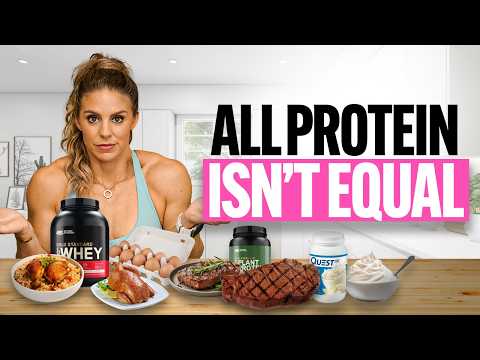
Protein for Women
What is the difference between complete and incomplete protein?
A complete protein contains all nine essential amino acids, the ones your body can't make and must get from food. An incomplete protein is missing one or more. Complete sources are mostly animal-based, like chicken, eggs, fish, Greek yogurt and whey. Incomplete sources are mostly plant-based, like nuts, beans, lentils and oats.
Read the answer →
Protein for Women
How much protein do women over 40 need?
Most guidance on The WarriorBabe Show lands at about 1 gram of protein per pound of body weight per day for women over 40, based on goal weight if you have a lot to lose. Nikkiey says strength-training women may need 1.2 or even 1.3. Some episodes and guests cite 0.7 grams as the floor.
Read the answer →
Protein for Women
Does eating more protein help with fat loss?
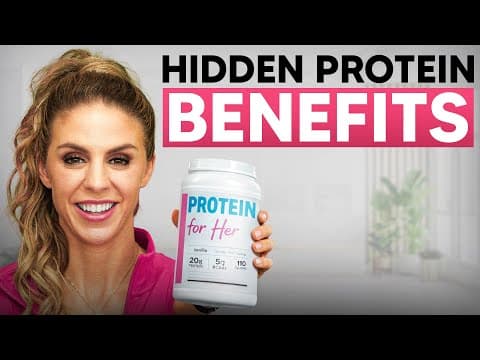
Yes. Nikkiey explains that protein helps fat loss in three ways: your body burns more calories digesting it than carbs or fat, it protects and builds muscle while you're eating less, and it keeps you full so cravings don't derail you. She's also clear the digestion boost is small compared with exercise.
Read the answer →
Watch the full episodes
More episodes → 34 min
How to Start Counting Macros Without Getting Frustrated
Episode 55 · May 15, 2023
 20 min
Which Workout Supplements Are Actually Worth Taking?
Episode 45 · Apr 21, 2023
 20 min
How to Build Muscle During Menopause and Choose Protein
Episode 9 · Jan 27, 2023