
Answered in 3 episodes
Why are my lab results normal when I feel awful?
Answered by Nikkiey Stott and her guests · Updated
The short answer
Often because normal isn't the same as optimal. Nikkiey explains that standard lab ranges come from population averages wide enough to include about 95% of people, including those who are unhealthy, insulin resistant, sedentary or already symptomatic. Basic panels also tend to leave out key markers, like a full thyroid panel or testosterone.
Hear it from the show
Tap play to start right where it's answered. It keeps playing while you browse.
Nikkiey on why lab ranges include unhealthy people and what normal really means
Plays from 8:22 · Ep. 297: Normal Labs but Still Feel Awful? What to Ask Your Doctor
Why TSH alone can miss a sluggish thyroid, and Nikkiey's own experience
Plays from 6:51 · Ep. 375: What Lab Tests Should Women Over 40 Ask Their Doctor For?
Janet Smith on normal labs, then finding her testosterone had tanked
Plays from 28:59 · Ep. 206: Perimenopause, Hormone Testing and Strength Training at 50
What a basic blood panel usually leaves out for women over 40
Plays from 4:50 · Ep. 375: What Lab Tests Should Women Over 40 Ask Their Doctor For?
The full answer
On Ep. 297, Nikkiey explains that a result can be technically in range and still not be where you function well. Her example: a TSH of 4.4 falls within the standard range, but she calls it functionally a red flag for a sluggish thyroid. She is clear that the problem isn't individual doctors but the system they were trained in, one that often shrugs and calls it stress when your intuition says something is off.
The second issue is what gets tested at all. On Ep. 375, Nikkiey says a basic panel usually checks thyroid, often only TSH, and that is about it for hormonal health. On her account, TSH alone tells you almost nothing about how your thyroid is actually functioning. She describes subclinical hypothyroidism, where TSH looks normal while the rest of the panel is off, as massively underdiagnosed in women. Its symptoms can look like overtraining or under-eating, and she shares that she went through this herself. The markers she suggests raising with your doctor:
- Free T3, free T4 and thyroid antibodies, alongside TSH
- Estradiol, progesterone and testosterone if you have symptoms of hormonal imbalance
On Ep. 206, guest Janet Smith describes being told everything was perfectly fine after her OBGYN ran the regular panel for women her age, even as her sleep and mood were changing. Testosterone hadn't been tested. A fuller panel about a year later showed it had pretty much tanked.
The takeaway from both Nikkiey and Janet is to keep advocating for yourself. Ask your doctor what else could be checked, find a provider who will go through the results with you, and work with them on what the numbers mean for you. Feeling awful with normal labs isn't proof you're imagining it.
From The WarriorBabe Show with Nikkiey Stott. For education, not medical advice: talk to your doctor about your own health.
Women also ask
More questions →
Hormones & Hormone Health
What blood tests should I ask my doctor for after 40?
Nikkiey suggests going beyond the basic panel: a full thyroid panel (TSH, free T3, free T4, reverse T3, antibodies), estrogen or estradiol, progesterone, testosterone, cortisol, fasting insulin and A1C, plus vitamin D, B12 and iron. For heart health she adds ApoB, high-sensitivity CRP and homocysteine. Bring the list and talk it through with your doctor.
Read the answer →

Hormones & Hormone Health
Can stress stop me from losing belly fat?
Yes, according to Nikkiey. On The WarriorBabe Show she explains that chronic stress keeps cortisol elevated, which she says increases fat storage around the midsection and drives cravings for comfort foods. Even with solid macros and training, a body stuck in survival mode can hold on to fat, so managing stress becomes part of the plan.
Read the answer →
Hormones & Hormone Health
Should I lift weights on my period?
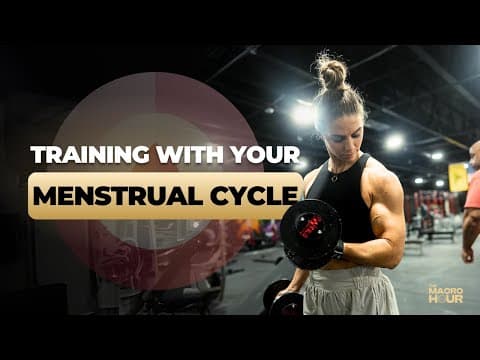
Yes, you can keep lifting on your period, but adjust rather than push. Nikkiey still shows up to keep the promise she made to herself, using lighter weights and higher reps. Guest Jessica Suchan agrees: train all month, go lighter or skip progressive overload if tired. On heavy, crampy days, a rest day is fine.
Read the answer →
Watch the full episodes
More episodes → 48 min
Perimenopause, Hormone Testing and Strength Training at 50
With Janet Smith
 36 min
What Lab Tests Should Women Over 40 Ask Their Doctor For?
Episode 375 · Jul 3, 2026
 26 min
Normal Labs but Still Feel Awful? What to Ask Your Doctor
Episode 297 · Sep 26, 2025