
Answered in 4 episodes
Will I lose muscle if I take a week off from working out?
Answered by Nikkiey Stott and her guests · Updated
The short answer
No. Nikkiey explains that a week off won't cost you your muscle. Meaningful detraining, a measurable loss of strength and muscle, doesn't begin until roughly two to four weeks of complete inactivity, and even then the loss is slow. You might feel a little weak or sluggish for a few days back, but strength returns quickly.
Hear it from the show
Tap play to start right where it's answered. It keeps playing while you browse.
Nikkiey on when detraining actually starts and why one lighter week won't cost you
Plays from 23:55 · Ep. 366: What Is a Deload Week and Do Women Over 40 Need One?
Nikkiey on the three-week mark for muscle loss and how muscle memory helps you rebound
Plays from 17:25 · Ep. 129: Will I Lose Muscle If I Stop Working Out When Sick?
Why a few days off over a 365-day year won't halt your progress
Plays from 6:02 · Ep. 274: How to Get Back on Track After a Holiday Weekend
Why short breaks barely matter, but two months off is a different story
Plays from 19:49 · Ep. 129: Will I Lose Muscle If I Stop Working Out When Sick?
The full answer
On Ep. 129, Nikkiey says significant muscle wasting generally doesn't start until about three weeks of inactivity, and even then the rate of loss is relatively low. On Ep. 366 she puts the window at two, three or four weeks of complete inactivity with no training stimulus at all. Either way, a single week sits well short of that line. She adds that most women come back from a lighter week feeling and performing better than before.
The reason your strength holds up is muscle memory and what Nikkiey calls neuromuscular adaptations, the connections between your brain and your muscles built through training. Those stay largely intact during short breaks. She describes feeling a little weak for the first couple of days back, then strong again within about a week. After two weeks off she noticed slightly less definition, but the muscle was still there, and she says the fear of losing progress is usually bigger than the actual change.
Where a break does cost you is when it stretches out. Nikkiey notes that two months off is a different story, and she points to the pattern of being off for weeks, back for two, then off for another month. On Ep. 274 she warns that the guilt spiral after time off can set you back faster than the time off itself, so let the break be a break and then pick back up.
And if the fear is about identity, on Ep. 251 Nikkiey shares that worrying her body would regress was the heaviest thought for her when she slowed down, and she came to see it as ego and conditioning. A week off doesn't undo years of work. Consistency over the long run is what builds results.
From The WarriorBabe Show with Nikkiey Stott. For education, not medical advice: talk to your doctor about your own health.
Women also ask
More questions →
Building Muscle After 40
Why is muscle so important for women over 40?
Muscle matters after 40 because it drives your metabolism and protects your long-term health. Nikkiey explains that women lose about 3 to 8 percent of muscle per decade after 30, and less muscle means a slower metabolism. She calls muscle the engine of your metabolism and, borrowing Dr. Gabrielle Lyon's phrase, the organ of longevity.
Read the answer →

Building Muscle After 40
Can I build muscle in a calorie deficit?
Yes, you can build some muscle in a calorie deficit, especially if you're newer to strength training or have more fat to lose, but not as much as at maintenance or in a surplus. Nikkiey explains that a modest deficit, enough protein and a real lifting program work. Crash-level calories like 1,200 don't.
Read the answer →
Building Muscle After 40
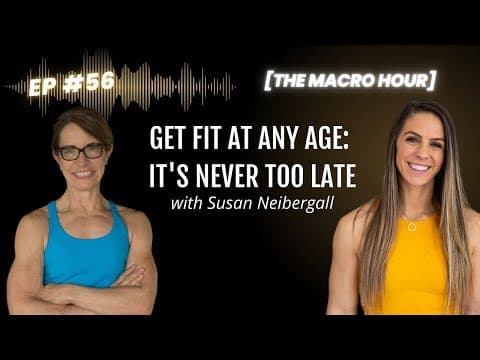
Can you build muscle in your 60s?
Yes, you can build muscle in your 60s. On The WarriorBabe Show, Nikkiey shares clients who did it. Cheryl added muscle and lost fat between 57 and 60, Sandra hit 90-pound lunges at 61, and Michelle got stronger at 67. Nikkiey says it took hard work, consistency and patience, with no special circumstances.
Read the answer →
Watch the full episodes
More episodes → 30 min
What Is a Deload Week and Do Women Over 40 Need One?
Episode 366 · Jun 1, 2026
 16 min
How to Get Back on Track After a Holiday Weekend
Episode 274 · Jul 7, 2025
 24 min
Will I Lose Muscle If I Stop Working Out When Sick?
Episode 129 · Feb 12, 2024