
Episode 16139 min
How Nikkiey Overcame Fitness Extremes with Macros and Moderation
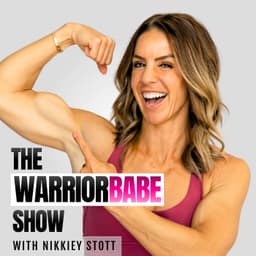
Listen to episode 161
Follow Lindsey on Instagram and Facebook here: @trainerlindsey
Full transcript
00:00Real quick, the only ask I could ever have of you guys is to help spread the word so we can help more women lose body fat, build muscle, reach their goals, and feel insanely confident. And the only way we can do that is if you rate, review, and share this podcast. So the single thing I ask for you to do is if you could leave a review. It will take you 10 seconds, and it will mean the absolute world to me and may change the world of someone else. I'm not somebody that's going to pull out a scale and track my macros at a restaurant or be with friends or do it when I'm with family.
00:32It's like I have years of this developed skill that I can look at food, and I can understand this is a carb, this is fat, this is a protein, this is the quality or the quantity of each, the quality of each. That's what healthy living is to me. It's not like being restrictive or feeling like I need to track all the time or feeling I need to go to extreme and restrict certain foods. It's like I know nutrition well enough to know this is where I'm at for the day, and this is what a good quality piece of food is. And so I'm going to allow myself to have whatever I want, whenever I want, but in balance.
01:08Hello, and welcome to episode 27 of the Nourish and Strengthen podcast. I'm so excited about our guest today, you guys. Nikki, you don't know this, but I've had a girl crush on you for so many years. And I'm so excited to introduce Nikki Stott to you guys. She has an incredible story and is a wealth of knowledge. She is the co-founder of Warrior Babe. She's a certified personal trainer, has a BSN in nursing. She's the host of The WarriorBabe Show, which is an amazing podcast. Welcome to Nourish and Strengthen, Nikki.
01:39Thank you, Lindsay. I appreciate you having me on. Oh, I'm so excited and so honored. So I just want to dive right in because you have an incredible, incredible story that I don't think I even really realized happened to you until pretty recently. So from my story, most of my audience understands like, you know, there's downsides to getting competition lean. You used to compete, right? Yes. Yes. And restrictive dieting. Obviously, we don't believe in that. Overtraining. But your story actually ended you in the hospital.
02:10What? Like, tell me, tell me kind of more about your story. Yeah, I'll go back a little bit and dive into that. And then we can touch on how that even led me to that arena. So perfect. Basically, like, you know, growing up, I was so much I was very much into sports, you know, basketball, field hockey, track. And then once like that regimen stopped with schooling and practice and like your coach and being held accountable, it was like my early 20s were like, you know, like before 2014.
02:43I was really struggling, like post like school in your early 20s, like drinking and then like that life. And like I wanted to be fit and healthy. Like I wanted to regain that mentality that I had while I was playing with sports and had a team. But I like didn't know where to start. Like I didn't know how to do it by myself. And it just it was like struggle bus city. Like I hate the way I looked. I always wore baggy clothes. I never wore shorts. Like, yeah, I totally resonate with that. Totally. Just about my legs. Tried various different diets.
03:15Would go to the gym sporadically. Couldn't keep anything consistent enough. Like to give it enough time to probably give me results. I think right there is like every woman's story, right? Totally. Right. Yeah. Yeah. And then this is probably to a lot of women's story in 2015. This is where I made my like I was in New Year's resolution, baby. And I was like, oh, yeah, transform my body. I'm going to boost my confidence. Like this is my year 2015. Heck yeah. And I was like determined to follow through because I was just fed up with like feeling bad about myself.
03:48And it was extremely challenging and overwhelming at first because I tried like all of these different methods and advice from like the Internet. Like I joke, like I didn't know what protein was. So I had to Google what protein was and where I could find it and like what I was supposed to eat. That is awesome. So you really came from the beginner of beginners. Yeah. Yeah, I really did. Like I had no idea. And then this is like where I really transitioned early in 2015 where I stumbled upon like Instagram posts of bodybuilders.
04:20And like their physiques inspired me. And I started to dream about, oh, well, if they can do it, then I can do it, too. And so one day, like long story short, this gym manager was like, oh, are you going to be competing in a bodybuilding competition? And I was like, no, but like funny you ask. I've been thinking about this. And so this is where I hired a coach. I dedicated myself fully to this plan. And I like immersed myself into training for six months for my first bodybuilding competition, all while in nursing school, taking care of my sick grandmother and working in like a part working at local ER at part time.
04:58Wow. And so like after months of like this hard work, I won the first competition. I turned pro. I, you know, it just ignited my passion. Yeah, that's amazing. Yeah. To want to understand more about like strength training nutrition. But like, you know, the high was totally short lived because I shared recently with you that like in my first month post show, I gained 25 pounds back. Wait, really quick. Back up. So you turned pro after your first like national show.
05:29It was a very small federation. So it was NABBA. Still. Okay. Yeah. One pro with them, competed with the pros at night and then beat the pros. Okay. That's amazing. But it was like three people. But it was like three people. Thank you. But you don't need to say that part. No one knows. You could just pretend and no one would know the difference. Yeah, exactly. So, okay. And then like, I still like totally lack direction. Like, and I quickly gained that weight back. And I felt I was heavier than I was when I first started out on it.
06:03I was like, what happened? Yeah. So this is the only way I know how to do this. So I decided to like compete again. But I went for a bigger federation. I went for the OCB. And they're all natural. And I won. I went pro in that first show. And then took about two years off. But fell into that cycle again throughout that. And this is where like, it was weight loss. It was weight gain. It was like, it was up and down for two years. And then leading into wanting to compete with the pros on the major pro show in 2018.
06:34Right before that is where I landed myself in hospital two times. Oh, so how did that happen? Yeah. So going into for the pro show is like, oh, you know, my coach is like, we got to do this better. We got to show up better. We got to come and leave. We got to do all these things. And like training went like 10x. Like it was. I was training. First of all, I was prepping for about like eight months straight. It was. Wow. Yeah. And then my training about like eight weeks out went from like zero to 100.
07:04It was like, let's train six to seven days a week, three times a day. Oh, my gosh. Yeah. I was in the morning cardio. I had to wake up at like 4 a.m. do cardio first thing for an hour on the Stairmaster and then had to go back later on in the day and do strength training for an hour to an hour and a half. And then had to do an hour after that strength training session of cardio. Nikki. Oh, my gosh. Were you just dying? I was. I was. It was the lowest point of my life, like all to achieve a certain type of physique.
07:41Yeah. And to win. And so what happened was amongst all those extremes, I ended up with rhabdo, rhabdomyolysis, so where my body can't filter out lactic acid enough. And like I was literally it was in my legs and I was walking around like a penguin. All of my blood levels were elevated. Oh, my gosh. It was so uncomfortable. They had to flush me with seven liters of fluid. Oh, yeah. So what what is it? So I've heard of rhabdo. I know what it is. But and you just kind of talked about that. But what is like the symptom that sends you to the hospital for that?
08:12What does that feel like? Yeah. So basically, your muscles are so tense, like in a flex state. Yeah. For like 24, 48 hours, maybe even 72 hours, like three days. And you it's like you're like you're waddling. You're waddling around like a penguin, at least for me. Like you have a cramp, like you have a cramp kind of or not? No, like think about like I think about like you're like you're doing a leg extension, right? Yeah, that's actually where my mind was like. Yeah, you're like a flex state. Yeah, you're just you're in a flex state for that entire time.
08:45Oh, my gosh. And and then you also start to experience like your urine can get dark because you're so dehydrated. Your kidneys can't filter out this lactic acid. And and so knowing I knew this, right, because I'm nursing background. So I'm like, I'm the worst patient. I'm like, let me just put it. It'll get better. I'm sure it'll get better. Sure. Like as what as much what I can't you can't like physically drink enough water to keep to keep your kidneys filtering it out. All it needs like you need the leader after leader after leader.
09:15Sure. Fluid. So that was hospital visit number one hospital visit number two was because my fats were extremely low with dieting for competition. I was eating one tablespoon of olive oil for my fat today. So it's 14 grams of fat a day. Oh, my gosh. So I ended up in the hospital because I could not poop. Uh huh. I was constipated. Yeah. From from entirely like my x-ray showed an entire side of my rib cage.
09:47My my my digestive tract was just completely backed up. And then it was bleeding into the other side. Like my no way. Yeah. And then because I worked in the ER, my doctor walked in. He was like, Nikki, you're full of shit. Like literally. Really? No pun intended there. Right. Oh, my gosh. Yeah. So both of those like the extreme just led me there. And then after I finally I competed in the pro show, I still did it. Like even amongst that. Wow. I beat the pros.
10:17But like, my gosh, I was like, peace. I'm done with this lifestyle. Yeah. Seriously. So those are some major extremes. And I feel like even if our listeners didn't compete, they can kind of relate. I have a lot of listeners who are, you know, they just under eat because I think they're supposed to. And that causes so much stress. And that's something that I like to talk about. Like even if people don't have our story of competing or the extremes that you went to, you know, they can still understand the idea of going to extremes and having that backfire. Right. How do you feel like your story applies to, you know, just our our everyday listener?
10:49Everyday woman. Yeah. I mean, everyday woman isn't eating enough food first and foremost. And like, I know that these women struggle with because like you have you coached women in this arena. Me too, as well. It's like, I hear these stories all of the time that they have digestive problems. They're constipated. They're that's like one of the symptoms that I hear. And I'm just like, let's let's pull it back and look at what you're eating on a regular basis. And like, it's just not either consistent. It's not enough. It's usually like totally under in calories and all of it just because of like not knowing how to eat, which is a lot of struggle.
11:22Um, but yeah, totally resonates. I hear this all of the time. Yeah, totally. So now you're about a lot more balanced. So I want to talk about that. So, you know, you moved from this restrictive low fat. Were you following meal plans at the time? I assume back in the. It was a diet. Yeah. Totally. Oh, my gosh. Chicken, broccoli, rice, tilapia, cod. Like I will never look at tilapia and cod to say that again. There's no way. Oh, my gosh. I'm so with you. I even feel that way about chicken sometimes, which is sad because I like chicken, but sometimes I'm just like chickened out, you know?
11:55Um, but now you've called yourself the queen of macros, queen of macronutrients. And I feel like that probably symbolizes the balance that you try to find. So why do you feel so passionate about tracking macros versus just calories or meal plans? And why is that so important? Ladies, are you feeling frustrated with body changes? You're experiencing during menopause. It's time to take control. If you're between 45 and 65 years old and tired of struggling with body fat and muscle loss, Warrior Babe is here for you.
12:32At Warrior Babe, we've helped over 18,000 women just like you lose body fat, build toned muscle, and understand their bodies better with personalized plans based on hormone and thyroid testing and more. Imagine knowing exactly what your body needs to see real results and results that last. Look, don't wait anymore. Take charge of your health and join our community of strong, empowered women. Visit WarriorBabe.com forward slash apply today to start your transformation.
13:02That's WarriorBabe.com forward slash apply. All right, let's get back to the show. Yeah, many. So a few reasons. I'm going to narrow this down to like three in particular. One, because I'm very, very keen on macros. One being a personal story because when I was competing, I asked my coach, I'm like, what is this macro thing? Like, how can I see people flexible dieting and then stepping on stage and looking incredible? And my coach was just like, no to macros.
13:35Like, guys, if you're watching this or listening to some audio, I'm putting a big X up. He was like, nope, no, can't learn this. I'm like, and I'm going to, you know, share this in a little bit. But it just caused me to be more curious. It's like, anybody tells me, no, I'm like, oh, I got to go figure this out. Exactly. Why are you saying no? Or I'm going to show you that I actually can do this. Exactly. Yeah. Exactly. So that just led me down the world of macros. And once my eyes were opened and I learned the skill set, because it is a skill set. It's not a diet, everybody. It's like, it's a skill set that will serve you for the rest of your life.
14:07And the reason why I love macros so much is mainly three reasons. It's like, you know, it's your, you can have a huge impact on your body composition. So they, macronutrients, protein, fats, and carbs directly affect your body composition. And if you can tailor your nutrition by eating enough protein so that you can grow your muscles and repair the muscles, and you can eat your carbohydrates for the energy, and then you can have the fat for the, for the hormone production. When you understand what those things do for your body, you can tailor the way you eat on a daily basis.
14:37And that's going to optimize how you can change your body composition. For a lot of the women that I speak to, it's like, they want to be build muscle. They want to be toned. And I'm like, okay, but they're following calories. And I'm like, okay, well, cool. Yeah. 1800 calories. Great. 2000 calories. Great. But like, what is that calorie and makeup coming from? Yeah. It's mainly carbs and fat. So I'm like, let's dial it in a little bit deeper because if you want to change your body composition, you got to have that protein in there. Yeah. So one being definitely the impact on your body composition too, is that it can, when
15:10you're dialing in like a balanced nutritional diet with macronutrients, you can prevent and manage health conditions. So there's so many women that I hear and support and help that are dealing with, managing and dealing with a variety of health conditions like diabetes or PCOS or, you know, high blood pressure and obesity, it's right there. Yeah. Heart, disease, like all of those things. And so if you can balance out your nutrition and eat right for the protein, fats, and carbs,
15:43you can prevent and manage these health conditions. And then another one is like, the last one is like, it's not just about, you know, the body and the way you want to change it. Like I love, yes, macros to the changing your body composition, but it's also like when you're eating right, you have, it has a profound impact on your mental and your emotional wellbeing. So like you, if you're eating what your body needs, right, it can improve your mood. It can improve your energy levels. It can improve your cognitive function. It can just overall lead to better mental wellbeing. So that's why I love macronutrients.
16:13Yeah. I love that. And you talk about it being really important as we age too. Can you touch on that a little bit too? Hey, hey, just want to drop a huge appreciation to you guys listening to the show. It means a lot. I hope you guys are enjoying it and there's so much more to come with it. If you are enjoying it, hit the subscribe button. I'd appreciate that tons. And also it would help this podcast reach others who need to hear these messages too. Thanks so much, guys. Let's get back to the show. Yeah. A hundred percent. So the women I speak to are like 45, 55, 65 years old.
16:45Same. Yep. Same. Okay, cool. So when you, after the age of 30, your muscle mass decreases by like three to 8% per decade. So what a lot of women experience is they lose their muscle mass as they age. It's just a natural progression that happens with that process. And so when you're eating enough protein and high quality protein, it is a vital macronutrient to help you to maintain that muscle mass. And not only importantly, to help you build more strength and functionality with strength training.
17:19Right. So by having macronutrients and eating the right portions that you're supposed to be having, it can help you to preserve muscle mass and build more if you're doing strength training. And then another one is weight management. So with your age, as you age, your metabolism begins to slow down. At the same time, us humans begin to slow down. True. So it's not entirely on metabolism's fault. Right. When you're able to balance out carbs, fats, proteins, that's key to maintaining a healthy weight and healthy, you know, everything, preventing obesity from happening.
17:55And then like I touched on with when your muscle mass decreases, your bone density decreases. So when you are eating macronutrients and you're having that right balance, you can, you're getting adequate protein, you're getting fats to absorb for vitamin D. You're getting everything that will help keep your bones strong. On top of that, when you're doing strength training, then you're getting, you're making, the muscles are helping to make your bones stronger. So that will help too to prevent osteoporosis, which a lot of women experience later on in life.
18:25I've seen so many people come into the ER when I worked there that had broken hips or had fallen. Yeah. And I'm just like, you can just look at somebody and be like, well, that person definitely does not work out. That person just definitely does not eat right. And it's just like if people had a little bit more information about these things or were more curious about learning about nutrition and fitness and applying these things, then yeah, that's how macronutrients are just vital for helping women age strong in a strong way. I love that. That's, that's so eyeopening and important for sure.
18:56So you come from this background of extremes, right? And now you seem to have found this really healthy balance, but I want to know what is, what is your day-to-day healthy living, your workout, your nutrition? Like, tell me, like, if I were to look into Nikki's life, what does healthy living mean to you? Yeah. I love this question because it's literally like half of what I was doing when I started out in my. Isn't that so cool though? Yeah. Yeah. Yeah. It's literally amazing. Like I, I, I say that less is more like, so my day-to-day I used to train like seven days a week.
19:31Right. And those three days of being in the gym three times a day. Now it's like, I'm training maybe three to four times a week with strength training. And I just incorporated a little bit of running for my cardiovascular health. Yeah. But it's like literally half of what I used to do. And healthy living to me is like finding the balance. And from the extreme to like, you know, actually living the sustainable, realistic way for myself. Like I'm not somebody that's going to pull out a scale and track my macros at a restaurant or be with friends while, or do it when I'm with family.
20:07It's like, I have years of this developed skill that I can look at food and I can understand this is a carb, this is fat, this is a protein, this is the quality or the quantity of each, the quality of each. And so I can look at a meal and be like, oh, this is like, that's what healthy living is to me. It's not like being restrictive or, or feeling like I need to track all the time or feeling I need to go to extreme and restrict certain foods. It's like, I know nutrition well enough to know, like, this is where I'm at for the day. And this is what a good quality piece of food is.
20:37And so I'm going to allow myself to have whatever I want, whenever I want, but in balance. And then when it comes to training, it's like, what do I love to do? And I love to train and I love to, you know, I'm getting into enjoying to run again. I can't believe I would ever say that. Yeah. And I know we both love to rollerblade. Yes, we do. We do both love to rollerblade. That is such a fun activity. It is so fun. That has been my cardio, like all through the summer. I didn't even start it as cardio.
21:07I started it because I just wanted to get outside and do something outside. And then I was like, hey, my heart rate's like 130 or something. I'm like, this is awesome. You know, totally. Yeah. Roller. Anything you, like what I said, it's like, what do you love to do? It needs to be fun. And then you don't dread it. It does. Yeah. And also, you know, piggyback. A lot of people will say, well, strength training is not fun, but it's like, okay, can we think about longevity? Good point. That's a good point. Yes. And sometimes people might think, you know, eating a lot of protein is not fun, but then
21:37sometimes you have to have, you know, your conscious brain tell you, well, sometimes we need to do that. It's best for us too. Exactly. Or even people are like, oh, that's so boring. Strength training. This exercise is so boring. I was like, you got to do the boring work. Yes. Yes. Well, that's another time when balance is important. Yeah. Balance with having fun, enjoying it, but also just kind of doing what's best for you too. Yeah. A hundred percent. Yeah. Awesome. So I have a fun game that we're going to get into in just a minute, but I want to know before we get into more of the lighthearted stuff, I want to know, is there any advice
22:12that you would give yourself back when you were, you know, in the extremes or even to our ladies who are like under eating, over exercising, doing all the HIIT cardio classes? What would you tell either them or your past self now, based on what you know now? Yeah. Yeah. I would say the first thing that I would tell myself is to prioritize balance over extremes. I think that's really important. Now knowing what I know now, when I first started, now to a listener listening, I would say, don't fear food.
22:43Don't fear carbs. You know, it's a lot easier said than done. There's so much marketing that's out there that like says carbs are bad and carbs will make you fat. Well, it's like, get, this would be another thing. Get curious. I was like, why are they saying that? You know, like why would carbs make somebody fat? And you can dive into the science and understand, oh, well, you know, carbs turn into glycogen. Glycogen holds onto water. So it's not necessarily fat, but it's water weight. So it's like, get curious. Always keep learning. Know, like, know that your truth and not necessarily somebody else's truth or what they're saying.
23:16Yeah. And I would say, enjoy the journey. If I, you know, looking back, it's like, I, I love the process that I went through. Right. But like, don't just, I was so honed in on the results. Like I was like, I got to get to this show. I got to get this. I got to eat this way and train this way because it gave me this result before. But instead, like, just find the joy and like, dude, I get to do this. I don't have to do this. I get to do this. My body can do this. I, you know, can I have, I can eat healthy because it's my choice. So it's like, enjoy the journey.
23:47Um, and then another one would be like, everybody always feels like they're going to be happy. Once they achieve a result, they feel like they're going to have a body positive self when they achieve a results. Like, dude, just like appreciate your, for your body, for what it is right now and what it can do and not just how it looks. And that alone, I love that. Yeah. That alone will help you just like step into a different type of mind frame around yourself and your journey. Yeah. I love that. That is, that's so, so important, especially those mindset, those mindset shifts for sure.
24:18Yeah. Yeah. All right. So, okay. I want to play overrated, underrated. Do you know how to play? Yeah. When I understand, maybe you played a little bit differently. I mean, I do. Okay. So I don't probably play it any differently, but I'm just going to say a topic. Like maybe a buzzword in fitness and like on social media or whatever. And you're going to tell me if you think it's overrated, properly rated or underrated. So just to be clear, mainly like if you think it's overhyped, like people think it's too important, that'd be overrated. If you think it's more important than most people think it is, that would be underrated
24:52and properly rated would be, it's getting the appropriate amount of attention from mainstream. Does that make sense? Yeah, it makes sense. I'm a little dyslexic, but so bear with me. Okay. I turned it back. Well, these are all, we're going to talk. Yes. Okay. And we'll talk through each one. We won't do like just a one word answer. We'll talk through it. So, and I did guys, I didn't give Nikki these, these beforehand. So this, I'm just throwing them right at her. That's why it's a game. So love it. I love it. Yes. The first one is cardio for weight loss, overrated or underrated?
25:25Overrated. How come? How come? How come? Because you can achieve, you can do cardio to lose some weight. However, it's not the answer. I feel like a lot of people want when it comes to the type of appearance they want with their body. Um, and for a couple of reasons too, like cardio in the moment you burn and lose the calories. However, strength training, when you incorporate that for fat loss or weight loss, it, you burn
26:01calories, you know, all throughout the day. It's not just like a one and done type of exercise. Like your muscles are active tissue. They're always going. They're always operating. They need, they, they're always burning. Um, and then strength training too helps to aid in your metabolism. So, you know, if you are strength training, it's like double effect. You're going to, you're going to lose fat. You're going to lose weight by doing that type of activity rather than, and you're going to get the results that you want with the physical appearance that I think a lot of women want with more tone. Whereas weight loss or cardio is just like, you're going to become a skinnier, fatter version of yourself.
26:31It's going to help lose weight, but it's like, it's just, you won't have much tone to your body. Yeah. Yep. I totally agree. And maybe I could have said cardio for achieving your optimal body composition or something, but yeah, I completely agree with you. Okay. This next one, I'm going to put it in quotes. I don't know if my quotes make a difference, but next one is motivation, overrated, underrated, just the idea of being motivated, needing to be motivated. Overrated. Yeah. Yeah. Talk about that.
27:03Yeah. Well, I love that you asked that because I had Sal DiStefano on The WarriorBabe Show and that was one of the leading questions I asked him. I was like, what do you think is like a big fitness myth in the industry right now? And he led with motivation. I was not expecting that. And I was like, in the way he explained it, I was like, well, damn, that actually makes so much sense. So he was just like, everything out there right now is leading with like, you're not motivated enough. And like all of the tactics, all of the marketing, all of like the things are saying like, you
27:34need to be more motivated. And, uh, you know, um, to me, motivation is an emotion. It ebbs and flows. You're not always going to be motivated. Like, cool. Yeah. Once that ad gets you to say, you need to be more motivated. And the person's like, yeah, as a parent experiencing. Yeah. It's like, great, cool. You're motivated to start it, but like, you're not going to be motivated in four weeks guaranteed. You're not going to be motivated in three months guaranteed. So it's like, I think that's entirely overrated. And the fact that like, you need to be more disciplined rather than motivated.
28:07Yes. And you need to like build more habits and become disciplined with those habits rather than like trying to do these quick things and quick fixes because you're in a motivated state. Right. Right. I sometimes will talk about, you know, are you motivated to do the laundry? No. Like, are you motivated to go to work? I mean, maybe you and I are, but most people know they aren't always motivated to go to work, but you go to work because you want to make money. You do the laundry because you want to have clean clothes. You just do it because you have a habit of doing the laundry on the weekend.
28:38And so you do it even though you don't want to, I hate the laundry, but yeah. Yes. Oh man. Okay. Next one. Intermittent fasting, overrated, underrated. Oh, you know, I'm going to say overrated. Okay. Because to me, what I, in my opinion, what I love to preach is like, let's just not create any type of restriction around any type of limit, like around the time around food. It's like, can we just do the basics and just learn how to eat?
29:08Right. Yeah. And then that's where I would say too, like maybe you could, I'm about intermittent fasting for people that need to address health issues. There's a right time for that. However, that's just for those people. Like, it's like, if you are healthy, you like have the ability to make a change that you don't need to, like, you can just keep the basics into play. Like just keep the basics into play. Yeah. Don't yourself. Don't eliminate foods. Don't allow timestamps around X, Y, and Z.
29:38Yeah. So I would, I would, yeah, I would lean to overrated. Awesome. I totally agree. Next one. Breathwork and meditation. Oh, I know you love breathwork. This is my jam, man. I think it's underrated. I don't think that enough people are really diving into the benefits of what this can do for a fitness and, you know, a fitness journey. There's, there's so many positive components to breathwork, to meditation that will lead
30:12into supporting like the results that you want with your, with along your fitness journey. So I think it's entirely underrated. What, what do you do for breathwork? I know you've talked about that before, but what's like your daily practice if you have one? Yeah. Every morning I do about 12 to 15 minutes of breathwork exercises. I have a breathwork coach. Uh-huh. Oh, awesome. Yeah. Her name is Brit Lee. She's amazing. Um, so for the first, like, it's just normal breathing, coming present to your breath, recognizing that you are breathing and you're trying to be present in the moment rather
30:45than letting your mind spiral into like what you have to do for the day. Yeah. We move into a halo active breath. So it's like, you're just open mouth to your own. Hmm. Like that. And it's just like a halo. So it goes in and out, in and out, and then into a triactive. And so each of these are like designated time periods. Yeah. Cool. Breath. And then you're also halo is like two breaths in and then one breath out. Oh, okay. At the end of the, at the end of the halo and end of the trifecta triactive, um, you're holding your breath at the end.
31:16So you can feel like your energy. You can feel the stillness around you. You can feel just like your own power essentially. And, uh, and then you let it go. And like you, you sit in the end, you sit at the bottom of that release and you just kind of like, you know, experience how you want to experience your day. That is so cool. I love that. That is awesome. Okay. Got another one for you. Creatine overrated, underrated. I would say this is right in the middle. I think properly rated.
31:47Yeah. I think it's starting to be probably rated, um, because there's so much I'm actually was, I was totally, uh, against creatine at the beginning of my journey. Cause I'm like, Hey, and as a mom and a dad, you can totally, you know, you get natural protein from eating those whole foods. Yeah. Vegans and the plant-based people, they don't get that. So they need to have it. And then there's just been a three 60 of like, or is it three 60 or one 80? I don't know what turn. Yeah. One 80 where I like agree with it. Just changed your mind.
32:18I changed my mind, which is makes, you know, it makes a great coach and it makes you adaptable to the learning. So, uh, there's so much studies and so much, uh, uh, positive things around how creatine can help for the, you know, uh, keeping your muscle mass intact, keeping your strong keeping you strong throughout aging, especially women that are of 45 and older going to the menopause creatine is great. However, consult your doctor, because if you're not drinking enough water, then there you go
32:48anything. So, yeah. Um, but yeah, I think it's properly rated. Awesome. Uh, I got a holiday one for you and I think I know how you're going to answer this, but tracking your macros on the holiday or on vacation. Uh, overrated. Yeah. That's stupid, right? Like it's so stupid. Yeah. Memories over macros, man. Like just enjoy, be present, have fun, create new memories. Don't worry about, Oh my God, is this a protein, fat or carb? Does this fit into my day? Am I over my grams? Like, yes. Yes. Stop. Yeah. I totally agree.
33:20It's literally 3% of your year. So like, don't lean on the holidays being something that throws you off track people. Yes. It's literally the smallest amount of time. Yeah. I, I totally agree. But at the same time, don't let the idea of the holidays, Christmas and Thanksgiving make you go off track for eight weeks. And then in January, you're up 10 pounds and kicking yourself, you know, control yourself, control yourself, control yourself, get right back on track. It's not, it's a temporary pause to your routine. It's not a forever change.
33:50Oh, I love that. That's a great way to think about a temporary pause. That's awesome. Okay. Another one. Let's see. I've got three more. Well, one of them we already talked about. We're going to do two more. Using the scale to track your progress. Overrated, underrated. Overrated. Entirely overrated. Yeah. So many reasons. I just did a podcast on this on The WarriorBabe Show around like when you start strength training, why the scale may not budge. Yeah. I saw that. One of them is being that when you put on more muscle, muscle is more dense than fat. So like you could literally weigh 150 pounds, be standing next to somebody that weighs 150
34:24pounds. But like if you have more muscle mass and that person does, and like you, obviously your body is like way different. And that's because you just have more densely muscle and it takes up less space and fat does. And then overall, like these other two points I would say, it's just like when you step on the scale, it's only telling you how heavy you are. It doesn't tell you what you're made up of. It doesn't tell you about the muscle mass you have. It doesn't tell you what's, you know, muscle to fat ratio. It doesn't tell you about the, uh, the, how heavy your bones are. It doesn't tell you like how much water are you holding onto, right? Which would go in my second point, water retention.
34:55You're going to experience that no matter what. It doesn't mean you're getting fat. And then how, when you, when you start strength training, you eat carbohydrates, you have an increased glycogen storage so that you have power to perform your workouts. And for every type of, uh, for every carb, when carbohydrates turn to glycogen, that glycogen gets stored in your muscles and your livers, liver. And when you go on to perform strength training exercises, uh, when it's stored, it get used for when you strength, but when it's stored, you hold on to three times the amount of water
35:26and people like, that's where carbs get a bad rep. It's like, Oh, well I eat carbs and three weeks later, I'm, um, I weigh more on the scale. It's like, no, dude, no, you don't. Carbohydrate. There's water with every gram of carbs. It's just some water weight. So like, I hate the scale. It's just like, Oh God, get over it. Yeah. It doesn't tell you the full story, man. It doesn't tell you the full story. Yeah. I love it. Okay. Last one for you.
35:56And that is eating at maintenance calories. Underrated, overrated. Underrated. I didn't really give you any that are overrate or that are over. Did I give you many overrated? Anyway, talk about maintenance calories. I gave you a ton of overrated. I mean, the other way around. Yeah. Yeah. My rights and my left. So I'm like, Oh wait. Like wait. Just that way. Yeah. Yeah. Underrated. Yeah. Entirely underrated.
36:27Because I say maintenance is magic. It's like, you're giving your body the food, the fuel that it needs to give you the type of results that you want. Like a lot of women don't associate with like your muscles need fuel for energy. And when you go and do strength training, like they don't, they don't associate those two yet. Hopefully soon the fitness industry will trend that way. Yeah. There are things that they have to eat less in order to get some type of result. So it's like when, if you're doing strength training and you want fat loss and you want
36:57a more toned physique, you want that body composition to change. You got to eat more to fuel that process to happen internally. Right. And like, I always say, let's focus on internally making your body happy. And then you will experience a compound effect, the physical on the outside happening. Yes. But like a huge, a huge component of that and a successful journey is maintenance calories. Yeah. I love that. And sometimes that's something I try to say a lot is, you know, in a deficit should be little blips of time, not the most of the time of your year. Most of the time you should be spent in maintenance.
37:27And then if you want to do, you know, cuts here and there, fine. As long as you've spent enough time in maintenance, sounds like you have to earn it, you know? Yeah. A hundred percent. Yeah. I love that. Well, Nikki, thank you so much. Where can we find, uh, find you and where can we learn more from you? Yes. So you can check out warrior. You can check out warrior babe.com. If you're ever interested in some one-on-one training. Um, I hang out Instagram the most at Nikki Stott. And then there's also the macro podcast on Apple and Spotify. I love it.
37:58Thank you so much. So much fun having you here. Thank you, Lindsay. I appreciate you having me. Okay. See you soon. Hey guys, real quick. If you're interested in taking your body to the next level, lose body fat, build more muscle, feel more confident. Do it alongside one of our 30 plus professional coaches. Work one-on-one with her to eliminate all of the guesswork that you may have. And all you need to do is just do the work that she tells you to do to get to those goals of yours. And to learn more, click the link below this podcast and apply to our VIP program right now.
This transcript was generated automatically and may contain errors.
Listen next
All episodes →Reverse Dieting: The Fix You Need to Make Fat Loss Actually Work
Episode 284 · Aug 11, 2025
Why a 1200-Calorie Diet Fails Women Over 40
With Dr. Stacy Sims
How To Get Ripped at 51 w/Alicia Erickson
Episode 221 · Jan 3, 2025
Free Body
Transformation Assessment