
Episode 14341 min
How to Switch From a Cut to Maintenance or a Build

Listen to episode 143
Chapters
In this episode
You've been in a calorie deficit, and now you're wondering what comes next. In this episode Nikkiey Stott walks through how to move out of a cut and into maintenance or a building phase without undoing your progress. She starts with the basics: a cut is about losing body fat while holding on to muscle, a build is a planned surplus to grow muscle, and maintenance, the step in between, is where the magic happens. You don't have to bulk. You can live at maintenance.
From there she covers the four signs it's time to switch: you've hit your body fat goal, you've plateaued for several weeks, your energy and gym performance are tanking, or you're simply mentally done with dieting. She explains why so many women are metabolically adapted to very low intakes, why eating less and training harder won't break that plateau, and why eating more, done consistently, rarely leads to unwanted fat gain.
Then she gets practical. Increase slowly, about 150 to 200 calories at a time, mostly from carbs and fats, and hold for two to three weeks before adding more. Keep protein steady, set clear goals for the new phase, focus on strength gains, and rely on scans and consistent progress photos instead of the scale.
Key takeaways
- You don't have to go from a cut straight into a bulk; moving to maintenance and living there is a valid choice, and Nikkiey calls maintenance the place where the magic happens.
- Nikkiey wouldn't start about 80% of people in a cut; most women first need to eat more, reach maintenance and hold it so the next cut is more successful.
- The four signs it's time to end a cut are reaching your body fat goal, stalling for several weeks, consistently low energy or gym performance, and diet fatigue.
- Judge body fat progress with body scans, calipers, DEXA, or progress photos taken in consistent lighting, poses and clothing, not the number on the scale.
- When coming out of a cut, add roughly 150 to 200 calories, mostly from carbs and fats, and hold that for two to three weeks before increasing again.
- Keep protein fairly steady at about 1 to 1.2 grams per pound of body weight, let carbs make up most of the increase, and keep fats around 20 to 30% of total calories.
- A true building phase sits around 250 to 500 calories above maintenance, and increasing too fast is how women gain weight quickly.
- Feeling fuller after a food increase is normal, so give your body two to four weeks to adapt before deciding to cut back or add more.
Questions answered
How do I know when it's time to stop cutting?
Nikkiey lists four signs: you've reached your body fat percentage goal, you've plateaued for several weeks, your energy levels and gym performance have dropped, or you're mentally fatigued from dieting and ready for a new goal.
How many calories should I add when coming out of a cut?
Nikkiey suggests starting with about 150 to 200 more calories, mostly from carbs and fats, and holding that for two to three weeks before making further small increases. A building phase typically lands around 250 to 500 calories above maintenance.
Will eating more after a diet make me gain fat?
Nikkiey says that when women eat more consistently, 99% of the time they don't gain unwanted body fat and often lose it. Eating more inconsistently, or increasing calories too quickly, is what leads to fast weight gain.
Should protein go up during a building phase?
According to the episode, protein doesn't change much and usually stays around 1 to 1.2 grams per pound of body weight. Most of the added calories come from carbs, with fats increased in a balanced way.
What is a healthy body fat range for women?
Nikkiey says it varies by individual, but a range they consider healthy for women is roughly 15% to the low 20s. She notes that losing your period can be a sign your body fat is too low for normal hormonal processes.
How should I track progress during maintenance or a build?
Set clear goals for the new phase, focus on strength gains in your lifts, schedule scans like DEXA or InBody every four to six weeks, and take regular progress photos with consistent lighting, poses and clothes rather than relying on the scale.
Full transcript
Nikkiey: Real quick, the only ask I could ever have of you guys is to help spread the word so we can help more women lose body fat, build muscle, reach their goals, and feel insanely confident. And the only way we can do that is if you rate, review, and share this podcast. So the single thing I ask you to do is leave a review. It will take you 10 seconds, and it will mean the absolute world to me and may change the world of someone else.
When you are in prolonged caloric restriction, it leads to these types of adaptations, and it makes it super, super hard to continue to lose body fat without further reducing the caloric intake to an unsustainable level, right? So a lot of women come to us, and they're not eating enough, and they're wondering why they're not seeing the results that they want. Well, it's because they're not feeding the body what it needs.
Yo, yo, yo, what is going on, you guys? Welcome back to The WarriorBabe Show with Nikkiey Stott, co-founder of WarriorBabe. On this podcast, we talk about mindset, methodologies, and tactics that will help you lose body fat, build muscle, be strong, and feel insanely confident. I'm your host, Nikkiey Stott, and welcome to today's episode, episode 143, which is a heavily requested topic that I'm bringing to the podcast.
A couple weeks ago, I popped up on my story, like I do time and time again on Instagram, and I put up a questions box. I always ask you guys what concepts you want to learn, so I can take what you want to learn, bring it to this podcast, dive deeper into the answers, educate you and give you tactics. And that's exactly what we're going to do today on this specific concept that has been heavily, heavily requested, which I'm super excited to dive into.
I'm going to try not to make it so heady, and I'm going to try to keep it at a fifth grade level, so you guys can jump off the podcast and implement it if it's something you're working towards in your fitness journey now. Which probably some of you guys aren't, a little hint of what we're going to talk about, since we're leading into summer. But maybe you are, or maybe you can save this podcast for when you are planning to do this type of transition along your fitness journey.
Okay, so what we're going to talk about today is how to transition, how to move from phase to phase. Moving from a cut to a bulk, moving from a bulk to a cut, or what I like to call a build, that could take up an hour and a half's worth of me talking to you guys and giving you information, education, and knowledge on how to do those transitions. So for the purposes of time, and keeping it condensed to 30 to 40 minutes, hopefully I can get through it all in that time, I want to specifically speak to moving from the phase of cutting, or decreasing your body fat, to transitioning into a building phase.
That was specifically requested: a cut to a bulk. But don't forget, there is the middle in between, which is maintenance, which is honestly where all the magic happens. So I don't want you to think that you have to move from a cut to a bulk. You don't have to do that. You can move from a cut to maintenance. You can sit at maintenance. You can live at maintenance. Like I say all of the time, and you've probably heard me say it time and time again on the podcast, maintenance is where the magic happens.
Earlier on, I did podcasts talking about the phases: a cut, maintenance, a build. I'm pretty sure I talked about a reverse as well. It's in the single-digit episodes of the podcast. So if you want to find that, dive into it and learn about it, I would highly recommend you do.
For the purposes of this episode, I'm going to specifically talk in buckets so you guys can conceptually grasp the information I'm going to share. And if you don't want to have to worry about doing this yourself, remember, WarriorBabe is there to support you. This is what we specifically do inside our program. We help women move from cutting to maintenance to building for the purpose of changing their body composition. You have to go through these different phases for the adaptability of your body and so you're not staying in one phase for too long.
And in terms of results, building more muscle needs more food. So you have to move into maintenance and a build to give your body the food it needs to build the type of muscle you want, in order to give you that toned aesthetic appearance that you want.
So think about it in terms of buckets like this. First, we're going to talk about understanding a cutting phase and a bulking phase, super high level. Then I want to talk about the signs of when it's time to switch, when you're finishing out a cutting phase and moving into a building phase. The third bucket is adjusting: how do you adjust your macros? And the fourth bucket is monitoring your progress. These are all very, very important buckets. You can't do one without the other.
I'm very excited to bring this concept to you guys, and I hope you can understand it. Keep in mind, I've been doing this for eight, nine, ten years. This is my jam. This is my world. I love this stuff. I could talk about it all day long. Our coaches love this stuff too. They're very passionate about it and could talk about it all day long. So if I get ahead of you guys, I apologize. But I'm going to do my best to bring it down to a level where you'll understand it, so you can apply it the best freaking way.
So, for understanding the phases, the first thing I want you to understand is the definition of each phase and the goal of each phase.
First, let's talk about a cutting phase. The cutting phase is a period where the primary goal is fat loss, while at the same time preserving as much muscle mass as possible. I've talked about this in many podcasts before. You are not just losing weight in these phases, because your goal is to build more muscle, be more toned, and change your body composition. So in a cutting phase, you need to hold on to as much muscle as you can.
If you're just looking to lose weight, and you're eating less and so on, you will also lose muscle mass. You don't want to do that in a cutting phase. You want to preserve as much muscle as possible while losing the body fat around it. That's what's going to give you that toned appearance.
During this phase, you typically consume fewer calories than you burn. This creates a caloric deficit. The focus is on losing body fat to highlight muscle definition and improve your overall body composition. Like I said, it's not just about weight loss. It's about reducing body fat percentage while maintaining muscle. That's the cutting phase. That's the definition, and that's the goal.
A building phase, or what people like to call a bulking phase, is where you aim for muscle growth. You can't have muscle growth without a little bit of weight gain. So in this phase, you consume more calories than you expend. This creates what you may hear in the industry called a caloric surplus. The surplus is intended to support muscle recovery and muscle growth from the weight training you are doing. The goal is to increase muscle mass, size, and strength, not just overall body weight. You will put on a little bit of weight, but keep in mind that during this phase, the weight you may be putting on is also muscle mass. So those are the definitions and the goals of each phase, high level.
Now some of you may be asking, why cutting? Why bulking? For those of you who want to cut, or lose body fat, that phase is crucial for improving your overall physique and aesthetic appearance. It helps reveal muscle definition that may be hidden under layers of body fat. And that can significantly enhance your physical appearance, your performance, and your body composition.
So why cutting? You want to decrease body fat. Why building? It's for people who want to increase muscle size and strength. It's particularly for people who may need to add a little more muscle tone to the body. If you don't have much muscle underneath and you go into a cut, you may not be able to go that far in the cut. But when you have more muscle, and you're building more muscle on your body, that actually puts you at an advantage to go into cuts more easily in the future.
I don't want to get ahead of myself with how I'm explaining this, but the more muscle you have, the easier future cuts will be. That's why I like to say a lot of people should start out at maintenance, at their maintenance calories, and focus on a period where they're making their muscle bellies more full, feeding them appropriately, maybe increasing a little muscle mass. Doing that will support the cut you go into next. I wouldn't recommend that probably 80% of people start their journey in a cut.
I need to plug this in: it totally depends on you individually as a human. Where you're at, your body type, where you're starting, how advanced you are, how much of a beginner you are, your experience with strength training, your experience with eating properly and eating enough. It totally depends on all of those things. But through my coaching experience, and I know through our coaches' experience and the way they coach clients inside WarriorBabe, the majority of the time we are trying to get our clients to eat enough food.
That means not putting people into a cut, and training their metabolism in a reverse manner to take on more food. At the same time, a lot of people will either maintain their body weight or drop body fat, because their body is like, oh my god, thankfully, it's about time this human is giving me enough food. So a lot of the time we're having people eat more food, and then we get them up to their maintenance calories. We hold their maintenance calories for a period of time so their metabolism and their body can adapt, metabolic adaptations, all this jazz. And then after a period of time, we can successfully go into a cut.
That's the part a lot of people don't like. But it's a very, very important part of a successful outcome when it comes to building more muscle, and most importantly, when it comes to changing your overall body composition.
Okay, so that's the high-level understanding of the difference, the goals, the definitions, and why you'd go into those phases.
Now let's say you've done everything I just described. If you're a WarriorBabe, especially in a reverse, you've eaten more than what you started at when you joined. Now you're sitting at maintenance, and you've experienced a cut with your coach. Or, speaking generally to you guys listening to the podcast, you're in a cut, you've put yourself in a caloric deficit, your macros reflect that deficit, and now you're finishing your cut. And you want to transition into either maintenance or a building phase.
So here are some signs it's time to switch from cutting into maintenance or building. Number one, you've reached your goal, your body fat percentage goal. I'll talk about each of these in detail. Number two, you've plateaued in your fat loss or your body composition changes. Number three, you have decreased energy levels and decreased performance. You're at a point where you're so tired throughout the day that you're relying on caffeine or a nap to get you through. That's a really big indicator, which I think a lot of people ignore, that it's time to give your body more fuel, which comes from food. And number four, being psychologically ready for a change: the mental fatigue, and wanting motivation for a new goal.
Let's first unpack reaching your body fat percentage. The indicator that you've completed your goal is that you've reached your target body fat percentage. That's a clear sign you successfully reduced body fat to your desired level. How would you know that? Not by the number on the scale. You'd know it by getting body scans, measuring yourself with calipers, or getting a DEXA scan. These are comprehensive tools that will give you the body analysis results you need to understand whether you've progressed the way you wanted to. They're accurate ways to track your body fat progress. The scale is not going to tell you that you dropped body fat if it's just giving you numbers.
For those of you wondering what target range you should be looking for: first of all, it's completely different for everyone. It varies on the individual, your health, your goals, and your body. But a target range we'd call a healthy range for women to live in is typically between 15 and the low 20s percent. That's a great range. Maybe 15, 16, 17 is a goal you want to aim for. But again, it totally depends on the individual.
What pops into my head as I'm sharing that, because I've experienced this: if you stop getting your period and you're not menstruating normally each month, it's because you're sitting at a body fat percentage so low that the hormonal processes aren't able to do what they need to do on a monthly basis. So just keep that in mind.
So sign number one is that you've reached your goal. Number two is that you've hit a plateau in fat loss or in body composition changes. And first and foremost, another way to track your body fat, if you don't want to do all those fancy high-tech tests, is taking progress pictures. That's a telltale, free indicator of how you're progressing.
With this second sign, you've been in a deficit for way too long. You've been in an extended period of weight loss or fat loss, you've stalled for several weeks, and your body is no longer seeing the changes you want. This is a sign that your body has adapted to its current caloric intake. It's actually an ideal time to do what I used to do in coaching, and what I know our coaches do: cool, we're going to bump up your calories and have you sit at maintenance for about two weeks and see how your body adjusts. If you decrease body fat, there it is. That's the signal that your body was sitting in a deficit for too long. It didn't have anywhere more to go, and it needed more food. And that's the data showing that's exactly what your body needed to continue progressing.
What's also happening is that your body is metabolically adapting to the caloric intake you've been consuming. When you are in prolonged caloric restriction, it leads to these types of adaptations, and it makes it super, super hard to continue to lose body fat without further reducing the caloric intake to an unsustainable level. So a lot of women come to us not eating enough, wondering why they're not seeing the results they want. Well, it's because they're not feeding the body what it needs. Their body is metabolically adapted to 1,100 calories, and it's not going to go anywhere from there. It doesn't matter how hard you work out. It doesn't matter how many hours you spend running. If you are not feeding your body what it needs to get the results you want, it's just going to totally plateau.
Hey, hey, I just want to drop a huge appreciation to you guys listening to the show. It means a lot. I hope you're enjoying it, and there's so much more to come. If you are enjoying it, hit the subscribe button. I'd appreciate that tons, and it would help this podcast reach others who need to hear these messages too. Thanks so much, guys. Let's get back to the show.
You guys need to understand how important nutrition is to getting the results you want. You have to be feeding your body enough, especially in the world I talk about here on this podcast, which is getting you toned, building more muscle, and changing your body composition. Nutrition is king when you're working toward that type of result. Exercise is queen. Exercise is the tool, the resource that's going to help you get there as well.
So if you're sitting in a caloric deficit for way too long, or you're not eating enough food for way too long, that leads to metabolic adaptations and makes it harder for you to lose fat. And the only way people think they can go is, I need to eat less, I need to eat less. Then you're reaching unsustainable levels, and this is where you want to pull your hair out because you're not getting the results you want.
Ladies, are you feeling frustrated with the body changes you're experiencing during menopause? It's time to take control. If you're between 45 and 65 years old and tired of struggling with body fat and muscle loss, WarriorBabe is here for you. At WarriorBabe, we've helped over 18,000 women just like you lose body fat, build toned muscle, and understand their bodies better with personalized plans based on hormone and thyroid testing and more. Imagine knowing exactly what your body needs to see real results, and results that last. Don't wait anymore. Take charge of your health and join our community of strong, empowered women. Visit warriorbabe.com/apply today to start your transformation. That's warriorbabe.com/apply. All right, let's get back to the show.
I understand that you fear that if you eat more food, you're going to get fat, but we need to throw that concept in the fucking trash, okay? Because what your body really needs is just that. I've literally seen this happen with thousands and thousands of women, and I know our coaches can say the same exact thing. When they have their clients eat more food, and the clients do it consistently, 99% of the time they are not gaining unwanted body fat. They're losing it, because the body is finally like, damn, this is what I've needed for so freaking long. I needed this food. I needed this fuel.
Now, if you're doing it inconsistently, eating more, then overeating, then not eating, then yeah, you're probably going to gain unwanted body fat. I have to plug that you have to be consistent with the process of eating more food.
So that's another sign. If you've plateaued and you're not seeing the results you want, you need to eat more food and get to maintenance, or you need to start really putting effort into the building process, the bulking phase.
Another big one, which I mentioned earlier and which I feel a lot of people ignore, is decreased energy levels or decreased performance when you're getting too low into a cut, especially because you aren't eating enough food. This is a very important time to transition yourself into maintenance or into a bulking phase. If your energy levels are consistently low, or your performance in the gym is suffering significantly, that's a sign your body needs more nutrients to recover and grow. Extended periods of cutting, being in a caloric deficit for long periods of time, can lead to nutritional deficiencies that affect your overall well-being and your performance in the gym. That's a sign your body might need a break from the deficit. It's a telltale sign that you need to give your body more fuel, transition up into maintenance, and maybe go into a building or bulking phase.
And then another sign is mental fatigue. Diet fatigue is real. I've been working with my clients for almost four years now, and we just had this conversation a month or two ago where two of my clients literally did not want to track their food or adhere to the protocol they know will get them results, because they were totally experiencing the fatigue of following macronutrients. That is so freaking true. That could be a whole other podcast topic for another day, which I would love to talk about, because I have been there. I've experienced that. And there's totally a way through it where you come out renewed and excited, and you understand that this is just part of life and part of the journey.
It's like when you're fatigued from working out: not going to the gym for a couple of days, or maybe even taking a week off, is so freaking bomb, because you take that time to rest and recover, and then you find a new love and passion for why you go to the gym, even in that short amount of time. Diet fatigue is the same thing. It's real. If you are mentally drained from the constant calorie counting and the restriction of being in a caloric deficit, it might be time to switch into maintenance or a bulking phase and give yourself a psychological break. It's so real, and it's so powerful to bring that awareness, if you've ever experienced it, and actually act on it by going into maintenance or a build.
And transitioning out of cutting gives you motivation for new goals. When you're experiencing one of these four things, you've reached your goal, you've hit a plateau, your energy has decreased, whatever it is, and you know you're at the end of the cutting phase, you can say, okay, cool, now I can transition to maintenance or a bulking phase. I can shift my focus from fat loss to muscle gain. Instead of focusing on a percentage I'm aiming for, I can focus on my strength with pull-ups, push-ups, squats, deadlifts, my strength inside the gym, strength gains in general, and then see my overall body composition change.
So those are the four main signs that it's time to switch from cutting into maintenance, or all the way up into building or bulking.
The next bucket I want to talk about is adjusting. I hope you guys are still with me. I'm actually 24 minutes in. Let's go. I feel like this is being broken down to an understandable level for you, and if it is, I would love it if you'd screenshot this podcast and tag me on Instagram. I haven't said that in a while on a podcast. I'd love to know how this episode is helping you, how you're adding it into your fitness journey, how it's serving you. So take a screenshot and tag me. I would love to see it.
This next bucket is adjusting your macros. Understanding the signs is also important, but this is definitely up there in terms of importance. This is what we do inside WarriorBabe. We do this for the clients, so you don't have to worry about it when you're working with one of our coaches. That's nice, because it takes the mental load out of wondering whether you're doing it right or wrong, which is a lot of what I hear from women trying to do this by themselves.
They'll say, I adjusted my macros and I'm not seeing results. And I'll ask, well, how long ago did you adjust your macros? And they'll say, last week. And I'm like, yeah, keep going. This is where impatience is so real. You have to apply patience.
So when you're going from cutting to maintenance or a bulking phase, you need to increase gradually. Transitioning from cutting to building involves increasing your caloric intake to create a caloric surplus, which is necessary for building muscle and getting more toned. And when you build more muscle in the building phase, you can then do a future cut and decrease the body fat around the muscle you built. I like to say it's like Christmas morning. You'll probably put on a little body fat in the building phase, but then you unwrap the present and reveal it by dropping that fat in the cutting phase. You can see your hard work. Super cool.
I've done this. Early on, my journey probably consisted of anywhere from three to five building and cutting phases, going back and forth, maybe even six. That's where tons of my gains were made, you guys. This body was made in building phases and eating.
So the increase should be gradual to minimize, hear me out, fat gain. You want to make sure this is an entirely gradual process, because if you do it too fast, you will gain weight, and you will gain it fast. So when you're transitioning from a cut to a build, I would start by adding about 150 more calories on a biweekly basis, just to see how your body adjusts and adapts, and it's mainly coming from your carbs and your fats.
You'll notice that during this transition, your protein may not drastically increase. A common recommendation is to keep your protein intake at about 1 to 1.2 grams per pound of body weight. It doesn't really change that much. So as you gradually increase your calories, the increase comes mainly from carbs and fats.
Your carbs are usually increased significantly when you go into a building phase, because they fuel your workouts and aid your recovery. They should make up a larger portion of your increased caloric intake. This is very individual for every human being, which is why I'm speaking in broad terms right now. If you want help doing this process the right way and you don't want to have to think about it, warriorbabe.com is your go-to for the tools, resources, support and accountability for reaching your goals, and for us to do this for you.
Your fats should be increased in a balanced manner. They are so essential for hormone balance and, most importantly, for nutrient absorption when you're transitioning between phases. Typically, fats make up anywhere from 20 to 30% of your total caloric intake.
So again, out of the gate, when you're transitioning, you start with about a 150, maybe 200 calorie increase, mainly from carbs and fats, for two to three weeks. You're allowing your body time to adapt to the new caloric intake. If after one week you're saying, I'm not seeing results, I'm not feeling any better, wait, pause, patience. Because if you add in more calories after a week and you go too fast, that's how you screw up this process. You can fix it, but just be patient. Be patient.
Then, based on your progress and how your body responds, you can continue making small, incremental, gradual increases that get you up to a surplus. You can either sit at maintenance, where you're maintaining your composition, or you can go anywhere from 250 to 500 calories above your maintenance calories, which will put you in a surplus if you're truly going into a building or bulking phase.
The most important takeaway there is that you're gradually increasing your caloric intake and applying the right macronutrient breakdown as you transition. Adjusting your macros from cutting to building is arguably, second to the signs we already talked about, one of the most important things. Because if you do it wrong, you will gain weight, and I know that's a lot of the fear. But if you're patient and increasing gradually, you will do it right. Okay?
The second thing I want to talk about is... sorry, not the second thing. There's a little gnat flying around my office right now, and he just got in front of the camera for those of you watching on video. The last thing I want to talk about is monitoring your progress throughout this whole transition.
What I think is so important is to set clear goals. You had a goal in your cut, right? You also need a goal in maintenance, and you also need a goal in a building phase. Because we are humans. We love striving for goals and achievements, and that's a telltale sign that you'll be consistent and follow through. When you're in maintenance, you may not see much change the way you would in a cut.
So define clear objectives before you begin your bulking phase. Set clear, measurable goals. These could include target body composition changes, strength improvements, or anything you want to watch for in your progress photos, physical achievements. What I tell clients to do is focus on strength gains here. Focus on your strength improvements. And establish benchmarks to measure your progress, whether that's weekly, biweekly, or monthly. All of these should align with your long-term goals. If you know you want to build more muscle and you don't have much muscle mass right now, set benchmarks you can check in on weekly.
This is what we do inside the program with our coaching team. Coaches check in with their clients weekly, and they're also responsible for setting benchmarks to hold clients accountable and see where they're at on a monthly basis. So that's number one: setting clear new objectives as you move from one phase to the next.
Then, piggybacking off of the clear goals, there's tracking your body composition. How are you tracking it? You're either measuring it with DEXA scans or InBody, scheduling scans every four to six weeks, because in this phase it's not as consistent a check-in as weekly check-ins during a cutting phase. So you're deciding when you're going to check in and measure. It's the benchmarks again.
Then there's tracking your strength gains: measuring your strength progress in your lifts and exercises. Are you increasing your strength? Are you increasing your weight? That's a huge indicator that you're gaining muscle.
The most important thing I want to say about monitoring your progress, though, is taking progress photos. Take regular photos with consistent lighting and poses, and potentially even the same clothes. These comparisons can be incredibly motivating, and they're a more reliable indicator of change than the scale ever will be when it comes to changing your body composition. I think you know that by now from previous episodes I've recently recorded: the scale is not going to tell you the full story, especially when you're building more muscle and changing your body composition. The most invaluable asset along your journey is your progress photos. So those are some of the main ways to monitor your progress.
And most importantly, listen to your body. As you make these adjustments, increasing your caloric intake and changing your carbs and fats, how is your body responding? Let's say at the end of week one or week two, you're more hungry, you feel like you're going to gnaw your hand off. That increase in food has almost awoken your metabolism a little more. That's a clear indicator and a measurement of progress: I'm progressing the right way, and I'm going to increase my food a little more.
Or let's say after week one you're feeling a little full with the increase in macros and calories. That's a really good indicator that you need to hold where you're at. It doesn't mean you need to cut back down to where you were before. It just means you need to give your body a little more time to adapt to the intake you've adjusted to. It's totally normal after you've increased your food to feel fuller at the end of the day. Your stomach will feel a little more distended. It's okay. Allow your body to adapt. I just used one week as an example. Give your body two weeks. If you're still feeling that way after two weeks, give your body a third week. I guarantee you the third or fourth week is the magic spot where you go, oh, my body has adapted to this increase in macros and calories, and now I need to give it a little more. Those are ways to measure your progress.
So all in all, you guys, that's the buckets. We just went through monitoring your progress: setting clear goals, benchmarks, tracking your body composition, tracking your strength and performance gains, listening to your body, and paying attention to how you feel physically and mentally with your macro adjustments.
We also talked about adjusting your macros. The most important thing to take away from that bucket is to make sure you're gradually increasing your caloric and macro intake at a slow rate.
Another bucket was the signs that your body is ready to switch from a cutting phase to a building phase. You've reached your goal. Or you're plateauing and there's not much more room to cut your calories, because you'd be getting into uncharted, unsustainable territory, so you need to give your body more food to break through the plateau. If your energy is decreasing and your performance is suffering, give your body more food. That's a sign to switch. And then mental fatigue, diet fatigue, or the want and need for motivation for new goals. Great time to switch from cutting to building.
And the first bucket was conceptually understanding the phases: the definition and goals of a cutting phase and a building or bulking phase, and the importance of each.
So that wraps up this topic. I hope you thoroughly enjoyed it. I really enjoyed talking through it with you, sharing that knowledge and insight, and helping paint the picture of what's really required. Building muscle is not easy. It's not a sexy thing to say that it takes so much time. But if you really want to feel confident in your skin, muscle is like a statue of dedication, a statue of hard work, a statue of perseverance, a statue of resilience, a statue that shows you're a strong individual. If you really want those goals for yourself, you've got to put yourself through these types of phases. It's not just, I want to lose weight. It's that you want to change your body composition. And changing your body composition calls for a completely different protocol than what a lot of people are used to.
I hope this podcast was super enlightening for you all. If it was, please screenshot it and tag me on Instagram. I would love to see that. I appreciate you guys, and I'll see you in the next episode.
Hey guys, real quick, if you're interested in taking your body to the next level, losing body fat, building more muscle, and feeling more confident, do it alongside one of our 30-plus professional coaches. Work one-on-one with her to eliminate all the guesswork, and all you need to do is the work she tells you to do to reach your goals. To learn more, click the link below this podcast and apply to our VIP program right now. Thank you.
Listen next
All episodes →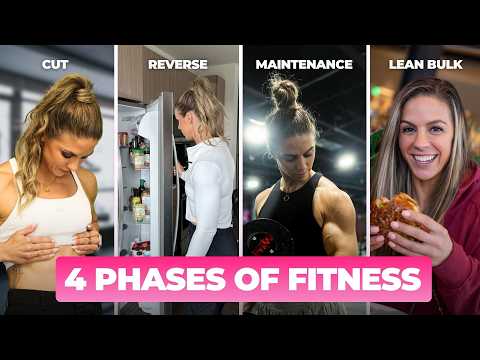 35 min
Lean Bulk for Women: Why the Scale Goes Up When You Eat More
Episode 377 · Jul 10, 2026
Cut, Reverse, Maintenance or Build: Which Phase Are You In?
Episode 33 · Mar 24, 2023
 30 min
Why Eating Less Isn't Helping You Lose Fat After 40
Episode 390 · Aug 24, 2026
Free Body
Transformation Assessment