
Episode 19435 min
How to Transition to Confident Intuitive Eating
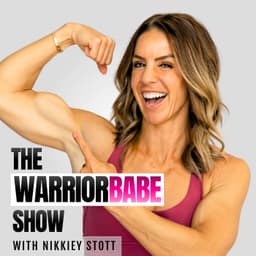
Listen to episode 194
In this episode Nikkiey Stott shares the journey from tracking macros to confidently embracing intuitive eating. After years of measuring food and...
Full transcript
00:00Real quick, the only ask I could ever have of you guys is to help spread the word so we can help more women lose body fat, build muscle, reach their goals, and feel insanely confident. And the only way we can do that is if you rate, review, and share this podcast. So the single thing I ask for you to do is if you could leave a review. It will take you 10 seconds, and it will mean the absolute world to me and may change the world of someone else. I became more confident in my choices. I became more confident in myself. I trusted myself more.
00:30I realized that I could listen to my body, and I could still maintain the same level of nutritional balance I had when I was tracking. And the best part, you guys, is when I finally got to this part of the journey with intuitively eating, it felt so freaking liberating. Because I was still hitting the goals that I had. I still was maintaining my body composition without having the added mental burden of tracking every single bite. Yo, yo, yo. What is going on, you guys? Welcome back to The WarriorBabe Show with Nikki Stott, co-founder of Warrior Babe.
01:05And on this podcast, we talk about mindset, methodologies, and tactics that will help you lose body fat, build muscle, be strong, and feel insanely confident. I'm your host, Nikki Stott, and welcome to today's episode, episode 194. And today, I'm going to be sharing something that's been a major part of my own journey. And that is specifically how to transition from tracking macros to confidently intuitive eating.
01:37So, as you guys know, like, I, for the past seven, six, seven years, have diligently tracked macros. And that gave me, like, such an incredible and amazing understanding of food, of portion sizes, of what's on my plate, of what my body feels good with, what it doesn't feel good with, and what it needs to have the right fuel, and to survive, and to thrive, and, like, all the things. And that phase of nutritional understanding laid the foundation for something even more powerful where I'm at now today, which is intuitive eating.
02:16So, today, in this episode, I want to walk you guys through that journey, offer you guys insights on how you, too, can trust yourself to eat intuitively without sacrificing your goals. You know I've said this so many times, or maybe this is your first time listening to the podcast, but when I teach macros, or our coaches teach macros, I want you guys to understand that it is a skill set that will serve you for the rest of your life. It's not another diet that you are following. And I also don't expect you to track macros for the rest of your life. I don't expect you to be carrying around your food scale, or to be whipping out your app when you're out to dinner with your friends.
02:51Like, truly, my goal with you, with humans in general, is, like, I understand that macros is a foreign concept for a lot of people. Whenever I talk to people or meet people, they're like, I have no idea what macros are. So, my want and my desire for you guys is to understand what macros are, be able to apply them successfully, go through the ups and downs, but then eventually graduate into the world of intuitive eating. But it takes, just as you guys know, which is not sexy to say, it takes time.
03:21I mean, for me to fully feel confident in my ability to intuitively eat, it took me upwards of six, almost seven years to be like, hey, I can do this. And some of you guys could do it faster, but some of you guys are not going to be doing it in the first year of your journey, if you were coming from not understanding macros at all. So, I just want to kind of lay down that, you know, timeline, that perspective, so that as I go on throughout this episode, you guys can understand that just as building your body and building muscle and changing your composition takes time, so does this concept that you can fully trust yourself to lean out of tracking macros
03:55once you develop the skill set to go into intuitively eating. But before we dive into what intuitively eating and all the things, I want to acknowledge the power of tracking macros and how it builds an incredible foundation for understanding your nutrition and gaining insight on foods and portion sizes and, you know, what a food, what you can look at a food and be like, oh, this is protein. Or you can look at another food and be like, oh, this is mainly carb.
04:26So, for those of you guys that may be newer to this concept, right, like tracking macros means and what it even means or what it entails or what it, like, you know, this is the macro hours. You know, I've talked about macronutrients all the way up through 194 episodes. It's the basis of this podcast. So, you know, maybe this is your first of the episodes that you're diving into and you don't know what this concept is. It means just monitoring your intake of macronutrients, that being protein, carbohydrates, and fats.
04:58It's not all about calories. It's about ensuring that your body is getting the right balance of the nutrients to meet your goals, whether it be muscle building, fat loss, maintenance, any of those categories that, you know, I've talked about those different phases or depending on where you're starting out. Typically, majority of you guys have no idea what macros are. Like I said, tracking macros is like learning a new language. So some of you guys may be listening to this. And if you are at this stage, you may not even know what those phases even mean, muscle building, fat loss, or maintenance.
05:28Some of you guys just want to lose weight. Some of you guys don't even, quote unquote, you know, you have five pounds to lose, which when you enter in the world of macronutrients, that may mean that you have to go into the maintenance phase. So I'm not going to really dive into those concepts because I don't want to get lost in the sauce with you on that. There's definitely an episode that I've recorded on what the different phases are and what they mean and how they're applicable to where you're at in your journey. But for the concept of just like tracking macros, it's just making sure it's not just about calories. Like calories are the, you're eating 1800 calories in a day,
06:00but like where are the, what is making up those calories? And that is your macronutrients. That is how much protein you're eating a day, how many carbohydrates you're eating a day, and how many fats you're eating in a day. So like, and that's a percentage of that to equal out to the overall calorie intake that you're eating. Some people, and I mean, I go on a thought trip here, but some people focus on calories, but like they could be eating all carbs and fats and little protein. But in order to meet some types of potential goals, you have fat loss, maintenance, building muscle, you need more protein, moderate carbs and low fat,
06:33depending on where you're at in your phases. So just like to keep that on a high level thought, if you've never heard of what macros are, and, and, you know, without diving into the sauce of like the different phases, and you do X, Y, and Z in those phases and da, da, da, da, da. You just need to be giving your body protein, fat, and carbs, and the right balance of those nutrients to meet your goals. It's not just calories. Okay. So like I just mentioned, tracking macros is, it's like learning a new language. At first it can feel overwhelming. It can feel tedious. You're measuring portions.
07:04You're logging every meal inside of your app. And I trust, like I even say this to our community of worry babes. I'm like, yeah, at the beginning of your journey, it's going to feel like work and it should. It's something you've never done before. So you're basically like hopping on your bike for the first time with training wheels on. And it's going to take you time to feel comfortable without the training wheels on. Take them off and you're going to be able to glide. So at first when you're tracking your macros, it's tedious. You're scanning barcodes. You're running around your kitchen. You're trying to put meals together.
07:36And it could take you upwards of an hour to two hours at the end of a night to do that. But trust, like over time, as you develop like the intuitive sense for what foods contain and how much of each macronutrient is in them, or if you're eating the same, you know, types of snacks every single day, that two hours, that one hour is going to turn into 30 minutes. And then it's going to turn into 10 minutes. And it's going to turn into three minutes. And then you're going to be able to go throughout your day, not even worrying about tracking inside of an app, get to 4 p.m.
08:07Be like, okay, I need to log all of my meals into my app. Because the app starts to recognize too what you eat. So it's all saved. So it may seem tedious at first, but it should. Okay? If it was easy, everybody would be doing it. But after years of you doing this, and after years of you tracking, and you start to see food differently, you start to understand these concepts. You start to understand portion sizes. You start to know what food contains and what's made up of protein, fats, or carbs.
08:38You no longer need the food scale to know that a chicken breast on your plate contains about 30 grams of protein, or that a spoonful of peanut butter adds, you know, a good dose of, you know, 32 grams of fat if you're doing two tablespoons. And that's your fat content for some of your day, right? Like that's 32 grams of, I'm sorry, it's 32 grams in serving size. And that's about 16 grams of fat. See, I can just like spitball that out of my head because I've been doing this for so long.
09:08For me, those seven plus years of tracking taught me portion, control taught me nutrient awareness and the effects of the different foods that has my body. And it taught me to be able to look at, you know, I can, I can, I know that two tablespoons equates to this amount of fat grams and peanut butter, or, you know, this three ounces equates to 24, 25 grams of protein in a chicken breast, right? So it's like, I can look at these things and I can eyeball these things. And that education became the foundation for intuitive eating.
09:43I can't tell you how sometimes I get really frustrated when women think that they are intuitively eating at the beginning of their journeys, and they haven't actually grasped the concept of what I just walked through. You can't intuitively eat without graduating from understanding macros. This, that education of what you gained from tracking your food, what you gained from logging your meals, what you gained for looking at portion controls, what you gained from the awareness of the different types of foods that you're eating on a daily basis, and that you can get down to saying like,
10:15this is how many grams of fat is in this serving size, or what I just talked about. You can't intuitively eat without graduating from that, those concepts and that skill set. You can't have intuitively eating without having the skill set of tracking your macros. And because that is literally the foundation that you have to have first before you can even move to intuitively eating. Okay, so what is intuitively eating? Intuitively eating is basically like an approach to eating
10:46that is based on listening to your body's hunger and your fullness cues, rather than following a strict rule of food, or logging every single meal, or, you know, putting everything on a scale, and seeing where you're at with what that is weighing, or X, Y, and Z. It's an approach to you eating based off of what you need for your body, your cues, but also like being able to tally up where you are during your day,
11:18roughly speaking, and being able to say, okay, at the end of my day, I definitely ate around 2,000 calories today, making up, focusing majority on protein, letting the rest come from carbohydrates and fats. It's about eating when you're hungry. It's about knowing those cues. It's about stopping when you're satisfied, and enjoying the process without having the guilt or the anxiety. You have to log every single meal. You have to be strict with your food. That's what intuitively eating is. And again, like, a lot of people don't have that awareness
11:48when they're first starting their journey of what a hunger cue is, or what a fullness cue is, or the discipline to stop when they're satisfied. Or even recognize that how much food they are eating in a day, and that they can confidently say at the end of the day, oh, yeah, I had 2,000 calories, and, you know, I focused heavily on my protein intake, and the rest kind of just settled away side with the, or settled with carbs and fats. You can't confidently do that without logging and tracking and going through that phase.
12:18So I just, like, want to keep reiterating that, because I think it's a really frustrating thing when I hear women say, oh, yeah, I eat healthy. What does that mean? Oh, well, I have X, Y, and Z in a day, and then I can basically, in my head, tally up that math, and it's, like, around 1,000 calories. And there's, like, I eat healthy, and I intuitively eat, but, like, how long have you, like, how long have you been in this journey that you've, and how long have you been trying to get to your goals? And it's, like, I'm still struggling to get to my goals. Because, like, the foundation of which you need to lay down for yourself first
12:50has not been laid down. And it all takes time. So that's why I think a lot of people get frustrated, is because these things, and these concepts, and these skill sets aren't something that are going to be built overnight. They're something that take time, months, years, to even get down confidently. So, ladies, are you feeling frustrated with body changes you're experiencing during menopause? It's time to take control. If you're between 45 and 65 years old, and tired of struggling with body fat,
13:21and muscle loss, Warrior Babe is here for you. At Warrior Babe, we've helped over 18,000 women, just like you, lose body fat, build toned muscle, and understand their bodies better with personalized plans based on hormone and thyroid testing, and more. Imagine knowing exactly what your body needs to see real results, and results that last. Look, don't wait anymore. Take charge of your health and join our community of strong, empowered women. Visit WarriorBabe.com
13:51forward slash apply today to start your transformation. That's WarriorBabe.com forward slash apply. All right, let's get back to the show. Yeah, I just like, that's what I wanted to kind of just paint the picture of for you guys in terms of this is what McInerney treatments are. This is how tracking McInerney to begin your journey is, but then like, what is intuitive leading? What does it look like?
14:23Ladies, are you feeling frustrated with body changes you're experiencing during menopause? It's time to take control. If you're between 45 and 65 years old and tired of struggling with body fat and muscle loss, WarriorBabe is here for you. At WarriorBabe, we've helped over 18,000 women just like you lose body fat, build toned muscle, and understand their bodies better with personalized plans based on hormone and thyroid testing and more. Imagine knowing exactly what your body
14:54needs to see real results and results that last. Look, don't wait anymore. Take charge of your health and join our community of strong, empowered women. Visit WarriorBabe.com forward slash apply today to start your transformation. That's WarriorBabe.com forward slash apply. All right, let's get back to the show. If you've spent the time tracking your macros and you're learning about portion sizes, you've already laid down
15:24the groundwork to transition into intuitively eating with confidence. What I will say is for many people, the idea, once you, if you are, if you can grasp that concept, what I just said, when you've worked for five years at that concept, and this is where like personally came into my journey to as well, the idea of intuitively eating and transitioning of that to that can feel scary because for me personally, like I relied on the external methods like tracking apps or, you know,
15:56feeling confident that if I'm logging my meal inside of my fitness pal, I know exactly where I'm at at the end of the day, that's helping me to guide my eating in a daily basis. So breaking that can feel scary because you have to fully trust yourself that you have the discipline to do the intuitive leading aspect. But like I said, if you've tracked macros for so long and you've learned what it looks like, what foods are, portion sizes, nutrient awareness, then you've already allowed the groundwork,
16:27really down the groundwork. Now it's just like allowing and trusting and fully, trusting yourself fully in your ability to transition to intuitively eating. So this is what I want to share with you guys, how I transitioned from tracking everything that I ate to trusting myself with intuitively eating, but knowing too that sometimes you guys, still on a daily basis, I will throw in my egg weights on the scale in the morning and log or weigh that out, but I won't do that with,
16:57I'll do that for maybe 10% of my food items in a day. I won't do that for all of them. So, but, and then too, side note, maybe like a couple months or a couple weeks in the year, if say I'm going on, I went on vacation, I come back, like, or I feel like I'm a little bit off and I'm not eating enough in the day and I need to bring myself back to baseline and balance of like eating the 2000 calories or more, then I will spend time like a week
17:27just tracking and getting back in the habit and reminding myself of how much I do need to eat in a day. So I just want to say like, that's a part of that intuitively eating journey. Like, you, 80, 90% of the time will be intuitively eating, but maybe the 10% is where you're coming back for a week and, you know, here and there in the year, you're just reminding yourself the habits and giving yourself a refresher to the awareness of things. So, for me,
17:57like I share, like after meticulously measuring food, I noticed I no longer needed to rely on the food scale or rely on the app. Like, I had internalized this knowledge. When I looked at my plate, I could roughly estimate the amount of protein, roughly estimate the amount of carbs, the fats that I was, you know, consuming and eating and I knew what a well-balanced meal looked like and I could trust my body's a bit like, you know, giving me the cues and the signals and the things that I needed to, that I needed to have, I could trust that more.
18:30So, after I consumed a meal, I knew what being satiated felt like. If I maybe lacked a little bit on giving myself enough carbohydrates in a meal or enough protein mainly in a meal and I felt hungry 30 minutes after then I knew, okay, let me just go back and have a little bit more protein because protein is what makes me feel full and satiated and like stops like the cravings of wanting more food. So, the first step for me, so like that's like, I was, I internalized
19:01that knowledge and like you have to internalize that knowledge and what that, what that means is for you is you have to be able to to basically say everything that I just said, not only look at plate and look at food and roughly estimate X, Y, and Z in protein, fats, and carbs but also be able to trust your body signals and your understanding what your body is telling you and that sometimes is really hard for individuals to do. So, the first step for me was letting go of the need to track every meal and like I said, that can be scary
19:32because I rely on external, external validation essentially from those tracking apps. So, instead of immediately going cold turkey, I eased into it. I started only tracking certain meals or certain days of the week giving myself the freedom and this is how I typically go about it with my clients too as well to eat intuitively on the weekends or during social events and then that gradual approach allowed me to test my ability to control portion sizes without the crutch of tracking. So, like taking, again,
20:02not going cold turkey but like, okay, for example, I'm going to go Monday through Friday but like, I'm going to intuitively eat. It doesn't mean I like, oh, it's the weekend, fuck it, like, you know, I'm going to go do whatever I want, not eat or binge or, you know, have whatever I want to have. That's not, you still have to have control over yourself. So, I allowed myself to do that and this is basically what I allow some of my clients I've been working with now for like four or five years and again, like it took me this long
20:32because it took me like six years because I basically was trusted, had to trust in myself to do it but when you have a coach like the guy, the women I still work with to this day, it's like three, four years, we're kind of like there already so you can cut down the time in half when you're working with somebody that's a professional that can help you understand this and ease into it with you which I highly recommend. So, over time with me doing that approach I became more confident in my choices. I became more confident in myself. I trusted myself more. I realized that
21:02I could listen to my body and I could still maintain the same level of nutritional balance that I had when I was tracking and the best part you guys is like when I finally got to this part of the journey with intuitively eating it felt so freaking liberating because I was still hitting the goals that I had. I still was maintaining my body composition without but without having the added mental burden of like tracking every single bite and that's like what I hope happens for you guys too as well. You have to be
21:32willing and patient to go through this journey. It was it is it's liberating like I can know and go out to a restaurant and be like oh okay this is protein this is carbs and this is fats and like this is what I need to consume and I can like almost sometimes majority of the time I'm always and you this is how it should be anyway at any restaurant you're asking for more protein like I'll go in the true foods and I'll get a Korean noodle bowl which is a lot of carbs but it's delicious and I attribute it to my carb intake for the day but protein lacks
22:05drastically in there there are like three ounces ain't no three ounces it's definitely two ounces so I always ask for more like a side chicken breast that I can mix into my to the bowl and you're probably going to do that for a lot of things because a lot of restaurants which is crazy to me lacking the protein content that they serve but anyway so that's like a little bit about how I transitioned it for me but like if you guys are currently tracking macros and you're wondering how to make the leap to intuitively eating I have a couple steps
22:35I want to help you to be able to transition with confidence so first and foremost I've already kind of laid it in to you guys here before you transition make sure that you have a solid understanding of macronutrients of portion sizes of how different foods affect your body what different foods are made up of protein fats and carbs this knowledge is your safety net when you let go of tracking if you can if you can look at your plate and know roughly how much protein
23:06fats and carbs there are you're ready to take the first step towards intuitively eating so and I'm going to say again like that takes time like I just want to keep like just adding those little that little nugget there because it's not going to happen overnight like if you are somebody that doesn't know what macronutrients are like I said at the beginning and you're just starting to get into the habit of tracking them and logging all of your foods that's you need to do that confidently you know along the way of being able to like for me looking at a plate of food
23:36knowing roughly how much protein fats and carbs were there I would say took me like confidently took me at least two years to like feel that way that I knew what was on my plate and I knew this consisted of protein fats and carbs like when you're there then you're ready to make the first step but you have to build your nutritional knowledge you have to hands down no questions asked number two I would say start small like begin by intuitively eating for one meal a day
24:08or on specific days of the week like I said like for example you could choose to eat intuitively eating you can choose to eat intuitively during the weekends or social events or when you're traveling where tracking might be inconvenient but you need to pay attention there when you're doing that you still have to have awareness for the choices that you're making and how it's impacting your body pay attention to your hunger to your fullness cues and then you have to practice estimating the portion sizes based on
24:39step one based on your knowledge and you also have to apply some type of discipline because it's easy to be at a social event and see the desserts and want to just like eat as many little cupcakes as you want that's the first thing that came to my mind you have to be able to say no I'm only going to have one and that's it okay number three is trust your body signal so one of the biggest shifts from tracking to intuitively eating is learning to trust your body again listen to your hunger
25:10listen to your satiated signals if you're genuinely hungry eat if you're feeling satisfied stop if there's still food on your plate even if there's still food on your plate like you need to know this is what I said like a little bit earlier you need to have the discipline of like okay this is enough I'm done like I'm satiated I feel you have to become aware of those two signals hungry and being satisfied and then reconnect with your body's natural ability to regulate food intake you have to be
25:41like it's a type of awareness you have to be in tune with with your body this one was the hardest one for me the fourth one letting go of guilt intuitively eating is not about perfection and when it comes to tracking macros sometimes you will find you have to be perfect to get your macros within plus or minus five in a day when it comes to intuitively eating it's not about perfection there will be days where you eat more or less than you expected and that is okay trust your body that it will balance
26:13itself out over time and so this is where you need to remove the guilt associated with food and allow yourself the freedom to enjoy meals but again with control and self-awareness and then the last one is and this is where I'm currently at like full send is just because like just stay mindful of your goals for me it's maintaining my body composition so just because I'm not tracking doesn't mean that I lose sight of that goal of maintain like it doesn't mean I'm going to you know gain 20 pounds
26:45it doesn't it doesn't mean that I lose sight of like I want to maintain my body composition I still want to look lean I still want to look still have you know look like I have muscle definition and x y and z so keeping your fitness and your body composition goals in your mind and continue to prioritize that and then continue to prioritize you eating enough of the right types of foods in your day that's going to help you maintain that goal stay focused on that goal fuel your workouts and fuel your recovery
27:15so those are like some some of the ways that I would transition if I were you if you're thinking like you know and like I would say general of thumb you need like three years of two three years of tracking your macros consistently two three years and like gaining the knowledge and understanding of it and then also building the confidence and the trust within your ability that you can transition to this so one is just again building the nutritional knowledge if I'm looking at timelines like two years then like for the next year
27:46maybe and you have to be at that timeline you're working with a coach because that's going to person going to hold you accountable then you would move into starting small you know practice a day or practice a meal and that could take you to do that honestly and truthfully six months to a year maybe like two and three are together trust your body signals so that's like six that's the portion size and starting small is like the six months and the next one is like trusting your body signals which is the other six months and all of
28:16this you're learning number four which is let go of the guilt and then you can confidently be like okay maybe at year three four into your journey you can try and full send it with trusting your ability while still staying mindful of where you are with your goals because by this time you should have already accomplished some of the goals you had in mind for yourself so and like after saying all
28:47that and even just like giving you guys those steps like I like I even feel like it's a little bit intimidating and overwhelming like intuitively transitioning can be and feel intimidating especially if you're worried about losing control and that is some of the common fears that I personally had and some of the common fears I've heard my clients personally had too like what if I overeat or what if I gain more weight or like how will I know if I'm eating enough to maintain you know the goals that I have for myself so I want
29:17to talk about those specific concerns a little bit here the fear of overeating if you spent years tracking your macros your body is likely very good at self regulation for me specifically that's how I've noticed it within myself my body is really good at self-regulation so the fear of overeating often stems from a more of a lack of trust in knowing your body signals so if you feel like your fear of overeating like I know that there's been times in my intuitively eating journey where I've definitely ate more than I should have but I am aware of my body
29:48signals and so I trust my body signals because I get to a point of feeling really uncomfortable I'm like I've I'm done I've had enough once you practice tuning into that you'll find that your body naturally is saying hey stop it naturally balances itself out so I get that I want to acknowledge and validate the fact that you have that intimidating feeling the intimidation of in transitioning to overeating and I understand there may be a fear of overeating but if you've done this and you've laid down the foundations and you have the knowledge
30:18and you're aware of things you have your body will balance out I know for me along my journey I had the worry of if I was eating enough in a day I know there's definitely been some times my intuitively eating journey where I've eaten only like 1200 calories in a day but if you've already trained yourself to prioritize protein even without tracking you can continue to focus on protein rich meals knowing that you're fueling your body with the nutrient that it needs to support your goals whether that be muscle growth
30:48or fat loss like if there's any macronutrient to focus on 110% when you're intuitively eating it's just making sure that you're getting enough protein in the day because that's ensuring that you are the goal is still in mind that you are focusing on body composition goals and then last little tip there for the concerns is intuitively eating isn't an
31:18all or nothing approach so if you can still return to tracking temporarily if you feel like you're getting off track and that's what I talked about a couple minutes ago in terms of like if I'm not eating enough to that one concern then I would be like hey I check myself and track my meals for a week so that I can remember and remind my brain of and my body and my cues and all the things this is what this feels like this is what this looks like so it's not like you have to
31:48go full send intuitive eating and you're never tracking again or you're never paying attention to bringing awareness to the foods that you're eating or using the apps as a benchmark to see where you're at reminding yourself you can allow yourself to return to tracking temporarily if you feel like is to stay flexible and trusting yourself to make balanced choices over time
32:19that is the benefit and the amazing thing that intuitively eating does it's flexible you're trusting yourself and you're making balanced choices and you're staying in control and your self awareness on the food that you're deciding to eat the decisions you're making and your signals that your body is giving you so all in all really like the most important aspect of this journey from tracking macros to intuitively eating is trust
32:49it's trust in your knowledge it's trust in your body it's trust in your ability to make balanced choices about the need for external tools and it's a gradual process and it's okay to take small steps forward to getting to that freedom of intuitively eating it's not just about letting ! go of all structure it's about using the foundation that you've built from years of tracking to make confident decisions in your nutrition it's about listening to your body it's about honing in the needs that your body needs while
33:19staying mindful of the goals that you've set out to accomplish for yourself and you can do that again like I don't expect you guys to be tracking macros for the rest of your life it is a skill set that will serve you for the rest of your life if you lay down the foundations of it and you can transition confidently after laying the foundations to intuitive leading so guys thanks for tuning in I hope that you enjoyed this podcast and take away the insights that you need
33:49especially if you're on year two three of your journey and you're like what's next well I hope this you've applied consistency and you've applied patience and you're here at this part of your journey of like I don't want to have to track macros I feel too maybe you feel some type of way you feel like you're you're being confined to the scale you're being confined to the tracking app and it almost you feel like there's a certain point where you feel like burnout you're
34:20burnout because you're doing the same thing over again and there's a trust in you that's being like yo I can do this just let me try it and I just want you guys to try it and see what it's all about if you guys are worried take this episode to your coach and say hey like I'm two years in I want to do this and then work up the game plan to do it it it's
35:08more
This transcript was generated automatically and may contain errors.
Listen next
All episodes →Reverse Dieting: The Fix You Need to Make Fat Loss Actually Work
Episode 284 · Aug 11, 2025
Why a 1200-Calorie Diet Fails Women Over 40
With Dr. Stacy Sims
How To Get Ripped at 51 w/Alicia Erickson
Episode 221 · Jan 3, 2025
Free Body
Transformation Assessment