
Episode 21821 min
Mindful Eating Mashup for the Holidays
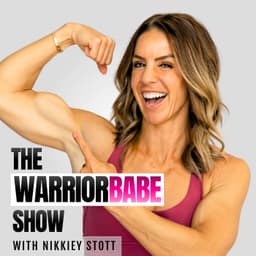
Listen to episode 218
In this special The WarriorBabe Show mash-up episode, Nikkiey Stott cuts through the holiday noise with no B.S. strategies for mastering mindful eating...
Full transcript
00:00Real quick, the only ask I could ever have of you guys is to help spread the word so we can help more women lose body fat, build muscle, reach their goals, and feel insanely confident. And the only way we can do that is if you rate, review, and share this podcast. So the single thing I ask for you to do is if you could leave a review. It will take you 10 seconds, and it will mean the absolute world to me and may change the world of someone else. Social events can feel like a landmine to your nutrition goals and to your fitness goals, right? So maybe you're wondering, how can I enjoy myself without feeling guilty or derailing my progress?
00:36Or can I really stay consistent when I'm surrounded by drinks and food and friends that are also indulging in these luxuries as well? And the good news is you 1000% absolutely can. What's going on, you guys? Hey, so most people gain weight during the holidays and they spend January absolutely regretting it. But here's the truth.
01:06It doesn't have to be that way. In this episode, we've packed a no BS mashup of advice on how to eat mindfully during the holidays without feeling deprived or like you've completely lost control. So if you're having cravings or you're having guilt, let them be gone. It's time to own your choices and make this holiday season work for you. Enjoy. I feel like the first half of the year is like a holiday every three weeks. So or it could be like a night out with your friends. This one time isn't going to mess you up.
01:37It's not going to make or break your progress. What matters the most is like your consistency, your behaviors and habits around these events. And truly giving yourself the permission to enjoy the event while staying intentional will make all of the difference and how you feel about it before and afterwards. So one of the best ways to feel confident at an event, I personally think, is to plan ahead.
02:08But don't overcomplicate it. So I want to give you guys a few things that you can do before you show up to the event. But for somebody that may be working towards a goal or you're new to starting your journey and you're trying to rewrite your habits and like you're trying to maybe you're four weeks in and you have the social event. So one, you know that it's not going to deride your progress, but also be consistent when you get when you're done the event. But two, maybe you have a hard goal that you're trying to get to. Maybe there's a vacation. Maybe there's a wedding. Maybe there's just something that you want to prove to yourself. And you do need to kind of plan ahead.
02:42So if you know, the first thing that I would say is like if you know what the event will have, like types of like specific foods, like if it's a barbecue, it's a buffet or it's like a sit down dinner where you where you can plan your meals around it, then I would be more aware of that. Like if there's a menu, for example, you know where you're going to dinner and you can search the menu online, then I would and I've told thousands of women to do this and it truly helps them mentally. I would recommend that you look at that menu and you see what options that they have.
03:15And then you can kind of plug and play that with your MyFitnessPal to see how you can plan your other meals around that meal. Or another example, as you go to dinner, will be like a higher carb or higher fat. You can aim for more protein and veggies earlier in the day and all of those other meals around the big meal. It's not about restricting yourself. It's about making adjustments that allow you to enjoy the event or the holiday without any type of stress. First, let's just talk about like what cravings are and why they happen.
03:48So first and foremost, they're like intense feelings or they're intense desires that you want to eat a specific type of food. And they're different from like hunger because they're actually about you wanting a very specific food like chocolate, for example. Or have you ever had a craving where you're like, oh, I really want something salty or I want some I want chips or I want ice cream rather than just just wanting food in general. Like hunger is like, oh, I'm hungry. I need to have like a meal right now. Craving is like I want chips. I want ice cream.
04:19I want a piece of pizza. I want chocolate. And craving specific like sometimes can kind of come out of nowhere. And sometimes they can really get in the way of like the best intentions that you have for yourself in the day. Have you ever noticed like you have a specific desire for a set of said type of food like chips or ice cream or chocolate? And then but you just had an amazing day of following like you went to the gym, you ate well, you stayed hydrated. But then all of a sudden at the end of the day, you have these cravings and it can sometimes derail the fact that you just had and set out on an incredible day for your intentions that you woke up for that day.
04:58But then at the end of the day, it's like, bam, you have this type of craving. So why do they happen? I feel like the biggest reasons why they happen and what I've seen with working with hundreds of people is the emotional triggers that you get from being bored or you get from being stressed or even from being happy. Like you had a big promotion at work. And so you're like, I'm going to celebrate and then it leads to this emotional trigger of going out for pizza or going out for a glass of wine or, you know, it ripple effects.
05:32Or the other night of what I just talked about, it's like, maybe you set out for an intentional day and you successfully did that. But now you're at home and the stress of the kids running around or the stress of maybe a conversation with your partner or maybe the stress of the day is getting to you. And so that is a point of which is an emotional trigger. And at that point, think about how many times have you been in those emotional feelings. Think about how many times you've reached for a snack because you were stressed out or because you wanted to celebrate, right?
06:03Think about the times that that's happened. And there's room for all types of foods when you're having a balanced approach to it. So when you stop like almost like demonizing certain foods, then they lose power over you. So if you just view foods as neutral, chocolate's neutral, a piece of pizza is neutral, protein, chicken, it's neutral. You're not labeling it as something. And so there's room for all of what I just said if you're allowing yourself to have a balanced approach.
06:38And so that brings me into the next one of how you guys can handle cravings. What I kind of mentioned earlier is like plan for your indulgences. Like depriving yourself completely will backfire. Instead of banning your favorite desserts, your favorite treats, you allowing yourself to have a couple pieces of candy around this holiday season, plan for them in moderation. Like if you love like I love going out with friends sometimes on weekends or even weekdays. And I love knowing what this restaurant offers in terms of desserts.
07:11And so if I love having that, I'm going to allow myself to have it. I'm going to allow myself to include it in my plan so I don't feel like I'm breaking the rules. And you guys can do the same exact thing. When you plan for these types of indulgences, you can actually enjoy them without feeling like you failed or like you've given up or like you lost control. So the mindset that comes from after having an indulgence is like again, you got to be kind to yourself and give yourself grace and know that you plan for this and not allow yourself to feel like you've lost control or failed.
07:42It's like more of a mindset thing. Like you can't go in the next day and then be like, oh, I got to, you know, go work out hard and I got to go run a marathon or I got to go run like five miles because I just had this for dinner last night. That's not being successful and you actually planning for these indulgences. You're still beating yourself up afterwards and you're still acting as if you lost control. Like if you do it the right way, you're feel at ease with it and you feel like you actually have control over the situation and that you didn't lose your power over the situation. Sometimes we confuse, which it's the same control in our brain, thirst with hunger or cravings.
08:17So when a craving hits, go drink a glass of water and see if it subsides. If you're still craving something afterwards, after a few minutes, then you can make a more informed decision about whether or not you want or need or whether you should indulge. Quick break. If you're finding this episode helpful so far, it would mean a lot if you could hit pause for just a second, leave a quick rating or a review or share it with someone who could benefit from it.
08:48Your support helps more women discover these tools to build muscle, lose fat and feel confident. Thank you so much for being a part of this journey with me. Actually, I think this is a really cool topic to be talking about because we just kicked similar thing off inside of the Warrior Babe VIP program. We did a 60 day, the babes inside are doing a 60 day lifestyle challenge. And so we are encouraging the babes to give up alcohol, to focus on meal prep, to focus on their steps, to focus on strength training and to focus on their mindset.
09:24And, you know, I think all of these pillars really make up a lifestyle change rather than just focusing on another diet to follow. So many people often use a term of diet and lifestyle change interchangeably. However, while they kind of like seem similar, I believe that there are some very, very important differences between the two. Diet is like, let's just take a temporary approach to food.
09:57And it's usually focused on achieving some specific like health goal or addressing a particular health issue. Or, you know, for instance, someone might adopt a like a low carb diet to lose weight or to go gluten free because they're managing some type of like celiac disease. And like diets can be helpful in the short term. Like I don't want to totally like discredit the fact of that word, but they often require a lot of willpower. They often require to they often are very difficult to sustain. And they may not provide like the necessary nutrients that your body needs for optimal health.
10:31Not just to speak to the word diet in terms of like people having to achieve specific health goals or addressing specific health issues. Women out there jump on tons of different diets in hopes of achieving some type of instant gratification result in X amount of time. And so like they're all out. There's low carb diet. There's keto diet. There's freaking like the 21 day fix.
11:04Like there's so many things out there that require one to drastically stop all of the things that they are doing. Put on mad restrictions and rules in order to get to X amount of weight loss in X amount of time. Typically, it's like 21 day fix, 21 days. Some people expect immediate results with a keto diet. And I've talked about that in previous podcasts on what happens with immediate results. But then what happens when you start actually eating that one macronutrient that you can't give up forever because it's not sustainable.
11:37You know, there's there's just people the word diet like people think of it in terms of like I'm going on a diet because I need to lose 10 pounds in 30 days. And so I'm going to cut out everything that will that I've been doing and get to that goal in 30 days. And then once the goal is achieved, then I can go back to doing all the things I was doing before I set out to achieve that goal. That's not a lifestyle change. That's just like you getting on and off the hamster wheel of losing and gaining the same 10 pounds over and over and over again.
12:12And that's what these diets give you. They have their own set of rules. They have their own set of restrictions. And what I firmly believe on the other hand is a lifestyle change. You will. You've heard me say this if you listen to the podcast. If not, you're going to hear me continue to say this. This is the first time you're hearing it. But I believe that macronutrients are not a diet. I believe that they are a skill set that can serve you for the rest of your life. If you understand what you're putting in front of you that consists of food on your plate and you know what that food is made up of,
12:47then you have empowering skills to be able to make decisions for every other meal that you eat moving forward. I believe that to be like a lifestyle change because you're gaining skills, you're gaining understanding, you're learning insights about nutrition that are able to carry out long-term, apply to long-term commitments for you to living a healthy and balanced life. So you don't have to set specific rules with macros. You don't have to set specific restrictions like other diets do.
13:20Sure, there's rules with macros, but they allow you to eat the foods that will help you to manage a sustainable plan in the long-term. Like they're not, we're not, the macros aren't asking you to eliminate anything. They're not asking you to drastically cut down on calories in one specific group. They're saying, hey, here is what you should be eating based off of your lifestyle, based off of your goals, based off of your, you know, you as, where are you, where you're at as a human.
13:55I mean, diving even deeper into maybe some lab work and understanding how metabolic processes work for you or where sex hormones are, where your hormones are in general, where your cortisol is. Like what is so cool is that there can be a unique number for you to follow on a regular daily basis. Nobody should be following the same macronutrient numbers because we are so vastly different. And what the diets offer you is like, hey, here's a cookie cutter program that I found from online.
14:29That's a PDF that came from my cousin's friend's sister's daughter and they're all following it. And so you should follow it too. At Warrior Babe, we pride ourselves on not giving like meal plans for our babes, our clients, to follow on a 60, 90, 24 month period, right? We give them meal plans at the beginning to see that this is a tool and resource on how you're able to like identify how to put some macros together and some meals together on a daily basis.
15:00But a meal plan is restricted in of itself because it's like a meal plan is telling you, oh, you have to have this for breakfast today. You have to have this for lunch today and you have to have this for dinner today. Like there is a wide variety of so many foods out there in our world that you can incorporate into your plan rather than the three options that are given to you in each one of these meals,
15:30which some people don't find enjoyable, but they eat it. But then the reason why they get off of it after 30 days is because they don't like it and it's not enjoyable and it's not sustainable. And so they go back to all of the things that they were doing prior, which is that hamster wheel of gaining back and losing the same 10 pounds over and over and over again. People are only looking at the surface level what diets can offer you, right? Quick results. If people can shift, and this is what I'm hoping that you guys understand within this podcast episode,
16:03if people can shift from that mentality, that mindset of instant gratification and, oh, here's just a simple plan that I can follow for 30 days and shift to like, oh, okay, this lifestyle bit that Nikki's talking about may be a little bit harder to do, which it is, but anything worth doing, you guys, requires hard work, consistency,
16:37and changing the way that you are navigating the type of result that you're going after. Like, same result that people want, losing weight, getting toned, building muscle. The diet aspect has a different type of mindset to get you to that goal. It's probably, it's easier, but like, it's also not sustainable. It's not long-term and you're constantly, I don't actually argue that's easier. It's harder because you're constantly in this loop of gaining and losing and restrictions and rules
17:10and pressure and unhappiness. Same goal though. That's the diet aspect. Lifestyle, sure. The lifestyle change. Well, more so comes as like, okay, you can find any fitness program out there. You can find somebody giving you a workout program. You can find somebody doing an app. You can find somebody giving you a nutrition protocol. You can find all of that. But like, what makes a long-term change, a lifestyle change, entirely like applicable
17:46and like one that you are able to, you know, jump on board with, like what makes that, that is the behavioral changes that have to come into play. So like diets are like, I'm just stuck in this, I can, I'm going to just get rid of my habits for 30 days that have gotten me to where I am, to where I'm not happy to make change. But then the habits come right back.
18:18The bad habits come right back. Whereas a lifestyle change is like, okay, I'm learning these triggers that I have with myself when it comes to food. I'm understanding that I am not eating enough and this is why and being insightful into taking this information and getting rid of the bad habits that got you to this point or understanding the triggers more that got you to this point or learning the knowledge
18:53as to, oh, eating less actually isn't ideal. I need to eat more. And you're learning all of these, these facets about you, which you should because you're so individual. There's different triggers that you would have than somebody else. There's different beliefs and stories that are being told about not about eating less food than somebody else. There's different habits that you have than somebody else that got you to where you are that you're not feeling comfortable with yourself right now that led you to want to make a change. But I want you to not make the diet change.
19:25I want you to make the lifestyle change. And I want you to understand and learn these behaviors about yourself, which what we do at Warrior Babe, and we're able to work. What we pride ourselves on is like our coaches don't just give you these plans that I'd mentioned. They build a relationship with you to understand how you operate, how you think, your stories, the narratives that you're telling yourself on a daily basis, the triggers that you have. And from building that relationship and being able to professionally give you some tools and
20:00resources to create new habits, to shift the behavior, that's going to lead you to the ultimate transformation. That's going to lead you to a lifestyle change. So with that said, guys, I love y'all. I appreciate you all. Cheers to lifestyle changes. And I'll see you in the next episode. Peace out. Hey, really quick before you go. I have one small favor to ask. If this episode brought you value or sparked something in you, take just a moment to hit that
20:35review button, your rating and review make all of the difference, helping more women discover the tools they need to transform the fitness and their confidence. It takes less than a minute, but it can change the path of someone else's journey. Thank you so much for leaving that review. I appreciate you so much. Thank you. Thank you. Thank you. Thank you. Thank you. Thank you. Thank you. Thank you. Thank you. Thank you.
This transcript was generated automatically and may contain errors.
Listen next
All episodes →Reverse Dieting: The Fix You Need to Make Fat Loss Actually Work
Episode 284 · Aug 11, 2025
Why a 1200-Calorie Diet Fails Women Over 40
With Dr. Stacy Sims
How To Get Ripped at 51 w/Alicia Erickson
Episode 221 · Jan 3, 2025
Free Body
Transformation Assessment