
Episode 6529 min
Strength Training for Strong Bones During Menopause

Listen to episode 65
Chapters
In this episode
Menopause shifts your hormones, and the episode explains that falling estrogen goes hand in hand with declining bone density and a higher risk of osteoporosis. Nikkiey Stott draws on nine years in healthcare, including years in a nursing home and an emergency room where she saw fall after fall and fracture after fracture in older women. Her view is that strength training is the main form of exercise that builds strong bones, and the choices you make now decide how you move later in life.
She walks through five tips. Strength training increases bone density by stressing the bone so it builds new tissue. The muscle-bone connection means stronger muscles protect the bones beneath them. Progressive overload keeps challenging both. Training frequency and duration work best when less is more. And exercise selection matters, with free weights and compound lifts like squats, lunges and deadlifts doing the heavy lifting.
She also tackles the belief that you can't build muscle past a certain age, pointing to WarriorBabe member Cheryl, who built significant muscle from 57 to 60. Results may come more slowly during menopause, so her advice is to focus on performance goals, keep going, and become the woman who keeps up with her grandkids instead of watching from the sidelines.
Key takeaways
- Make strength training the primary focus of your exercise routine, and treat HIIT, running, boot camps and boutique classes as extras.
- Lifting weights and doing resistance exercise put stress on your bones, which signals them to build new bone tissue and increase bone mineral density.
- Building stronger muscles around your bones helps protect them and reduces your risk of falls and fractures.
- Apply progressive overload by gradually adding weight, doing more reps or moving to more advanced exercise variations over time.
- Aim for around four strength sessions per week, or even three, at about an hour max, because recovery is when muscle actually gets built.
- Treat each session as a real challenge and push outside your comfort zone instead of just going through the motions.
- Lean toward free weights, barbells and resistance bands over weight machines, and use the Smith machine as a stepping stone to build confidence under a barbell.
- During menopause, focus on performance goals like getting stronger rather than only aesthetics, since results may come more slowly during those years.
Questions answered
Why does bone density decline during menopause?
Nikkiey explains that hormone levels shift and some decrease during menopause, including estrogen, which is important to bone health. As those hormones change, bone density declines and the risk of osteoporosis rises.
How does strength training make bones stronger?
Weightlifting and resistance exercise create stress on the bones, which triggers a response to make them stronger and denser. That challenge stimulates the production of new bone tissue and increases bone mineral density.
How often should women in menopause lift weights?
Nikkiey recommends about four strength sessions per week, and says you could even argue for three, at about an hour max per session. Training for hours every day is overtraining and leaves no room for the recovery where muscle gets built.
Can you build muscle after menopause?
Yes. Nikkiey points to WarriorBabe member Cheryl, who crushed her fitness goals and built a lot of muscle from age 57 through 60, post-menopause.
What are the best exercises for bone health during menopause?
Nikkiey recommends compound movements like squats, lunges, deadlifts, chest presses and shoulder presses. Walking, jogging and stair climbing also stress the bones, but strength training should make up the majority of your exercise.
Are weight machines good enough for building strong bones?
Nikkiey says machines are fine for part of your routine, but free weights, barbells and resistance bands give more resistance and build coordination, core control and balance. The Smith machine is a good way to build confidence before moving to a barbell.
Full transcript
Nikkiey: Real quick, the only ask I could ever have of you guys is to help spread the word so we can help more women lose body fat, build muscle, reach their goals, and feel insanely confident. And the only way we can do that is if you rate, review, and share this podcast. So the single thing I ask you to do is leave a review. It will take you 10 seconds, and it will mean the absolute world to me and may change the world of someone else. All of the things that I talked about today will be the reason why things are different for you later in life.
What is going on, my friends? Welcome back to The WarriorBabe Show. Or if this is your first time listening to the show, welcome to the show, with Nikkiey Stott, co-founder of WarriorBabe. On this podcast, we talk about mindset, methodologies and tactics that will help you lose body fat, build muscle, be strong, and feel insanely confident. I'm your host, Nikkiey Stott. And welcome, you guys, to episode number 65, where I'm going to talk to my ladies that are going through, about to experience, or even past menopause.
This stuff that I'm going to dive into today is very, very beneficial. I've talked about controlling your body fat through menopause. I've talked about stories of women going through menopause. But with this podcast today, I want to put an emphasis on the importance of building strong bones during menopause and even post-menopause. You guys know the whole gamut of what happens during menopause. In short, all of the things get wacky with the hormones inside of a woman's body.
They shift, they change, some levels decrease. Estrogen is one of those, and it's very important to your bone health, right? With all these hormones shifting, something that happens is bone density declines as you're going through these hormonal changes. And with that, there's a huge risk of osteoporosis, which is so common in women going through this and in their later years of life.
So pre-menopause, perimenopause, going through it, and post-menopause, strength training is just so important. So this podcast is about building strong bones during menopause and overemphasizing the importance of strength training. But I want to talk about the reasons why. You guys know I have a background in nursing. I spent nine years in healthcare before I transitioned into fitness and made this my full-time career. I spent upwards of four and a half years in a nursing home taking care of elderly patients who were in assisted living or a skilled nursing unit.
So they needed assistance. They needed to be fully bathed or fully dressed, or they needed help doing that. It wasn't independent living. Independent living is completely different. And I spent four and a half years working in an emergency room where, man, and I talked about this in previous podcasts, the majority of women that came in were there for fractures, falls and broken bones, and they were in their older years of life. You can just look at someone and see how they are living their life on a daily basis.
Back in the day, for these women who are now 70 and 80 years old, strength training wasn't prominent. It was all about how to be skinny and lose weight, the next diet that was giving the next best weight loss, or the supplements that would give you weight loss, and X, Y and Z. It's only now becoming more apparent that strength training is so important. But I've seen it firsthand. That's why I share those experiences of seeing frail individuals and being able to tie it back to their probably early lives, where they weren't as active or they didn't strength train.
They didn't incorporate this type of activity on a daily basis to ensure that their future years were prime for their body, or at least still healthy in a sense where they could keep up with their grandkids and do more. Now, this is aside from any type of chronic illness or disease that may be passed along genetically. But you still have control of this aspect, and you have control of making sure that your bones and your body are strong for your later years by incorporating strength training.
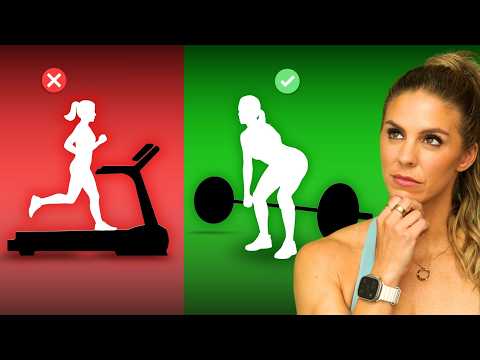
I'm all about you guys doing forms of exercise that you enjoy. But I'm honing in on strength training here. It's not HIIT and running and boot camp and circuit training and these boutique gyms like F45 and Orangetheory.
Sure, whatever, if you want to do that, great. Incorporate that into your routine. But make sure that the primary focus of your entire exercise regime is strength training. For this reason, you guys: strength training is the only thing that is going to help you build strong bones. Okay, I shouldn't say the only thing. It's the majority of the type of exercise that is going to help you build strong bones.
So I'm going to talk about all that today. I'm going to dive into five specific tips and reasons why building strong bones during menopause is so important, and how you're going to do that by focusing on strength training. We may get a little science here. Two of the things are going to be more related to your body, what happens during menopause, and the importance of creating these strong bones.
Then we're going to move into something I've already talked about before: the frequency and duration you guys should be doing. I just gave away number four. And I'm going to share some things at the end that you can incorporate into your everyday routine. I'm all about you guys listening to this podcast, then getting off this podcast and incorporating the things you're learning and taking action on them. That's the only way you're going to gain confidence in yourself that you can do these things.
You're going to be inspired, and you're going to develop the results that you want. Because if you just listen to this podcast and do nothing afterwards, nothing's going to change. You're going to get the same type of results. If you listen to this podcast and you take action on the things you're learning and implement them, I guarantee you, these are tactics, methods and strategies I've applied to the thousands of women who have been inside our programs with WarriorBabe, and they have gained insane results and optimized their bodies in a way that will serve their future selves for years to come.
Okay, so let's dive into number one. Strength training is crucial during menopause because it increases bone density. As I talked about at the beginning, menopause brings hormonal changes that lead to a decline in bone density and an increased risk of osteoporosis. And I've seen so many falls, fractures, bones breaking, women having to be in wheelchairs or use walkers, and just not being able to take care of themselves.
Something that strength training does is increase your bone density. It lowers the risk of you getting osteoporosis later in life. Weightlifting, resistance exercise, strength training, all of these things create stress on the bones, which triggers a response to make them stronger and denser. So by doing strength training exercises, you are challenging your bones with that type of resistance.
And when you do that, you stimulate the production of new bone tissue, and this leads to increased bone mineral density. In layman's terms, this is how you are making your bones stronger. And that's the whole premise of this podcast today: building strong bones. Like I said, this is so vital for reducing the risk of fractures, reducing the risk of falls, reducing osteoporosis, and maintaining your overall bone health during menopause.
And you guys, I have talked about this tons of times before. It's not just the aesthetic appearance. Sure, I know getting into fitness and going about your fitness journey, you want to lose weight. Okay, that's very surface level. But let's take it a bit deeper here. I want you to focus not just on that, but on you overall, especially if you're 45, 50, 55 and later, maybe experiencing later menopause.
Because overall, you are helping your bone health during menopause. So it's not just about aesthetics. It's about the internal aspect of your body. Sure, you're building muscle and helping with the aesthetics on the outside. But you're also building muscle and helping with the internal things happening within your body.
Hey, hey, I just want to drop a huge appreciation to you guys listening to the show. It means a lot. I hope you guys are enjoying it, and there's so much more to come. If you are enjoying it, hit the subscribe button. I'd appreciate that tons.
It would also help this podcast reach others who need to hear these messages too. Thanks so much, guys. Let's get back to the show.
Number two: the muscle-bone connection. I've talked before about the mind-muscle connection, making sure you're creating that connection so that you can feel the muscles being worked. This one is different. This is the muscle-bone connection. Strength training not only benefits bone health directly, but also indirectly through its impact on muscle strength.
When you do strength training exercises and strength training workouts, you stimulate the growth and development of muscle tissue. There is so much more going on than just body fat and building muscle. You are stimulating the growth and development of muscle tissue, and by doing that, you're helping to protect your bones. Strong muscles around your bones help protect your bones.
And again, this is a huge factor in reducing the risk of falls and the risk of fractures, by you improving muscle strength, getting stronger, building more muscle throughout. And let me just combat the people saying that you cannot build muscle past X age. If you want to have that story, that limiting belief, eliminated from your mind, go to YouTube or listen to the podcast from two episodes ago.
It's the whole story of WarriorBabe Cheryl, who absolutely crushed her fitness goals, and is still working on them, from when she was 57 years old all the way through 60. So this is post-menopause. On YouTube, you can watch the visuals and see the pictures of the overall transformation. Incredible results and so much muscle built. So I just want to eliminate that limiting belief, because it's not true and it's not serving you.
You can build muscle even with all of these hormonal changes happening. And more importantly, even if you experience a lag of not seeing the results you want while you're going through menopause, focusing on performance goals, building muscle and building strong bones is far more important than anything aesthetic, because this is a small period of your life. Going through menopause is only a couple of years in the grand scheme of things.
So if you can focus on performance goals, getting stronger and building muscle through these couple of years that you're experiencing menopause, that is so drastically more life-serving than just focusing aesthetically on losing body fat and losing weight. Okay, so it can happen.
You're developing and stimulating muscle tissue, which will help support the bones beneath the muscle. And then you're increasing your bone density by stimulating the production of new bone tissue. So you're building a strong body internally during this time. And as with Cheryl's story, there are also stories of women going through menopause who have been able to accelerate and achieve amazing results. But even post-menopause, this is just so important.
You've already built this foundation for yourself while going through menopause. Now, post-menopause, it's easy to keep up with and easy to maintain. And like Cheryl, your results could be just dramatic. Because during menopause, let me just throw in this bit here, because of all these hormonal shifts that are happening, results may not happen as fast as you experienced before menopause, or in the years before that.
And they can be as dramatic post-menopause as well. That's why it's so important during this phase of life not to give up and not to throw in the towel, but to focus on other aspects of your journey like this. That can be so profound when you are done going through these couple of years of menopause.
Okay, the third one is something I've talked about before. It's progressive overload, and I've done so many podcasts on this in the past.
It's so important that you incorporate this into your routine, because by doing progressive overload, you're continuing to stimulate muscle growth, and the bones and the muscles are getting stronger, as I talked about in the last two points. I'm just going to explain progressive overload in short, because there are entire podcasts on this that you can search for in the list, click on, and listen to. In short, it means gradually increasing the intensity, the resistance and the difficulty of exercises over time.
You do that by increasing the weight lifted, performing more repetitions, or challenging yourself with more advanced variations of exercises. As I said, I've talked about this in its entirety in previous podcasts. But by doing this, you're challenging your bones and your muscles to adapt and grow stronger, which is so important on top of the other two things I spoke to.
The fourth one: let's talk about frequency and duration, because when you're going through this, pre, during and post, less is more.
Let that phrase sink in. Less is more here. You don't need to be in the gym three hours a day, seven days a week, strength training and then doing X amount of time of cardio. That is overkill. That is overtraining. That is a recipe for not getting the results you want. And if you keep doing that, six to eight months later you're going to be wondering why you're not getting the results you want with all the hard work you're putting in.
Seven days a week and three hours in the gym is stupid work. It's not hard work. You train smarter, you guys. So with frequency and duration, less is more for you going through this phase of life. To maximize the benefits of strength training for bone health, aim for about four sessions per week that you're in there lifting weights.
All right? No joke, just four. You can even argue three at some points, because this frequency allows you to have adequate recovery, which is so important and not spoken to, or just ignored, because you feel like you have to keep up with the type of training you did in your earlier years, which is not the case. When you focus on adequate recovery and make sure you're allowing that time to happen, that is where your muscle gets built.
I've said this time and time again: when you're inside the gym, you're breaking down muscle. When you're recovering in the days and hours after that workout, you're building the muscle. So this frequency of four days a week max allows for adequate recovery. It still allows you to be in the gym putting in the work, and you've got to put in the work, but you only need about an hour in the gym max.
Okay? With strength training, you've got to make sure that hour is worth it.
Ladies, are you feeling frustrated with the body changes you're experiencing during menopause? It's time to take control. If you're between 45 and 65 years old and tired of struggling with body fat and muscle loss, WarriorBabe is here for you. At WarriorBabe, we've helped over 18,000 women just like you lose body fat, build toned muscle, and understand their bodies better with personalized plans based on hormone and thyroid testing and more.
Imagine knowing exactly what your body needs to see real results, results that last. Don't wait anymore. Take charge of your health and join our community of strong, empowered women. Visit warriorbabe.com/apply today to start your transformation. That's warriorbabe.com/apply. All right, let's get back to the show.
Your job is making sure that you are challenging yourself and not just going through the motions.
And I'll save this for another podcast, but I think a lot of women need to understand that it's not about, oh, I'm showing up to the gym and I've got to do this workout, and then just going through the motions without challenging yourself. No. You go into the gym and make sure it's almost the hardest part of your day. That's the way I like to look at it. The gym is me time. It's go time. And I'm challenging myself outside my comfort zone at every opportunity I have within that workout.
Okay, so that's number four, frequency and duration. Make sure you hone in on that. Less is more, and that's so important. And the last one I want you guys to walk away with is an idea of exercise selection for bone health. There are certain exercises that are particularly effective for promoting bone health during menopause. I spoke at the beginning about weight-bearing exercise like walking, jogging, stair climbing and that kind of stuff.
The majority of your exercise needs to be strength training. Then you have the walking, jogging and all that stuff. It still puts stress on the bones and stimulates bone remodeling. But you don't need a lot of it, because strength training is the most important aspect of your exercise regime for building strong bones. Now, there are specific exercises. Weight machines are great.
But I think a lot of women in this demographic, going through menopause and 50 and 60 years old, like to go to the weight machines because they seem safer. While I love that, you're not getting the same type of resistance you would get by using free weights or resistance bands, or by building up the confidence over time to get underneath a barbell. There's so much coordination, ab control and balance that you will develop when you're using free weights, dumbbells and barbells as well.
Weight machines are great. You can build a percentage of your training routine around weight machines. But I would lean more toward free weights and barbells, and resistance bands are great too. And when it comes to the barbell, you guys, for the first couple of years of me really honing in on strength training and getting more into the weight room,
I fell in love with the Smith machine. There's nothing wrong with the Smith machine. It's a great piece of equipment, and you're able to hone in on your form, your balance and your core engagement pretty well just by using a Smith machine. And then, like I said, you can work up your confidence to get underneath the barbell and use it for exercises. Some exercises that are really great to incorporate into your training protocol are squats, lunges and deadlifts.
Those are the main compound exercises. Deadlifts, chest press and shoulder presses are really great compound movements that pull in a bunch of muscle groups to push through that type of exercise. Overall, you want to create an environment that stimulates the growth of new bone tissue and stimulates the growth and development of muscle tissue.
All of that is going to add up to you building really strong bones, especially during this phase of life. And you guys know I talk about WarriorBabe. The women we predominantly help inside WarriorBabe are women who are pre, during or post-menopause. We really emphasize the importance of hormones and understanding what is going on internally, not just focusing on the surface-level external results people want, but helping people understand the internal aspects of their body, because everyone's different, right?
Everybody's experience of menopause is different. So working with our coaches in the VIP program, you'll get a customized plan and program that's in alignment with what you need during this phase of life. If that interests you, check out the links in the description below and check out the WarriorBabe VIP program. But overall, these are the five things I talked about today: exercise selection for bone health, frequency and duration, progressive overload, and most importantly, understanding the muscle-bone connection and increasing your bone density.
Those two things, along with the other three, are so vitally important for you during menopause and for building strong bones during menopause. And the way you're going to do all five is by focusing on strength training. It plays a vital role in building and maintaining strong bones during menopause. So make sure you choose to do these things. You target major muscle groups.
You progressively overload your workouts. You prioritize safety, obviously. You focus on doing these things with strength training that will increase your bone mineral density and improve muscle strength, but also, in the long term, help you build a strong foundation within your body so that you have a lower risk of osteoporosis, and you reduce the risk of fractures, breaks and falls, because strength training helps balance as well.
I know I pinpointed that in there, but I just want to bring it out so it's top of mind. All of the things I talked about today will be the reason why things are different for you later in life. I've talked about this before, the two paths going through menopause. Either you don't do these things, and later in life it could be you using a walker and having a harder time getting around. Or you do these things, and you're the one at family gatherings running around and keeping up with your grandkids.
And you get to be actually involved in those memories rather than being a sideline watcher of those memories. Okay? So I hope this podcast helped you guys: five tips to building strong bones during menopause and the importance of strength training. That wraps up the podcast today. In all my years of being on video and doing podcasts, sometimes the close is the hardest thing to do. But I appreciate you guys listening to this podcast so much. And again, if you haven't rated or reviewed it, that's the only way this thing grows.
That's the only way we stay in the top 20 for fitness podcasts and this podcast reaches other women who need to hear these messages. So please just take a second when you're done listening to this episode today, go rate it, go review it. And I'll see you guys in the next one. Peace out.
Hey, guys, real quick. If you're interested in taking your body to the next level, losing body fat, building more muscle and feeling more confident, do it alongside one of our 30-plus professional coaches.
Work one-on-one with her to eliminate all the guesswork you may have. All you need to do is the work she tells you to do to get to those goals of yours. To learn more, click the link below this podcast and apply to our VIP program right now.
Listen next
All episodes →How to Reverse Insulin Resistance After 40
With Dr. Morgan Nolte
How to Build Muscle and Lose Fat During Menopause
Episode 67 · Jun 12, 2023
 31 min
Why Women Over 40 Need Strength Training
Episode 373 · Jun 26, 2026
Free Body
Transformation Assessment