
Episode 1818 min
You Don't Need To Be Sore After A Workout To Build Muscle (Myth Busted)
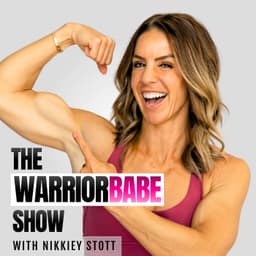
Listen to episode 18
So you had a great workout. You're feeling the burn and you're sore AF. But does that mean you're getting results? According to today's podcast,...
Full transcript
00:00Soreness is not an indicator of your progress. Progress is an indicator of your progress. What's going on, you guys? Welcome to The WarriorBabe Show with Nikkie Stott, co-founder and brand personality of WarriorBabe, where we talk about mindset, methodologies, and tactics that will help you lose body fat, build muscle, be strong, and feel insanely confident. I am your host, Nikkie Stott, and welcome to today's episode, episode number 18,
00:34where we're going to deep dive into talking about how you don't need to be sore after a workout to build muscle. I'm going to just take this myth that's swirling around the fitness industry, and I'm going to bust right on through it. All right, so I've gotten asked this a lot recently, and I wanted to dive in this topic with you guys today on the podcast. So maybe some of you guys have asked this, or you've said this, like, I'm not sore this week. Is that a bad thing? Or I was really sore at the beginning of my new workout, but, like, I'm not sore anymore.
01:09Why? Or, like, you know, this month I'm just not sore as last month. Guys, understand this, please. Soreness is not an indicator of your progress. Progress is an indicator of your progress, okay? So you could never get sore, but you could consistently build muscle, and you could consistently burn body fat. You can progressive overload just a tiny bit week after week to the point where you don't get sore, but your body is adapting.
01:45It's getting stronger because you're overloading, right? Meaning sets, reps, and the weights are increasing over time. That is progressive overload, which I touched on that topic in episode 16. So make sure you guys go give that a listen. And you guys will hear me say this over and over and over and over again, that the actual process of growth and building muscle takes place during recovery and rest. Not during the workout itself.
02:16You are breaking down muscle during your workout. You are building it during rest and recovery. So while muscle soreness can indicate that the muscles are being challenged and they may be growing, it is not the direct cause of muscle growth. Muscle growth can occur without feeling sore after every single workout. I hope there's just a boom, boom, boom, like, oh, thank you, cool. Like, I'm not sore from my workout yesterday.
02:48This actually means that I'm still progressing. Yes, yes, my friends. You are still progressing, okay? So this is what I want you guys to focus on is, like, wins during your week. And you guys may experience this already. And this is freaking awesome. Like, you go into your weeks, you go into your workouts, and, like, you're, like, at the end of the week, you're, like, man, I increased weight in all of our, some of my exercises this week. Dude, that is freaking awesome. Look, if you have a good coach, if you follow a good program,
03:19that coach or that program should and will play around with your sets and your reps, and that, all those counts to help you progress. So you're, they'll play around with your sets week to week, they'll play around with your reps week to week, they'll play around with their rest time, they'll play around with all of these different ways that you can progressive overload to help you progress. That is progress. That is progressive overload. That, my friends, is your best indicator that you are doing well with your workout program, not your level of soreness.
03:51If you never get sore, but your strength is going up, you are doing great. Okay? Let me just, you're doing great. You're doing great. But chasing the feeling of soreness as an indicator that your workout program is solid is a terrible indicator. Like, if you're, like, man, I love last month's workout because I was so sore all of the time. That is a terrible indicator.
04:23Actually, guys, soreness can be an indicator that you've done way too much. Like, if you're really sore, and that lasts for, like, two to four days, then you probably went too hard or you did too much. Okay? And, like, I'm guilty of this sometimes. And maybe you are too, right? You get excited about the workout. You can't wait to go crush it. You hit some pre-workout. And then you maximize your intensity to where you can't walk for three or four days after. Like, been there. Done that.
04:53I'm sure you have too. Guys, that's not optimal. So hear me loud and clear. At this point, if you've experienced that, you've done that, you seek for that, at that point, your body isn't adapting, which is building muscle and helping you to get stronger. At this point, if that's you, when you found yourself in that position one too many times, your body is actually healing. And so it's healing the damage that was caused during that workout. So you can heal, but you could never adapt.
05:24If your body is just constantly always in the healing process, it's just healing the damage that was caused. It's not helping you to adapt to that training, to you building muscle, and to you getting stronger. So the best indicator of progress is progress. If you're getting stronger, you're building muscle, you're progressing. Yes, boom, bang, Davey, hot dog. That's all that matters. Hey, hey, just want to drop a huge appreciation to you guys listening to the show.
05:57It means a lot. I hope you guys are enjoying it and there's so much more to come with it. If you are enjoying it, hit the subscribe button. I'd appreciate that tons. And also, it would help this podcast reach others who need to hear these messages too. Thanks so much, guys. Let's get back to the show. And guys, if you want to follow a strategic workout program where a professional is putting this together for you, a coach that is programming your reps, your sets, and helping you to progress over time with progressive overload,
06:28check out warriorbabe.com. Check out the links below this podcast and get in to the program and eliminate all of the guesswork for you building your own workout program and just have our coaches do it for you. That's why they're professionals. That's why they're coaches on their team. They do it really well and they help women get results. Okay? So, if in your programming, you, your coach, you know, whoever you're working with, adding reps, adding sets, and you're adding weight over time, and you never get sore, dude, like, you are absolutely crushing it at that point.
07:03That is, like, literally the perfect place to be. If during, within your programming, over time, you're adding reps, you're adding sets, you're increasing and adding weight, and, like, you never get sore, that's, like, the holy land. That is, like, ah, like, you're fucking crushing it. You are absolutely crushing it. That is, like, the perfect place to be. But, but, understand the reality is that we won't always do that.
07:33Okay? Right? You add sets, you add reps, you add weight. You will probably be sore. I've talked about this inside of our community of warrior babes, that each workout that you go into depends on so many variables. It depends on sleep. Did you get enough sleep the night before the workout? Did you drink enough water? Are you hydrated? Did you follow your macros the day before? Following your macros the day before can dramatically increase or decrease your output during your workout the next day, and or your recovery for the days to follow?
08:05Are you on your monthly period? Right? All of these things play a factor in the specific workout that you do day to day to day. So there's many variables that play into it. So, like, not every workout will you not be sore. Like, you will be. And that is okay. But if majority of the time you get to a level of not being totally sore, dude, that's a great state to be in, man. And that, my friends, could take years. Okay? So I just want to, like, add that in there. Like, if you are adding sets, adding reps, playing around with sets, playing around with reps,
08:40increasing your weight, playing around with rest time, most importantly, increasing your weight, and, like, you're not getting sore, dude, that's freaking awesome. Like, if you're doing all these things, it's adding more stimulus to your body, and, like, you're not getting sore. That's huge. Your body's adapting here. You're building muscle. You're getting stronger. But, like, to be realistic, you still will feel some type of soreness day to day. But if some majority of the not that you don't feel sore, it's okay. You're doing the right thing. You don't do not. Moral of this whole thing today is, like, do not seek for soreness as an indicator that your workout program is bomb
09:15and that you're making progress. Because what comes down to it is progress is progress. Are you increasing and playing around with the reps and sets? Are you playing around with your rest time? Are you doing progressive overload? Are you adding more weight over time? That is progress. That is your best indicator that you are doing things right. Okay? So that's the moral of the topic today. If you're not getting sore and you have the ability to do another set, or you can add five more pounds than you did the previous week,
09:47please do it. Do it. Please freaking do it. Challenge yourself, my friends. That is progressive overload. You are progressing here in that state. Okay? So if you have the ability, if you're doing a workout, right, and you have the ability to challenge yourself a little bit more, and next week, let's say you did four sets one week, next week you can do five, right, and you do five for a couple weeks, and then maybe in like week, I don't know, eight, you do six,
10:18just to challenge yourself, or like you play around with reps in there. Maybe you don't go up to six, but you play around with reps, or you just play around with weight. Dude, if you have the ability to do that, and you have the ability to add five more pounds, you did the previous week, my God, please do it. Do it. Do it. Look, seriously, though, some people need to like be called out here really quick. Some people say, I hear this a lot, that like they're just not feeling challenged from their workouts, or like the variety of their workout needs to change, or like they need more things to do.
10:51Example, my wonderful warrior babes, I'm going to call you guys out in the blueprint program. Some literally say our workouts aren't challenging enough, and then I go and do the workout that we have programmed for them, and I am dying. It feels so good. It's such a challenging workout. So ladies, if you are worried, or, you know, in general, if you're experiencing wanting more of a challenge with your workouts, work the workout.
11:23You are in control. Challenge yourself. Pick up heavier weight. Don't just go through the motions. Don't just show up in the gym today, and, you know, do the workout half fast, and then you're like, woohoo, I got my workout done for today. Check mark done. But like, did you have a good workout? Did you challenge yourself? Dude, you better have like an ugly face at the end of all of your sets. Last three reps of every set better be freaking challenging to where it's like hard to push through,
11:54but you tap into your inner power, and you make it happen. Guys, listen. The mind will quit before your body does. Look, it's inside of all of you. You got it. So find it and work the workout. Okay? Work the workout. You're in control. Challenge yourself. Pick up heavier weight. There should be no reason. Look, listen. If there's one person saying that workout's not challenging, and then I go and do the workout, and I am like literally 150 heart rate
12:26the entire time, no joke, real life story, and that's me, and I'm doing the workout, and I'm experiencing it firsthand, then where's the default here? Right? Where is it breaking? It's you. This workout is challenging. Trust me. I'm doing it. So I ask you, how can you make it more challenging? And it's definitely by, first of all, it's picking up heavier weight. End of story. That's usually what it comes down to, is that, you know,
12:56women sometimes, men too, man. Men too. Like you, the first, so this is, this can help you gauge what weight you should be using. And, and really, it comes down to like, just making sure it's a challenging weight, and that you have proper form, and that you feel a challenge coming from it. Okay? So, like your first set, maybe you're just gauging. Your first set of like, let's say four. You're just gauging the weight for that day, right? Because weight could fluctuate every single day, you guys. It could vary.
13:27Like I said, there's multiple variables that could affect your workout. So you go into the first set, and you're getting a feel for, you know, a heavy weight, or like you, you tracked your weight from the week before, so you know this is what you started with. And then you're like, okay, this feels really good today. You know, I banged out my 10 reps, easy, no problem. Um, and then so therefore, if you're banging out your 10 reps, easy, no problem, please do not use that same weight going into your second set. Like, please don't.
13:58That is where, this is a great, you assessed your first set, this was easy. If you did that weight last week, that's freaking awesome, because now you're about to increase. So then you go and pick up, like, five pounds heavier. It doesn't, it's nothing drastic, you don't need to go pick up 20 pounds heavier, literally just five. Five. If you feel like that five is enough, go to 10. Like, if the 10 reps in the first set was way too easy, then go for 10. But please, for the love of God, do not pick up a 20 pound, 30 pound, or 50 pound heavier
14:29than what you just did. Okay? You're gonna look like a monkey in the gym. You're gonna be flowling around the weight and your form's gonna look horrible. All it needs to be is like, maybe five or 10 pounds, depending on whatever exercise it is. Okay? So then, the second set, you do a five or 10 pound increase, and weight. And at the last three sets, you're like, whew, like you're pulling, right? You're like, this is challenging, this is hard. Stay there. If the last three reps are challenging for you, where it's like the last, you know, two,
14:59or you, if at, when you finish the set, you feel like you only, maybe you could have done maybe two more reps or three more reps, that's great. Gauge, gauge it by that. And then do that for the rest of your sets, you guys. That's how you kind of gauge what weight you should be using. Okay? So anyways, majority of all of this, please work the workout. There are challenging workouts. You just have to work the workout. You have to challenge yourself. Ain't nobody, ain't no, unless you're working with a personal trainer inside of the gym, but majority of the world now works with coaches online.
15:30So it's up to you to go into the workout and give it your all and to challenge yourself with your workout. All right? Anyway, so it is okay to not be sore. Don't look at it as your primary indicator. Progress is your primary indicator, you guys. Progress is your primary indicator. Looking to be sore and feeling sore after your workout and chasing that soreness is not your primary indicator. Okay? If you are getting stronger, you are building muscle,
16:00you are progressing. Progress is your primary indicator. Boom, bang, diggity, hot dog. That's what you want to look for. Okay? It's important to focus you guys on progressive overload. Focus on proper form. Like if you guys are picking up a little bit of a heavier weight, make sure you're not well in the weight around. Make sure you're still engaging and putting solid resistance on the muscle. Focus on adequate recovery rather than solely relying you guys on muscle soreness as an indicator of your progress. That's just a terrible thing
16:32to seek for when you're doing a workout program. Okay? Soreness is not an indicator of your progress. Progress is an indicator that you are making progress. Progressive overload, add sets, add weight, add reps, all that jazz. Over time, that's going to make you progress moving forward. If you don't get sore every once in a while and you still added weight the day before or you did something that was a little bit more challenging, cool. You're doing great. You're still progressing.
17:03You're still adapting. All right, you guys. So I hope this podcast helped you guys today understanding that the myth out there, like if people seek for soreness, if they're like judging their workout based off of how sore they are, you don't need to be sore after a workout to build muscle. You can never get sore and you can consistently build muscle and you can consistently burn body fat. Okay? So I hope that helped you. I'll see you guys in the next podcast. Peace. Real quick, the only ask I could ever have
17:33of you guys is to help spread the word so we can help more women lose body fat, build muscle, reach their goals and feel insanely confident. And the only way we can do that is if you rate, review and share this podcast. So the single thing I ask for you to do is if you could leave a review. It will take you 10 seconds and it will mean the absolute world to me and may change the world of someone else. is to help you
This transcript was generated automatically and may contain errors.
Listen next
All episodes →Reverse Dieting: The Fix You Need to Make Fat Loss Actually Work
Episode 284 · Aug 11, 2025
Why a 1200-Calorie Diet Fails Women Over 40
With Dr. Stacy Sims
How To Get Ripped at 51 w/Alicia Erickson
Episode 221 · Jan 3, 2025
Free Body
Transformation Assessment