
Answered in 8 episodes
How long does it take to repair your metabolism?
Answered by Nikkiey Stott and her guests · Updated
The short answer
It depends on how adapted your metabolism is. Nikkiey's ranges: about six to 12 weeks for mild adaptation after a few months of moderate dieting, closer to three months after a year or more of restriction, and six months to a year after many years of chronic dieting. Your body's response sets the timeline, not a calendar.
Hear it from the show
Tap play to start right where it's answered. It keeps playing while you browse.
Nikkiey's real timeline ranges for mild, moderate and severe metabolic adaptation
Plays from 22:48 · Ep. 354: Is Metabolic Damage Real? How Long Metabolism Repair Takes
Why a metabolic retrain can take two weeks to a year, and why expectations matter
Plays from 16:37 · Ep. 372: How to Retrain Your Metabolism After Years of Dieting
Why your body can't heal years of under-eating in four weeks
Plays from 6:57 · Ep. 307: Why Your Reverse Diet Didn't Work and How Long It Takes
Laura on giving herself a full year to undo 20 years of dieting
Plays from 13:21 · Ep. 230: Can You Change Your Body in Your 60s? Laura's Story
Nikkiey on patience: months of repair and rebuilding your body's trust
Plays from 25:49 · Ep. 308: Signs You're Not Eating Enough as a Woman Over 40
The full answer
Nikkiey is straight about this on Ep. 354: the honest answer is that it depends, and most women fall into the longer categories, not the quick one. On Ep. 372 she adds that some women who dive in strategically notice more energy within two weeks and see results in four, but others need three months, or a year or longer if years of chronic dieting have significantly suppressed their metabolism. On Ep. 307 she says that if you've been dieting for years, you might need a true 6 to 12 months of repair before another cut, and that how consistent you are matters as much as how much healing your body needs.
There's no fixed end date because the process is driven by your data. On Ep. 284 Nikkiey explains that you add roughly 100 to 150 calories per week, sometimes more, watch how your weight and biofeedback respond, pull back if it was too much too quick, and keep going until you reach maintenance, then stay there for a while. She suggests tracking sleep, energy, mood and digestion, not just the scale, because those are how you know your metabolism is healing.
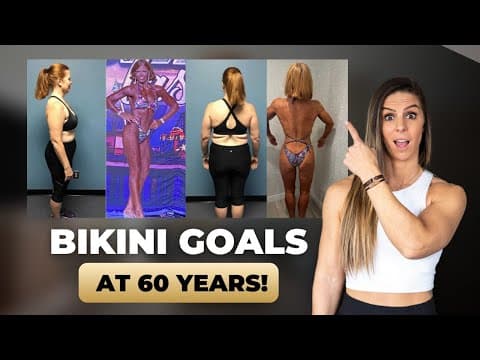
Laura's story on Ep. 230 shows what this looks like. It took her 20-plus years to get where she was, so she gave herself a full year and accepted she probably wouldn't lose weight in the first 90 days. By three months she was eating 2,000 calories without gaining.
The mindset piece matters. Nikkiey says going in expecting it to take longer is the best thing you can do for yourself mentally. Every consistent week helps your body start to trust you again, and the alternative is repeating the same lose, gain, repeat cycle. It's not that you're broken; it's that the repair has to match how long the restriction went on.
From The WarriorBabe Show with Nikkiey Stott. For education, not medical advice: talk to your doctor about your own health.
Women also ask
More questions →
Metabolism, Eating More & Reverse Dieting
Will I gain weight when I start eating more?
Probably a little, and that's expected. Nikkiey explains that when you start eating more during a retrain or reverse diet, your weight will usually fluctuate about two to five pounds from water, glycogen, food volume and salt, not fat. If the gain keeps climbing or holds around five pounds, the increase was likely too fast.
Read the answer →
Metabolism, Eating More & Reverse Dieting
How do I know if I'm not eating enough?
Nikkiey points to five signs: constant fatigue, irritability or anxiety, bloating and constipation, poor sleep and recovery, and stalled fat loss or weight gain while eating less. Not feeling hungry on very little food is another red flag. The only way to know for sure is to weigh and track what you eat for a week.
Read the answer →

Metabolism, Eating More & Reverse Dieting
What is reverse dieting?
Reverse dieting is the intentional, gradual increase of calories over time, usually after a fat loss phase or years of under-eating. Nikkiey explains that the goal isn't weight gain. It's bringing your metabolism back up, improving energy, mood and sleep, and keeping your results so your next fat loss phase starts from more food.
Read the answer →
Watch the full episodes
More episodes → 28 min
Signs You're Not Eating Enough as a Woman Over 40
Episode 308 · Nov 3, 2025
 34 min
Is Metabolic Damage Real? How Long Metabolism Repair Takes
Episode 354 · Apr 20, 2026
 39 min
Can You Change Your Body in Your 60s? Laura's Story
Episode 230 · Feb 3, 2025