
Answered in 5 episodes
How many rest days should I take a week?
Answered by Nikkiey Stott and her guests · Updated
The short answer
Take at least two rest days a week, Nikkiey says, and one of them can be active recovery like a walk, yoga, stretching or mobility work. She trains four days a week herself. One, two or even three rest days won't stall your progress. They help it, because rest is when muscle is built.
Hear it from the show
Tap play to start right where it's answered. It keeps playing while you browse.
Nikkiey on taking at least two days off a week, one as active recovery
Plays from 15:34 · Ep. 237: How Stress Stops Fat Loss After 40 and What to Do
Nikkiey on scheduling rest days and how she structures her own training week
Plays from 12:31 · Ep. 88: Do Women Over 40 Need Rest Days to Build Muscle?
What a rest day does for your muscles and nervous system, and why 1-3 won't hurt
Plays from 15:33 · Ep. 88: Do Women Over 40 Need Rest Days to Build Muscle?
Why rest days matter more with age, including a guest's perimenopause experience
Plays from 55:09 · Ep. 315: Why Am I Gaining Weight Eating Clean and Working Out?
Nikkiey on building muscle in the 24 to 48 hours after training
Plays from 10:46 · Ep. 10: Is Too Much Cardio Stopping You From Getting Toned?
The full answer
Nikkiey's own week shows what this looks like. On Ep. 88 she explains that she strength trains four days, spends one or two days out on a walk or a hike, and takes one or two days of complete rest. She wants you to schedule rest days ahead of time, not wait until you're exhausted. On Ep. 237 she sets the floor at two days off a week and says one of them can be active recovery.
Rest matters because of when muscle actually gets built. As Nikkiey says on Ep. 10, you break muscle down in the gym and build it in the 24 to 48 hours afterward, with proper nutrition, rest and recovery. On Ep. 88 she adds that a rest day lets your glycogen stores refill, your muscles repair and your central nervous system recover. That protects you from both physical and mental burnout. If you never recover, she says, building muscle becomes almost impossible.
The no-days-off mindset is often what holds women back. On Ep. 111 Nikkiey says it misses a crucial piece of the puzzle. On Ep. 237 she points out that constant soreness and tiredness are signs you're overdoing it. On those days a lighter workout or extra sleep will do more for you than pushing through. Taking a rest day doesn't mean you aren't consistent. It means you're building a plan you can keep following.
Recovery can matter even more as you get older. On Ep. 315 Nikkiey says rest days aren't about doing less. They're about giving your muscles and nervous system the recovery they need so your workouts can work. A guest on that episode who is in perimenopause says that when she shortens her rest days, her symptoms get worse and her gym performance drops. She'll sometimes stack two rest days together. If you're noticing changes like that, mention them to your doctor, and let your body's signals shape how much rest you schedule.
From The WarriorBabe Show with Nikkiey Stott. For education, not medical advice: talk to your doctor about your own health.
Women also ask
More questions →
Sleep, Recovery & Lifestyle
How can I improve my sleep?
Start with the basics Nikkiey returns to again and again: cut screens and bright light before bed, keep your room cool and pitch black with the phone out, and go to bed and wake at the same times. Then try Dr. Stephen Cabral's 3-2-1 rule: no food three hours before bed, no liquids two hours, no screens one hour.
Read the answer →

Sleep, Recovery & Lifestyle
Should I skip my workout if I'm exhausted?
Sometimes, yes. Nikkiey says that if you wake up exhausted after poor sleep or a stressful day, you can push that workout to the next day and still be consistent. On heavy days, she gives permission to scale back, take a walk instead of a PR attempt, or rest without guilt.
Read the answer →

Sleep, Recovery & Lifestyle
How do I recover from muscle soreness faster?
Recover faster by fixing your recovery inputs, not by pushing harder. Nikkiey points to sleep, eating enough (especially protein), and hydration, plus not hammering the same muscles over and over. She recommends spreading leg work across full-body sessions instead of one brutal leg day, and treating soreness past 72 hours as a sign to reassess.
Read the answer →
Watch the full episodes
More episodes → 1 hr 1 min
Why Am I Gaining Weight Eating Clean and Working Out?
Episode 315 · Nov 28, 2025
 15 min
Is Too Much Cardio Stopping You From Getting Toned?
Episode 10 · Jan 30, 2023
 20 min
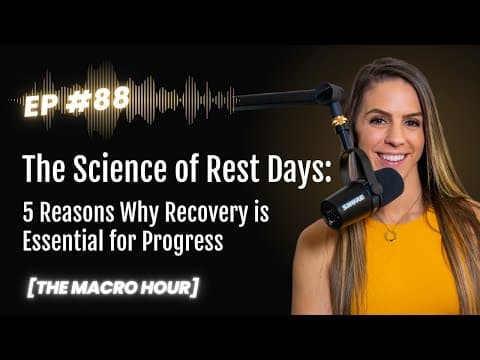
Do Women Over 40 Need Rest Days to Build Muscle?
Episode 88 · Aug 25, 2023