
Answered in 7 episodes
Why does the scale go up when I'm doing everything right?
Answered by Nikkiey Stott and her guests · Updated
The short answer
Because the scale measures total body mass, not fat. Nikkiey explains that water retention, sodium, glycogen from carbs, inflammation from hard training, stress, your cycle, poor sleep, constipation and travel can all push the number up overnight. None of that means you gained fat. Watch weekly trends, measurements and photos instead of single weigh-ins.
Hear it from the show
Tap play to start right where it's answered. It keeps playing while you browse.
Nikkiey lists everything the scale measures besides fat, from sodium to travel
Plays from 4:19 · Ep. 332: Scale Not Moving? 5 Better Ways to Track Fat Loss
Why the scale rises in the first weeks of a new training program
Plays from 8:56 · Ep. 395: Why Am I Not Seeing Results After 4 Weeks of Training?
What the scale can't tell you: glycogen, soreness, hormones and cortisol
Plays from 12:22 · Ep. 407: Why You're Not Seeing Workout Results Yet After 40
Kristi on learning the scale can swing five pounds in a single day
Plays from 37:59 · Ep. 255: How to Stop Tying Your Worth to the Scale After 50
Lisa on period weight, sodium and trusting her measurements over the scale
Plays from 16:10 · Ep. 158: Eating More Carbs and Ditching the Scale: Lisa's Story
The full answer
On Ep. 332, Nikkiey explains that the number includes everything in your body on that day: water, sodium, carbs stored as glycogen, inflammation, food volume, stress hormone shifts, menstrual cycle shifts, sleep quality, training soreness, constipation and travel. A late night, a salty meal, a hard leg day or a weekend out can show up as two pounds by morning. On Ep. 100 she adds that saltier or more sugary foods can make your body hold on to weight that isn't necessarily fat. She also avoids weighing at the end of the day, when all of that is even more pronounced.
If you've just started lifting, the rise is expected. On Ep. 395, Nikkiey describes water retention from the new training stimulus, glycogen stored in working muscles and inflammation that helps repair muscle fibers, like the swelling around a cut. It adds weight temporarily and resolves only if you stay in the process. Women who quit at week three or four, she says, quit in the exact window their body was rebuilding. On Ep. 407 she puts the visible shift around weeks four to six, sometimes not until day 90, when the scale starts moving more predictably.
Members have lived this. On Ep. 255, Kristi says she learned the scale can swing five pounds in a day depending on food and sodium. On Ep. 158, Lisa shares that her period can add two or three pounds, and that poor elimination or a high-sodium meal moves it too, while her measurements didn't change at all.
What to do instead:
The scale going up on a good week isn't you failing. It's a data point, and the trend tells the truth.
- Look at weekly averages, not single days, and skip weighing after a bad night's sleep or travel.
- Take measurements and progress photos alongside the scale.
- Track how clothes fit, strength progression, hunger cues, sleep, energy and mood.
From The WarriorBabe Show with Nikkiey Stott. For education, not medical advice: talk to your doctor about your own health.
Women also ask
More questions →
The Scale & Tracking Progress
How can I track progress without the scale?
Track the changes the scale can't show: waist and body measurements, side-by-side progress photos, how your clothes fit, and whether you're lifting more than two weeks ago. Nikkiey also watches energy, sleep, cravings, recovery and habits like hitting protein and showing up to train. The scale becomes supporting data, not the decision maker.
Read the answer →

The Scale & Tracking Progress
How often should I weigh myself?
Daily, if you can stay neutral about the number. Nikkiey suggests weighing every morning and comparing weekly averages, or weighing two to three times a week if daily weigh-ins trigger you. Guests Susan Niebergall and Paula Ciarniello also favor daily weighing, because a single weekly weigh-in can land on a water-retention day and mislead you.
Read the answer →

The Scale & Tracking Progress
Can I lose fat if the scale isn't moving?
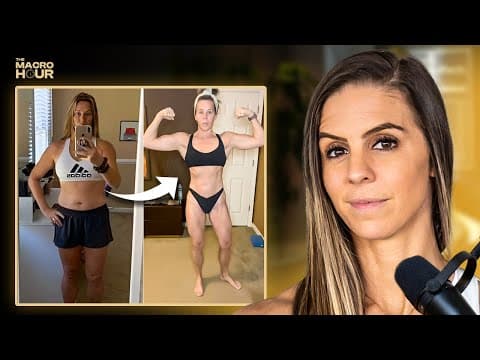
Yes. Across several episodes, women's weight held steady or even went up while their bodies got leaner: smaller clothes, more muscle, a smaller waist. Nikkiey explains that the muscle you build is denser than the fat you had, so the scale can't show what's changing. Photos, measurements and how your clothes fit tell you far more.
Read the answer →
Watch the full episodes
More episodes → 30 min
Why Am I Not Seeing Results After 4 Weeks of Training?
Episode 395 · Sep 11, 2026
 29 min
Scale Not Moving? 5 Better Ways to Track Fat Loss
Episode 332 · Jan 30, 2026
 41 min
Eating More Carbs and Ditching the Scale: Lisa's Story
Episode 158 · May 24, 2024