
Episode 10729 min
Does Alcohol Stop Fat Loss and Muscle Gain After 40?

Listen to episode 107
Chapters
In this episode
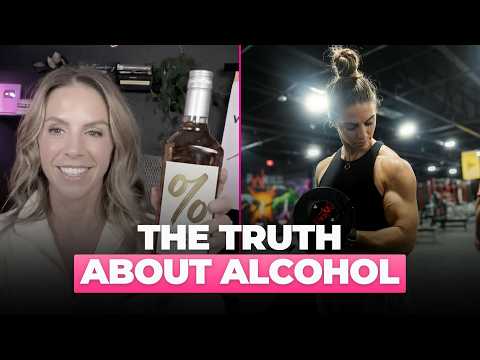
With Thanksgiving behind us and Christmas and New Year's coming, Nikkiey Stott revisits a topic she says is often misunderstood in the fitness industry: alcohol. She isn't telling you that you can never have a drink. She is asking you to stop and ask whether that glass of wine is supporting your goals, or whether it's a way to escape a stressful moment.
Nikkiey walks through five specific ways she explains alcohol works against building muscle and losing body fat. Alcohol carries seven calories per gram, which is nearly as dense as fat, and it adds no nutrition. It interferes with muscle protein synthesis. She describes it as disrupting testosterone, growth hormone, insulin function and cortisol. It's a diuretic that dehydrates you and throws off electrolytes and body temperature. And it damages sleep quality, which she ties to next-day hunger and junk-food cravings.
She also shares what her own Oura Ring shows after a couple of drinks: her HRV drops from around 200 to about 50, and her deep sleep falls from two to three hours to roughly 30 minutes. Her message is that you can do everything right with your workouts and food and still stall if alcohol is a regular part of your week. Cutting back a little each week and month helps your results, your longevity and your overall well-being.
Key takeaways
- Before you pour a drink, ask yourself whether it supports your goals or whether you're trying to escape a moment.
- Alcohol has seven calories per gram, nearly as much as fat's nine, so regular drinking can significantly raise your daily calorie intake.
- Don't trust low-carb drink labels at face value: if a 100-calorie can lists only 2 grams of carbs, those carbs account for only a small fraction of its calories.
- Alcohol is an empty calorie that displaces the protein, fats and carbs you need for building muscle and losing fat.
- Nikkiey explains that alcohol interferes with muscle protein synthesis, slowing muscle repair and promoting muscle tissue breakdown after workouts.
- Drinking often leads to poor snack choices at night, so the cost goes beyond the drink itself.
- Nikkiey suggests using a wearable like an Oura Ring to compare your HRV, body temperature and deep sleep on nights you drink against nights you don't.
- Treat the holidays as a temporary pause, and consider going alcohol-free outside the holiday days themselves, as the WarriorBabe VIP end-of-year challenge does.
Questions answered
How many calories are in a gram of alcohol?
Nikkiey explains that alcohol has seven calories per gram, nearly as calorically dense as fat at nine calories per gram. Carbs and protein have four calories per gram.
Does alcohol affect muscle building?
According to Nikkiey, alcohol interferes with muscle protein synthesis, the process that repairs and grows muscle after workouts. She says it both slows repair and promotes muscle tissue breakdown, so muscle takes longer to recover and grow.
Why are low-calorie alcoholic drinks misleading?
Nikkiey uses the example of a 100-calorie can that lists only 2 grams of carbs. Those carbs would account for only a small part of the 100 calories, so the label doesn't show where most of the calories come from, which is the alcohol.
How does alcohol affect sleep?
Nikkiey says alcohol impairs your ability to reach deep sleep, where muscle repair happens. Her own deep sleep drops from two to three hours to about 30 minutes after drinking, and she says poor sleep disrupts hunger-regulating hormones and drives junk-food cravings the next day.
Why do I feel hot at night after drinking?
Nikkiey explains that alcohol impacts body temperature regulation, so your body temperature is elevated when you go to sleep after a couple of drinks.
Does a couple of drinks a week really matter?
Nikkiey says yes. Whether it's a few drinks or you're getting wasted, the effects on recovery, hormones and muscle protein synthesis still happen, and regular drinking can slow your results even when your workouts and food are on track.
Full transcript
Nikkiey: Real quick, the only ask I could ever have of you guys is to help spread the word so we can help more women lose body fat, build muscle, reach their goals, and feel insanely confident. And the only way we can do that is if you rate, review, and share this podcast. So the single thing I ask you to do is leave a review. It will take you 10 seconds, and it will mean the absolute world to me and may change the world of someone else.
Alcohol is a diuretic, which leads to dehydration. And when you are dehydrated, that affects muscle function and recovery. When your body doesn't have the water that it needs, it causes you to decrease muscle endurance and strength.
What's up, you guys? Welcome back to The WarriorBabe Show with Nikkiey Stott, or if this is one of your first episodes, welcome to the show. On this podcast, we talk about mindset, methodologies, and tactics that will help you lose body fat, build muscle, be strong, and feel insanely confident. I am your host, Nikkiey Stott, and welcome to episode 107, where we're going to deep dive into something I talked about early, early, early on in the podcast. I'm bringing it back up because I think it's important, given the holiday season, that this is reminded and understood, because it's often misunderstood within the fitness industry. And that is alcohol.
So Thanksgiving just passed. Christmas is coming up. New Year's is right around the corner. And alcohol is a drink of choice right now, given the social environment that you are put in. Maybe the stress that you may be under. Maybe work is kicking your butt, and so you're relaxing at the end of the day with a glass of wine. I want to bring this topic back up so it's a little bit more understood when it comes to you staying in alignment with the goals you're striving for: fat loss, building more muscle, changing your body composition, and your overall well-being, especially as we close out this year and start this new year.
And I want to remind you that having a few drinks, while it sounds innocent, actually plays a significant role in the results you want to gain with building more muscle and decreasing body fat. So I'm going to dive into five specific things that I want you to be aware of. I want you to understand them, and I want you to be reminded. I'm not saying that you can't have a drink, but reconsider: is this supporting my goals, or am I just trying to escape a moment? Is this pulling me back into comfort, instead of facing whatever is in front of me with awareness and clarity, and choosing not to drink the alcohol? Because obviously I want you guys to reach your goals. I want you guys to be successful, okay?
Without diving extremely too deep, I know I just said alcohol is not entirely bad for you. However, my very, very, very personal opinion is that alcohol is poison. I have heard Gary Brecka talk about this. I have heard many other people in this space that I follow in health and fitness speak about alcohol and what it does to our body. So that's more of the well-being side of things.
But when it comes to fat loss and building muscle, which I know is what you guys are all striving for, think of it like an iceberg. The tip of the iceberg is macros, working out, all the things, trying to make better choices on a day-to-day basis. Then we dive a little bit deeper. We get rid of the things that you know don't serve you, and you're replacing them with things that do serve you. We get a little bit deeper, and then we need to address things like this, right? And then we get even deeper, to making sure that everything you are doing on a regular basis is supporting your well-being. That's not just building muscle and focusing on fat loss. It's longevity. It's mental health. It's well-being. It's down to: is what I'm doing supporting longevity? Okay?
So with all that being said, a little rant at the beginning there. But that's how I like to do it, you guys. Open it up with a little bit of a rant. Let's get down into these five specific things and how alcohol can truly hinder you seeing any type of result.
Seriously, here I go with a little bit more of a rant. You have a couple of drinks on Thanksgiving, and then you see that you're choosing that at the end of the night leading into the next couple of weeks, and then comes Christmas, and then comes New Year's. Like I talked about in last week's podcast, the holidays are a temporary pause. They're not a permanent change. However, if you allow permanent change within these next coming weeks until New Year's has passed, and alcohol is something you're having a little bit more of because of the holidays, this is why you may not see results over a four to six week period, because this can greatly impact it.
Okay, so let's first talk about alcohol, its caloric density, and its nutritional displacement. Alcohol contains seven calories per gram. That is nearly as calorically dense as fat. Fat has nine calories per gram, and carbs and protein have four calories per gram. So when you're choosing regular alcohol consumption, this can significantly increase your daily caloric intake.
For example, take those Truly cans. I'm going to use this because it was an Instagram reel that popped off on my Instagram a couple of months ago. A lot of people look at those Truly cans and say, oh, this is only 100 calories. And sure, it's only 100 calories, or you choose drinks that are lower in calories. But then we peel back the onion a little bit more, and it's like, oh, there's only two grams of carbs in here. That's freaking awesome. However, what's not being recognized is that it's not breaking down how much alcohol is in there. Alcohol is a macronutrient, and there are seven calories per gram coming from it. So if there's really only two grams of carbohydrates, and the alcohol is being counted as the carbohydrates, then it would only be 14 calories, because two times seven is 14. So where are the rest of the calories coming from? That's where the nutrition label is entirely wrong and the marketing is entirely wrong.
So if you're lumping alcohol in with carbohydrates here, you can either break down 100 by seven, or you can break down 100 by four, and then work out how many grams of something are actually there. I'm going to use carbohydrates, for example, so I'm not losing you guys, because it's a little bit easier on the math. If you're breaking down 100 by four, because there are four calories per gram, that means there are 25 grams of carbohydrate in that drink. So you having two of those means you just had 200 calories worth of carbohydrates, meaning that you had 200 grams of carbohydrates. Am I doing that math right? 25 times eight, if I'm doing that right. Yes. I'm bad with quick maths. Don't hold me to that.
But I just wanted to bring a little bit more enlightenment and awareness to you guys. It's not just two grams per can. There's so much more to unpack to equal out to the 100 calories it's telling you it's made up of. Basically, that's what I'm trying to say. So don't hold me to that quick math if I did it wrong.
Essentially, alcohol is considered an empty calorie in nutritional terms. So it's a nutritional displacement. It's often replacing more nutritious options and disrupting a balanced diet that is essential for building muscle and fat loss. So for people where the majority of their calories in a day come from alcohol, you're replacing the ability to have a more balanced focus on protein, fats, and carbs that are going to help you build more muscle and accomplish the fat loss goals you want. Okay, so just keep that in mind. It's almost as calorically dense as fat. And then the nutritional displacement: these are empty calories. They are not doing anything nutritious for you and for your body. Nothing at all. Squat diddly. So when you're consuming this, it's not helping you in terms of building more muscle and fat loss.
Number two, alcohol is a huge interference with muscle protein synthesis, which is a process critical for muscle repair and muscle growth following your workouts. It not only slows down the repair mechanism, but it also promotes muscle tissue breakdown. So alcohol interferes with protein synthesis, it slows down the repair mechanism that builds up muscle, and it promotes muscle tissue breakdown. This dual impact means that muscle may take longer to recover and grow after your workouts. If you are consuming alcohol, it's setting you back from achieving those goals. In order to be more toned, you have to undergo this process of muscle protein synthesis, of building, repairing, and growing muscle, and eliminate the fat around the muscle so that you can be more toned. And this is hindering that process from happening. Alcohol interferes drastically with muscle protein synthesis.
Hey, hey, just want to drop a huge appreciation to you guys listening to the show. It means a lot. I hope you guys are enjoying it, and there's so much more to come. If you are enjoying it, hit the subscribe button. I'd appreciate that tons, and it would help this podcast reach others who need to hear these messages too.
Now, diving a little bit deeper. Number three is that when you drink alcohol regularly or more routinely, this consumption leads to hormonal imbalances. It has a plethora of other effects that cause all hormones to go off balance. But when it comes to building muscle and decreasing body fat, there is a notable decrease in your testosterone, and women already don't have a lot of testosterone to begin with, and a noticeable decrease in your growth hormone levels. These two specific hormones are insanely vital for muscle growth and recovery. Additionally, it also disrupts insulin function. When insulin function is disrupted, it impacts your energy levels and your muscle endurance. It elevates your cortisol levels. And when your cortisol levels are elevated, you guys, that leads to increased fat storage and increased muscle breakdown, because cortisol is a stress hormone. Alcohol is a stressor to the body. It's poison to the body, as I said earlier. And when cortisol gets elevated, it is a fat-storing hormone. So you are increasing the chances of holding on to more fat when you are consuming alcohol. And on top of that, it increases muscle breakdown.
So with everything I talked about with muscle protein synthesis, and how that sets back your muscle-building efforts because it promotes muscle tissue breakdown, the fact that testosterone, growth hormone, and insulin function all get disrupted is another way that muscle is breaking down. You can put all your effort into working out. You can put your effort into choosing to eat the right types of foods. However, the consumption of this specific thing, alcohol, even a couple of drinks a week, sets you back.
Trust me, I am a drinker once in a blue moon. My body is so sensitive to it after a drink or two or three, because I don't do it often. How I feel on a regular basis is obviously prime and optimal, and then I have this coming into my system. Seriously, once in a blue moon. It's been very rare. I think I've had maybe three drinks this entire year. And when I do, I can feel all of these things happening in my body. I can feel the total imbalance internally shifting from just this consumption.
So think about it. People who consume alcohol more consistently are, how should I say it, maybe numb to this, because their body has become accustomed to these types of feelings. You may not be as sensitive to it as I am. But I want you to understand what is happening when you are doing this, because you may not even notice it. Your body is used to you having alcohol every weekend, or every other day, or even on a biweekly basis.
So what I encourage you guys to take from this entire podcast is to just reconsider this consumption. Ask yourself: is it helping you and your goals? Or is it moving you in the opposite direction of your goals? That should be a very conscious answer, because it should be loud and clear to your brain as I'm talking through this podcast. Like I was saying, you could be putting all your efforts into following a program, doing your workouts, and trying to make better food choices. However, if this specific thing is happening, I will tell you that your chances of getting the results you're seeking with building more muscle and experiencing more fat loss are very, very low. It's probably below a 30% turnaround for you to reach those types of goals.
Because alcohol, like I'm saying, is poison. Not a lot of people can feel the things it does internally to our body. You're not going to feel that it's interfering with muscle protein synthesis. Some people can feel that it's increasing fat storage, but you're not going to feel it promoting muscle tissue breakdown. However, when you're doing the work in one facet but you're still intertwining this one thing into your journey, it's slowing down your progress. It's slowing down you getting the results that you want. That's basically the message I'm trying to get across in this podcast, okay?
Now let's dive into the last two things. We already talked about the hormonal disruption, how that affects muscle and your fat metabolism, how it causes muscle breakdown and increases fat storage, the impact it has on muscle protein synthesis, and how it's close to being as calorically dense as fat and is also an empty calorie. And not to forget to mention that when you drink, you usually find yourself in the snack cabinet at the end of the day making horrible nutrition decisions. So not only is it an empty calorie, but you're also consuming shit on the back end of it because you're a little buzzed, right? And you're like, oh, anything and everything sounds amazing right now. Sugar, sweets. It makes you cognitively impaired as well, obviously.
But back to the last two points. Alcohol is a diuretic, which leads to dehydration. And when you are dehydrated, that affects muscle function and recovery.
Ladies, are you feeling frustrated with the body changes you're experiencing during menopause? It's time to take control. If you're between 45 and 65 years old and tired of struggling with body fat and muscle loss, WarriorBabe is here for you. At WarriorBabe, we've helped over 18,000 women just like you lose body fat, build toned muscle, and understand their bodies better with personalized plans based on hormone and thyroid testing and more. Imagine knowing exactly what your body needs to see real results, and results that last. Don't wait anymore. Take charge of your health and join our community of strong, empowered women. Visit warriorbabe.com/apply today to start your transformation. That's warriorbabe.com/apply. All right, let's get back to the show.
Dehydration: when your body doesn't have the water that it needs, it causes you to decrease muscle endurance and strength. And when you're dehydrated, there's a disruption in the balance of electrolytes in your body, which is necessary for muscle function, for growth and repair, and even for cognitive function as well. When you're experiencing dehydration and a lack of the electrolytes your body needs, not just for muscle function but for function in general, you may notice it leading to cognitive issues and fogginess, and in the muscle, it leads to cramps and spasms. For those of you who ever feel like you have cramps in your calves or your biceps, or you cramp somewhere, it may be an electrolyte imbalance of potassium. However, it could be even deeper. If you are consuming alcohol, you are dehydrated. It is a diuretic. That's why you pee so much when you are drinking, right? Don't want to break the seal. It's a diuretic. It leads to dehydration, and it's causing all of these imbalances inside the body.
It also impacts body temperature regulation, which can further diminish your performance and your recovery after a workout. You can see this if you wear an Oura Ring. Do a period without drinking alcohol, or test it now and then stop alcohol for the new year. Make that one of your New Year's resolutions.
That's something we're doing inside the VIP program right now with WarriorBabe. We do an end-of-year challenge, and one of the tasks is to remove alcohol. We've allowed them to drink alcohol on the holiday, but every day around that, they are challenged not to drink alcohol. And within the first freaking couple of weeks of this challenge kicking off, there have been so many wow factors, so many wins and accomplishments in how everybody feels from eliminating alcohol from their system. It's truly incredible. There have been so many wins I've seen within our community, and so many wins that our coaches share every week in our team meetings. It's incredible what people can experience when this thing gets eliminated.
With the Oura Ring, like I said, go test it, from when you're drinking alcohol to when you're not. You will see your HRV increase, which is your body's ability to regulate stress. You will see your body temperature decrease, because alcohol increases it. It impacts body temperature regulation. If you have a couple of drinks and you lie down and go to sleep at night, which is the next thing I'll talk about, you will notice that you have an elevated body temperature. Do you ever feel hot in the middle of the night when you drink alcohol? This is why. It's literally impacting your body's temperature, which is wild. Think about all the things it's impacting. It goes so much further and deeper than just your muscle-building ability and your fat loss ability. It's just poison overall. It's affecting longevity. It's affecting well-being. It's like I was saying at the beginning with the iceberg. I don't want to dive too deep into this stuff. I want to keep it mid-level right now so that you guys can start having the light bulbs go off and the wheels turning, and say, you know what, for this goal, I need to reconsider this consumption.
And the last thing is that it impacts your sleep quality dramatically. Sleep quality is so important for building muscle, for muscle recovery, for fat loss, and for overall well-being. When I wear this, which is an Oura Ring, at night after I've had a couple of drinks, it severely affects my HRV. I have an average HRV of around 200. It's honestly superhuman status right there, and I'm very proud of that. That's a very important indicator of your health. And my HRV after having a couple of drinks is literally 50. That is so scary to me. It's almost like I'm dead. That's what I joke about the next day. I'm like, oh, that's actually really scary that alcohol has that type of impact on my heart rate variability. It's pretty gnarly to see it drop that drastically. Just listen to my experience. I'm somebody who does not drink, and then I see this and it's a light bulb. Holy moly, it's insane that this type of beverage, this thing that people regularly drink, has this impact on the body.
So like I said, it impacts your sleep, which is crucial for muscle building. It impairs the ability to reach the deep sleep stages where muscle repair occurs. When you enter the phase of deep sleep, that is where your body hits the ultimate recovery period. On average, I get two to three hours of deep sleep a night. I sleep like a baby. And when I've consumed alcohol, my deep sleep is like 30 minutes. It's horrible. And when your sleep is impacted by alcohol, it affects your hunger-regulating hormones, which increases your appetite the next day and makes you want to eat whatever you want. Usually it's junk food or greasy food, to help make you feel better, but also because this regulating hormone is totally shifted. And that right there will challenge you in decreasing the body fat you want to lose.
So all in all, there are probably so many other ways that alcohol affects your body when it comes to building muscle, losing fat, and overall longevity. But these are the main five things I wanted to bring to your attention. I want you guys to understand this process and what is going on when even a few drinks are consumed. And then think about it: if you're having it every single weekend, this is happening internally, whether it's a few drinks or you're getting wasted. Regardless, your recovery period is going to be diminished. The process that is crucial for muscle repair and growth is impacted drastically. There are hormonal imbalances with testosterone, growth hormone, and insulin function, and then it's impacting your energy levels and your muscle endurance and increasing cortisol levels. All of this is happening whether it's a couple of drinks or you're getting wasted. And all of this is why you may not be getting the results you want with your body composition, seeing fat loss, seeing more tone develop, and seeing more muscle grow. Because alcohol literally severely impacts all of the things necessary for those results to happen.
So like I said, you could be putting in the work, you could be eating right, you could be working out, you could be following what the program tells you to do. However, if you are choosing to still consume this... I'm almost scaring you guys, because I want you all to succeed and I want you all to be the healthiest version of yourselves. So reconsidering this is my end goal for you all. I don't expect you to be like me. However, pulling it back a little bit each week and each month will help, not even just for results, but for longevity and for well-being, and just for you as a human to live fully and be more healthy. That's it.
If it's helping you, then, you know, I can lead you to water, but I can't make you drink it. Okay. All right, you guys. I love you all. I hope you have an awesome day, and I'll catch you next podcast. Peace out.
Real quick, the only ask I could ever have of you guys is to help spread the word so we can help more women lose body fat, build muscle, reach their goals, and feel insanely confident. And the only way we can do that is if you rate, review, and share this podcast. So the single thing I ask you to do is leave a review. It will take you 10 seconds, and it will mean the absolute world to me and may change the world of someone else.
Listen next
All episodes →Is Walking Enough for Fat Loss After 40?
Episode 238 · Mar 3, 2025
 27 min
Does Alcohol Stop Fat Loss? What Women Over 40 Should Know
Episode 359 · May 8, 2026
How Does Sleep Affect Fat Loss and Muscle After 40?
Episode 196 · Oct 7, 2024
Free Body
Transformation Assessment