
Episode 28130 min
Why Am I Lifting Weights But Not Seeing Muscle?

Listen to episode 281
Chapters
In this episode
You're lifting, tracking your macros, taking progress photos and showing up week after week, and your body still looks the same. Nikkiey Stott wants you to hear this first: nothing is wrong with you. What's usually missing is an accurate understanding of how visible muscle is built. In this solo episode she explains that being toned means having muscle mass and lowering the body fat around it, and that it takes four things: real tension and stress on the muscle, enough food and protein, recovery, and progressive overload.
Nikkiey explains why under-eating keeps your body in survival mode instead of building muscle, why a deficit without enough protein strips muscle along with fat, and why classes like Pilates, F45 or Orangetheory won't give you the toned look on their own. She also calls out what she sees all the time: going through the motions in the gym, scrolling between sets, hitting calories but missing protein, and training five days a week while chronically under-recovered.
She closes with practical steps. Aim for one gram of protein per pound of body weight, lift heavy at any age, sleep seven to eight hours, audit your training for progressive overload, track your food in MyFitnessPal rather than trusting photo-based apps, and measure progress with photos and strength PRs if the scale gets in your head. You're not starting over. You're fine-tuning, and you can do it while being kind to yourself.
Key takeaways
- Being toned means having muscle mass and decreasing the body fat around it, so you need to build muscle and lose fat rather than just lose weight.
- Muscles only grow from resistance, not just movement, so classes like Pilates, F45 or Orangetheory alone won't create the toned look you want.
- Eat about one gram of protein per pound of body weight, and if you have a lot of weight to lose, base that number on a realistic goal weight instead.
- Under-eating and slashing calories without enough protein can cause your body to tap into muscle along with fat, so eat enough protein and calories to protect your muscle in a deficit.
- Apply progressive overload by raising your weights roughly five to 10 pounds on a weekly or bi-weekly basis depending on the exercise, instead of repeating the same workout for months.
- Lift heavy enough that you never finish a set thinking it was easy, whether you're 48, 57 or 62.
- Get seven to eight hours of sleep and set a bedtime alarm, such as 9:30 p.m., just like you set a wake-up alarm.
- Track your food in MyFitnessPal for a week to see whether you're hitting your protein target, and measure progress with photos and strength PRs if the scale triggers you.
Questions answered
Why am I lifting weights but not seeing muscle definition?
Nikkiey explains that visible muscle takes four things: enough tension and stress on the muscle, enough calories and protein, recovery, and progressive overload. If any of these are out of alignment, such as lifting too light, under-eating protein or being under-recovered, you won't see the definition you're working for.
How much protein should I eat to build muscle?
Nikkiey recommends one gram of protein per pound of body weight as a non-negotiable. For someone with a lot of weight to lose, she bases it on a realistic goal weight, and someone very light who needs more muscle might aim for 1.1 to 1.2 grams per pound.
Will Pilates or Orangetheory make me toned?
According to Nikkiey, that type of movement isn't going to give you the toned look. Muscles grow from resistance, so you need to put real physical stress on them with lifting that is challenging enough.
Are photo-based apps like Cal AI accurate for tracking macros?
Nikkiey tried Cal AI for about five days and found it inaccurate, at one point showing about 12 grams of protein for a five-ounce chicken breast. She recommends sticking with MyFitnessPal, where you can scan barcodes and enter weighed food.
Why isn't the scale showing that I'm building muscle?
Nikkiey says the scale only tells you your weight, not how much muscle you've gained, and muscle is denser than fat. She suggests measuring progress with photos and strength PRs instead.
How heavy should I be lifting?
Nikkiey says you shouldn't finish a set thinking it was easy; if you do, you're not lifting heavy enough. She also says that to progressively overload, you should be increasing your weights, often by five to 10 pounds on a weekly or bi-weekly basis depending on the exercise.
Full transcript
Nikkiey: You shouldn't be finishing a set thinking, man, that was easy. If that is the case, you're not lifting heavy enough. And I get that the idea of being injured or hurting yourself runs through your mind, but the more that you pick up a heavier weight and you see that that's just a story that you're telling yourself, that's not actually a fact, the more you will trust and believe yourself that you can lift heavy.
What's up, you guys? Hey, everyone. Welcome back to The WarriorBabe Show, or if this is one of your first episodes, welcome to the show with your host, Nikkiey Stott, co-founder of WarriorBabe. On this podcast, we talk about mindset, methodologies, and tactics that will help you lose body fat, build muscle, be strong, and feel insanely confident.
Today, my friends, welcome to episode number 281. What we're going to dive into is a topic that I feel so many women are frustrated with. You're wondering why you're lifting, you're doing all the work, but you aren't seeing the muscle definition that you want. You're doing the thing, you're showing up multiple times a week, you're tracking your meals, you're tracking your macros, you're watching the scale, you're taking your progress photos, and yet nothing looks different. You want the tone, but it's not showing up. And the definition, you feel like it's still buried under layers and layers of fat. And it starts to feel like, dude, this isn't working.
Let me just say this: if that's where you are right now, I 100% see you, I understand you. That frustration is 1000% real. You feel stuck, you feel defeated. Maybe you even feel embarrassed because you're doing everything quote unquote right, and the payoff just isn't there. And then you start to spiral, and you're watching other women transform or you're seeing other women's successes, and you're thinking, well, dude, what's wrong with me? What's wrong with my body? Why am I not seeing the progress I want?
First off, nothing's wrong with you. What's wrong is the understanding that most women are given about how muscle growth actually works. So what I want to do in this episode with you guys today is throw out the old expectations of what muscle growth actually looks like and what it takes to obtain, and teach you guys what actually really happens.
So first, before I even dive into this, if you've listened to many episodes before, you know this, and if this is your first one, I want to remind you all: there have been 20,000 women that have gone through our program at WarriorBabe. And that's why I can say I understand the experiences that you are having, because I personally have coached thousands of women, and I've heard and listened to and helped virtually wipe tears off of women's faces because they have been in this position. They've been frustrated, they've been defeated, and they've been like, what is going on? Why isn't this working? Or they're going from program to program to program, and they're coming to us feeling all of these things.
So I want you to know that what you are feeling is entirely valid, and the experiences that you are having are what you have experienced up until this point. And I want to be able to share with you the way to get past it and the way to get through it. That is basically me saying, I hope you listen to what I have to say in this episode, because it can truly, truly help you if you take it and apply some of the tactics that we'll go through today, or even just some of the understandings that we go through today.
But first, I want to get really, really clear on what it actually takes to build visible muscle. Let that word sink in: visible muscle. You guys want to be quote unquote toned, right? That is the hottest word in the fitness industry. I want to be toned. I want to show more muscle definition. Basically, what toned is, is you having muscle mass and decreasing the body fat around it.
So in order for that to actually happen, one, you need tension and stress on the muscles in your body that you want to be able to show, whether it's your arms, your legs, your glutes, your chest, or your back. Muscles only grow from resistance, not just by movement. So I've seen women say, I go to Pilates, or I do F45, or I do Orangetheory, or I do whatever. That type of movement isn't going to get you the toned look that you want. You need to put actual physical stress and resistance on the muscles in a way where you're going to create metabolic stress so that they grow. Lifting needs to be challenging enough.
You guys have heard me say this all the time in the episodes if you've listened before; if not, it's your first one. You break down muscle in the gym. You build muscle in the 24 to 48 hours afterwards. So you're not building muscle in the gym. You're breaking it down. You're creating these micro tears in your muscle fibers when you are lifting the weights and really challenging yourself. I'm going to get to progressive overload in the fourth one, but you're really challenging yourself here. You need tension and stress in order to build visible muscle.
The second thing: you need nutrition. You need fuel, period, end of story. If you are lifting but you're not eating enough protein or enough calories, what you're doing is under-eating. And if you are under-eating, then getting what you want to see visibly in your body is going to be like swimming up a river when the river is rapidly flowing. It's going to be really hard to do if you're not fueling your body properly. Your body doesn't have the raw materials that it needs to rebuild anything that you break down in the gym if you're not fueling your body the right way.
And look, I'm going to touch on this right now. If you are being underfed, what is happening here is your thyroid function is going to lower, your stress hormone is going to rise, and your metabolism is going to slow down. You may not be feeling those things internally, but trust that is what's happening when you're not giving your body the right nutrition. If all of those things are happening, the last thing your body is concerned about is building muscle. It wants to make sure that all of the other organs and systems of your body are doing what they need to do to survive.
And while you may not be feeling that, what you may be feeling is tired all the time. You may be cold. You may be puffy. You may feel really strong in your workouts, but you feel stuck because of progress that isn't there. And this is why: your body's basically like, whoa, I don't know when this person is going to give me enough protein or another meal. I don't know when I'm going to be fed enough calories. So what it's going to do is protect your body and store it as excess for the time that you may need to tap into it in the future, because you're not consistently giving it what it needs on a regular basis. It's playing guesswork with you.
What's happening here is our bodies are in surviving, and what I want them to go to is thriving. There have been so many women inside of WarriorBabe where maybe this is you, right? You're feeling all the things that I just said, and you're just starting out in WarriorBabe or you're just starting off in a program and you're trying to do things the right way for yourself. You're not going to go from surviving to thriving in a week, in two weeks, in one month, let alone even three months. It takes time.
Or if you're somebody that's been a part of WarriorBabe for a while, or you've been at this, listening to this podcast and doing things on your own through these 280 episodes, and you're getting amazing results, then you will know that at one point your body was probably in this mode, and you're probably shaking your head like, yeah, Nikkiey, you're right. Because it had to take time to get out of surviving and get into thriving. And I want you all to be in thriving. But what you have to do is fuel your body the right way.
And I'm going to circle it back, especially if you want to build visible muscle. Let me throw this at you. As I was saying earlier, you need to decrease the body fat around the muscle. How do you think that muscle stays intact without being tapped into while you're decreasing body fat and weight? By you having enough protein. Because protein basically maintains, holds onto, and protects your muscle mass.
So while you are going into a deficit and decreasing body fat, what a lot of people do when they're trying to lose weight is slash their calories, and they will not have enough protein intake. But what the body will do is go and tap into those muscle stores first and foremost, and you'll lose the muscle along with the fat. So on the flip side, and you guys know I've talked about this in episodes before, the difference between fat loss and weight loss is that when you're trying to lose body fat, you want to hold on to that muscle, which means you need to be eating enough protein and enough calories so that you don't tap into that muscle mass, but you can decrease the body fat around it.
Okay. Nutrition, guys, is literally one of the hardest things to do. But I promise you, if you can get the nutrition aspect right, it will open up the full floodgates for your progress. You guys have heard me say nutrition is king, exercise is queen. You can exercise all you want, but you can't out-exercise a bad diet. Period.
The third thing your body needs to build visible muscle is recovery. As I've just said, your growth happens outside of the gym. Building the muscle happens outside of the gym, during rest, during sleep, during fueling your body, during time away from the weights. Because again, you break down your muscle in the gym and you build it afterwards. So recovery is so important for you to build and show that muscle.
And the fourth thing is progressive overload. If you are doing the same weights week after week after week, that is not overload. That is you maintaining your muscles. So if you are someone who wants to build more muscle but you're doing the same weight over and over and over again, you're going to get more of what you have right now. Your muscles need to be challenged, and they need to be challenged consistently in small but strategic ways.
I have multiple episodes on progressive overload. You can go to themacrohour.com, and if you're on your computer, hit Control+F, type in progressive overload, and find any episode that I have on progressive overload. I don't know how you would do it on your cell phone, but I'm sure there's a way. If it matters to you that much, there's a way.
And also, here's a truth bomb for someone listening to this right now. You might be lifting, but you're not lifting heavy enough or with enough intention. You might be in the gym and showing up for your workout, but you could just be going through the motions. And going through the motions isn't going to create the tension and the stress that your body needs. It's not you challenging your muscles the way they need to be challenged.
Guys, I was filming content with my team last week, and I'll never forget this. This girl was sitting on, I think it was the leg extension machine, and she was on her phone the entire time. But she probably told her friends, hey guys, I went to lift today. Bro, that ain't lifting. She was on her phone for probably a four-minute rest period and then would do her set. Maybe even longer. I remember I was talking to my team and I was like, guys, this is how you don't build muscle. And then I feel like five minutes later, I looked back and she was still in the same position.
So you could be quote unquote lifting, but you're not lifting heavy enough, or you're on your phone the entire time and you're not giving it enough intention. You might be hitting your macros, but not your protein. Anybody could follow a 1,400-calorie diet, a 1,500-calorie diet, an 1,800-calorie diet. If they're just focusing on calories, I guarantee you they're not focusing on how much protein they're getting. And you could be training five days a week, but your body is chronically stressed and just under-recovered.
Hey, while you're listening, if you're getting value from this episode, take a moment to tap that review button or share this podcast with a friend. It's a small gesture that goes a long way in helping more women find their way to feeling stronger and more confident in their skin. I appreciate you so much for taking the time to support this show.
All of this to say, you might be feeling like you're doing the right things, but if any of what I just said in terms of the science, the way to actually build visible muscle, is out of alignment for you, then I hope you take one of them and start putting better focus on it. Because when this starts happening physically, the emotional side of it comes into play. And that's when the true disconnection shows up, because you start to question your body. You start to think that you're broken. You start to compare. You start to spiral. And then you're like, I'm quitting. Or worse, you start lowering or shrinking your goals because you think you're just asking for too much.
But really, you guys, what a lot of women need is education. Because understanding how muscle works is the bridge between your current frustration, where you are right now, and your future body transformation, where you want to go. A lot of women don't have the education that I'm preaching in all these episodes and that we teach inside of WarriorBabe. That's why we do what we do, to get more education out there. And if you don't obtain this education, you're just going to continue to be frustrated, and you're going to get more of the same of what you're currently experiencing on a daily basis. But if you obtain this education, you learn this, you implement it, you try it, you fail, you take messy action, that is literally the bridge to getting where you want to be.
Okay, so tactical takeaways, as I do in every episode. Here's what your body is actually craving, what your body really needs. You already know. Or maybe you don't, because this could be your first episode.
You need one gram of protein per pound of body weight. That is an absolute non-negotiable. Now, somebody could be like, well, Nikkiey, I weigh 300 pounds. You want me to eat 300 grams of protein a day? No. For that siloed group of people that are overweight, what I would tell that individual is, hey, what is your goal weight? A realistic goal weight. Let's not say, I want to be 150 pounds, but I'm 300 pounds now. It's like, hey, I want to hit 250. Okay, maybe 220, 250. All right, we're going to probably aim for 220 or maybe even around 200, because it's going to be a lot of protein out of the gate for you to be eating. Maybe even 180, and we can work our way up so we don't overstimulate your metabolism. That's where you should be at.
But no matter what, you should not be eating 60 grams of protein, 80 grams of protein, 100 grams of protein, especially someone who could be 100 pounds. You probably need more muscle on your body, so you need to be eating more protein to build that muscle. That could be 1.2 or 1.1 grams per pound of body weight. But no matter what, protein is non-negotiable. Protein is the king of macronutrients, and dude, it cannot be ignored. It's so important.
You need to be eating enough. You need calories, but you need the right breakdown of calories. You guys know, or should know, that macros basically come from a calorie number. Let's say, for example, you're eating 2,000 calories in a day. It's actually right behind me if you're watching the video: 40% protein, 35% carbs, 25% fat. You need enough calories to support the repair and the rebuilding of the muscle and help it grow. For a majority of people, your body has lived in starvation mode for a very, very long time. So like I said earlier, we need to switch from surviving to thriving. And how you do that is by giving your body enough calories and enough protein.
You should be lifting heavy. Yeah. Even if you are 57 years old, even if you are 62 years old, even if you are 48 years old, you should be lifting heavy. You shouldn't be finishing a set thinking, man, that was easy. If that is the case, you're not lifting heavy enough. And I get that the idea of being injured or hurting yourself runs through your mind. But the more that you pick up a heavier weight and you see that that's just a story that you're telling yourself, that's not actually a fact, the more you will trust and believe yourself that you can lift heavy. I've seen thousands of women have that same thought process, break down the story, and change the narrative into a more supportive one. And now they're lifting heavier than they ever have before. They're doing pull-ups, they're doing push-ups. That fear isn't even a part of their vocabulary anymore.
Okay. You need to sleep seven to eight hours. Oh my goodness. When I was speaking at that conference in DC and I asked how many hours people got to sleep at night, I would hear four hours, five hours. And I would look at the individual, and I'm not judging, I can just understand what that person's lifestyle is.
Ladies, are you feeling frustrated with body changes you're experiencing during menopause? It's time to take control. If you're between 45 and 65 years old and tired of struggling with body fat and muscle loss, WarriorBabe is here for you. At WarriorBabe, we've helped over 18,000 women just like you lose body fat, build toned muscle, and understand their bodies better with personalized plans based on hormone and thyroid testing and more. Imagine knowing exactly what your body needs to see real results, and results that last. Don't wait anymore. Take charge of your health and join our community of strong, empowered women. Visit warriorbabe.com/apply today to start your transformation. That's warriorbabe.com/apply. All right, let's get back to the show.
All right. They were overweight, they had bags under their eyes, and there are probably hormonal things happening internally. You need to give your body seven to eight hours of sleep because your growth hormone peaks during the deep sleep hours. If you guys have ever heard how important deep sleep is, that's literally where your muscles recover the best.
I have an Oura Ring. I love this thing. I've had this thing for probably seven years now, and I'm on the most up-to-date generation. They've made so many incredible improvements to it. It's an awesome product. And I love it because I don't have to wear a watch to bed. I can just wear a ring, and that doesn't bother me. Whenever I open up the app in the morning, I always look at my REM and my deep sleep, and I make sure that I got enough of both. There are other things that also come into play with muscle recovery, but this is really important. Your body is craving seven to eight, even nine hours of sleep. Don't rob yourself of results by skipping out on getting enough sleep. Okay?
So what I want you guys to do leaving this episode today is, first, audit your training. Are you progressively increasing your weights or reps? I would go to weights first. On a weekly or bi-weekly basis, are you going up at least five to 10 pounds, depending on the exercise? Are you at least increasing the weights? Or are you doing the same thing over and over and over again? Because if you are literally doing the same workout from six months ago, your muscles have already adapted to that workout, and nothing is really changing. That's why, depending on the individual that we work with in WarriorBabe, you're getting a new plan every four weeks, every six weeks, or every eight weeks. So just ask yourself that. Are you doing the same thing over and over again? Are you progressively increasing your weights? If you are doing the same thing over and over, that needs to be reevaluated.
I would say data is king for checking in on your protein. If you have no idea how many calories you're eating right now, first of all, that's okay. But to bring more awareness to it, data will tell you that. So get on MyFitnessPal and track for a week.
And by the way, oh my gosh. When I was at this conference, somebody was talking about Cal AI. I'm going off on a rant because of MyFitnessPal. Basically, you can take a picture of your food, and it tells you the macro breakdown of the food that's on your plate. I thought it was a cool concept until I actually downloaded it and put it to work, and it's a crock of shit. So stick with good old trusty MyFitnessPal. I did this for probably five days, and it wasn't accurate. It would tell me that I had 12 grams of protein on my plate when it was a five-ounce chicken breast, and I know that there are at least 30 to 33 grams of protein in that.
And see, this is where it's really important. People were raving about this app at the conference, but they're barking up the wrong tree because they don't know what it actually looks like. I think I need to go on a whole rant on the pros and cons of the things out there that are supposed to help people along a fitness journey. Oh, I think that's going to be a great podcast. For example, Cal AI, or online calculators, or XYZ, or apps by fitness influencers to do workouts in. Anyway, I digress slightly.
Let me go back to Cal AI. People think it's right, and they're taking it at face value because they haven't spent weeks, months, years actually taking the food, putting it on a scale, weighing it, and being able to mentally take a picture of, oh, this is five ounces of chicken, which equates to 25 to 30 or 35 grams of protein. Or this is a half cup of oatmeal, which equates to 27 grams of carbs. Or, I'm sorry, this is 32 grams of peanut butter, which equates to 16 grams of fat. They're just taking a picture, accepting that the macro breakdown is true, and logging that. And they're going to wonder why, in maybe three to six months, they see some progress, but not the progress they could be at if they were accurately tracking the right things, because they're either under-eating or overeating with that kind of error. So I digress slightly there.
Anyway, track your protein in MyFitnessPal, which is most accurate because you can scan the barcode, you're weighing your food, and you're inputting the data in there. And ask yourself, are you hitting your protein target?
Another one would be to sleep-check yourself. Set a bedtime alarm. Just like a wake-up alarm, set a bedtime alarm at, say, 9:30 at night, knowing, hey, it's time to go to bed now, just as much as you set a 6:30 a.m. or whatever wake-up alarm. That'll allow you to be like, all right, I need to shut down everything. I need to turn off the TV. I need to turn off the phone. I need to get ready for bed, and I need to go to sleep. Prioritize your sleep like your results depend on it, because they literally do. If you can improve this aspect, it truly affects you getting the results that you want. Those are the three main things: your training, your sleep, and your nutrition.
And then I would say, dude, if you are triggered by the scale, measure your progress differently. Take photos. Focus on your strength PRs, because that's you getting stronger, and that's always the muscle. Like I've said before when I've talked about the scale, the scale isn't telling you how much muscle mass you put on. It's just telling you how much weight you gained. And trust that muscle is denser than fat. So while you could be building more muscle, the scale might not be fluctuating as much, because that's the density you're building that's being weighed on the scale. So focus on measuring your progress differently, because those are your wins, not the scale.
All right. So overall, guys, those are some tactical takeaways. Measure your progress differently. Track and review your protein intake. Audit your training and really question yourself: am I really pushing it in the gym? Log your sleep. If you've heard all of these episodes up to this point, and maybe you've done the other three things but you haven't done the sleep, then this is your chance to really focus in on your sleep, or whatever it is. Take one thing and implement it. That's all I ask: that you do something with this episode, walk away and change something, because that's going to help you start to progress toward the future transformation that you want. From current frustration, you're learning this stuff and you're putting it into action, and you're going to start getting to the future transformation that you want.
And know, too, that you're not broken. Your body's not broken. It's just missing these right formulas. So while I know that many of you are frustrated, don't let that feeling of frustration win. Don't let the mirror lie to you about all the effort that you're putting in. If you are lifting, if you are eating, if you are resting and you're still not seeing change, then check these gaps that I just talked about. Educate yourself and then course correct, but course correct by being kind to yourself, not by being frustrated with yourself. I know it's easier said than done, but leaving this episode, you're not starting over. You're just stepping into, oh, I need to fine-tune this, I need to fine-tune that. And you're being way kinder to yourself rather than being frustrated with yourself.
Okay. All right, my friends, I hope this helped you guys. I love you guys, and I will see you in the next episode.
Real quick: if this episode resonated with you or gave you the push that you needed, I'd love for you to pay it forward. Drop a quick rating and review, share the podcast with someone who might need it, and help me keep spreading the word. Your feedback not only helps the show grow, but it might just be the nudge someone else needs to kickstart their transformation. Thank you so, so much for your support.
Listen next
All episodes →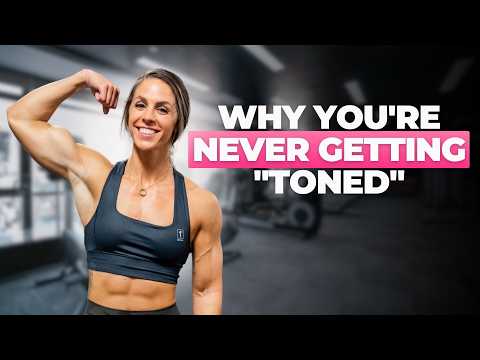 28 min
How to Get Toned After 40 Without Getting Bulky
Episode 356 · Apr 27, 2026
Why Isn't the Scale Moving When I Eat Well and Lift?
Episode 139 · Mar 18, 2024
How Long Does It Take Women to Build Visible Muscle?
Episode 229 · Jan 31, 2025
Free Body
Transformation Assessment