
Answered in 9 episodes
Why am I not losing weight on 1,200 calories?
Answered by Nikkiey Stott and her guests · Updated
The short answer
Eating 1,200 calories is often too little, not too much. Dr. Stacy Sims explains it sits around an average resting metabolic rate, so your body treats it as a threat, conserves energy and breaks down lean mass. Long-term dieting also adapts your metabolism down. Before cutting further, check your tracking is accurate.
Hear it from the show
Tap play to start right where it's answered. It keeps playing while you browse.
Dr. Stacy Sims on why 1,200 calories reads as a threat and costs you lean mass
Plays from 19:38 · Ep. 250: Why a 1200-Calorie Diet Fails Women Over 40
Amber Brueseke on metabolic adaptation and why reverse dieting helps
Plays from 40:17 · Ep. 47: Why You Keep Self-Sabotaging Your Fat Loss Goals
Nikkiey on how long-term under-eating disrupts thyroid and other hormones
Plays from 13:03 · Ep. 39: How to Fix Your Metabolism After Years of Dieting
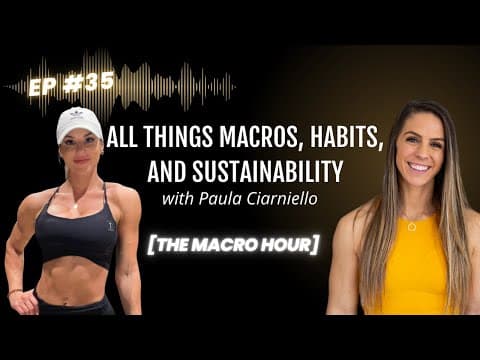
Paula Ciarniello on why tracking accuracy beats dropping to 1,200
Plays from 39:16 · Ep. 35: How to Track Macros Without Obsessing Over Every Number
The full answer
On Ep. 250, Dr. Stacy Sims explains that 1,100 to 1,200 calories is roughly what your body needs lying in bed, before you even get up to pee. Eat that little and the body conserves energy and pulls fuel from lean mass, which is metabolically active tissue. The women she sees under-eating tend to gain belly fat, look puffy, lose lean mass, stop responding to training and sleep poorly because the body is stuck in a stressed state. The same conversation runs on Eps. 300 and 324, where she adds that the menopause transition already puts the body under some stress, so feeding it and training appropriately matters even more. If you suspect hormonal or thyroid issues, that is a conversation to have with your doctor.
On Ep. 47, Amber Brueseke describes metabolic adaptation: stay in a deficit long enough and your body slows everything down to match what you feed it. Eating less and moving more doesn't break that cycle. She says metabolisms can adapt back up through reverse dieting, and that most of life should be lived at maintenance.
Nikkiey, on Ep. 39, ties long-term under-eating and overworking to shifts in leptin, ghrelin, thyroid, testosterone, progesterone, estrogen and cortisol, which in her view is why results stall even at 1,200. One sign she watches for: if you're eating 1,200 and never feel hungry, something is off. Her fix is usually bringing food back up, often a little more than you've been eating, before any cut.
There is one honest check first. On Ep. 35, Paula Ciarniello says to make sure you are logging everything, including condiments and drinks, and weighing food rather than eyeballing it. A handful of nuts can be 100 or 500 calories, and bites, licks and tastes add up. Her point: the answer is accuracy at your current intake, not dropping to 1,200. Either way, it's the plan that needs adjusting, not you.
From The WarriorBabe Show with Nikkiey Stott. For education, not medical advice: talk to your doctor about your own health.
Women also ask
More questions →
Diets, Fasting & Diet Culture
Do carbs make you gain weight?
No. Nikkiey explains that carbs on their own don't make you gain fat. Eating more calories than your body burns does, whether those calories come from carbs, fat or protein. Carbs are stored as glycogen, which holds about three grams of water per gram, so the scale can rise temporarily without any fat gain.
Read the answer →

Diets, Fasting & Diet Culture
Do I have to cut carbs to lose weight?
No. On The WarriorBabe Show, Nikkiey's position is that you don't need to cut carbs to lose fat. She calls carbs fuel, not the enemy, and says very low carb mostly drops water weight at first. Over time, under-eating carbs can drain your energy, hurt your workouts and make building muscle nearly impossible.
Read the answer →
Diets, Fasting & Diet Culture
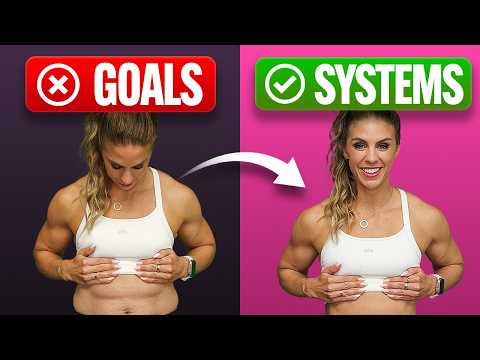
Why do I always gain the weight back after a diet?
According to Nikkiey, the weight comes back because the diet changed the outcome, not the habits underneath it. Quick fixes built on heavy restriction work for a while. Then the plan ends, you go back to normal, and normal recreates the old body. Most women don't have a weight loss problem; they have a keep-it-off problem.
Read the answer →
Watch the full episodes
More episodes →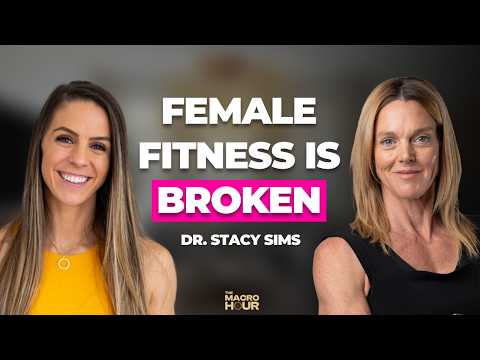 1 hr 3 min
Why a 1200-Calorie Diet Fails Women Over 40
With Dr. Stacy Sims
 28 min
How to Fix Your Metabolism After Years of Dieting
Episode 39 · Apr 7, 2023
 1 hr 1 min
How to Track Macros Without Obsessing Over Every Number
With Paula Ciarniello