
Episode 33820 min
Complete vs Incomplete Protein for Women Over 40
Chapters
In this episode
You have heard it over and over: eat more protein. But not all protein does the same job. In this episode Nikkiey Stott gets a little more technical and explains why the type of protein you eat matters as much as the amount, especially if you want that firm, toned look after 40. Protein is made of amino acids, your body's building blocks. Nine of them are essential, which means you have to get them from food.
Complete proteins like chicken, turkey, beef, eggs, fish, Greek yogurt, cottage cheese and whey contain all nine essential amino acids. Incomplete proteins like nuts, seeds, rice, oats, beans, lentils and vegetables are still healthy, but they are missing one or more of those building blocks. Nikkiey explains why so many women think they are eating enough protein when most of it comes from peanut butter, oatmeal, avocado toast and chickpea salads, and why two women can eat the same calories and get completely different results.
The fix is not to cut out the foods you like. Build most meals around a complete protein and layer incomplete proteins on top, such as egg whites with oatmeal or salmon with quinoa. As women age and naturally lose muscle, Nikkiey says the body needs a stronger signal to build it, and complete protein provides that signal. If you are not ready to track or weigh food, this is the place she suggests you start.
Key takeaways
- Complete proteins contain all nine essential amino acids, and the main sources Nikkiey names are chicken, turkey, beef, eggs, fish, Greek yogurt, cottage cheese and whey protein.
- Nuts, seeds, rice, oats, vegetables, beans and lentils are incomplete proteins: they still have value, but they should not be your primary protein source if you want to build muscle.
- Build most meals around a complete protein and layer incomplete proteins on top, such as chicken with rice, eggs with oatmeal, Greek yogurt with granola and fruit, or salmon with quinoa.
- When you order avocado toast at a restaurant, ask for a side of egg whites so the meal includes a complete protein.
- A bar with about 10 grams of protein is not enough, while three ounces of chicken gives roughly 20 to 22 grams and four ounces about 25 grams.
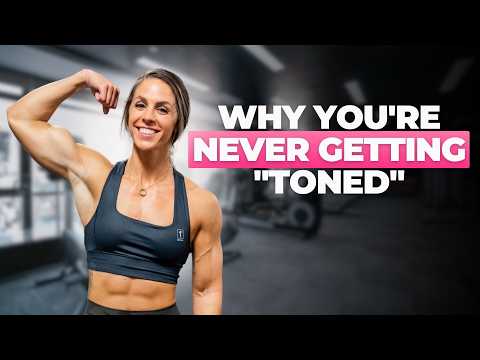
- Getting toned means building muscle and then reducing the body fat around it, so being afraid of getting bulky works against the look you actually want.
- Because women naturally lose muscle as they age, Nikkiey explains, the body becomes less efficient at building it and needs the stronger signal that complete proteins provide.
- If you are not ready to track or weigh your food, start by honestly looking at what type of protein you are eating and whether most of it comes from complete sources.
Questions answered
What is the difference between complete and incomplete protein?
A complete protein contains all nine essential amino acids, the ones your body cannot make and must get from food. An incomplete protein is still protein and still has value, but it is missing one or more of those key building blocks.
Which foods are complete proteins?
Nikkiey lists chicken, turkey, beef, eggs, fish, Greek yogurt, cottage cheese and whey protein as complete, high-quality proteins.
Are nuts, oats and beans bad protein sources?
No. Nikkiey says incomplete proteins like nuts, seeds, rice, oats, beans and lentils are healthy and part of a balanced diet, but they should not be your main protein source if your goal is to build muscle and get toned. Make complete proteins the foundation of most meals and layer these foods on top.
Why does protein quality matter more for women over 40?
Nikkiey explains that we naturally lose muscle with age, recovery slows and metabolism becomes more sensitive, so the body becomes less efficient at building muscle. It needs a stronger signal, and complete proteins provide that by supplying the full amino acid profile.
Is a protein bar with 10 grams of protein enough?
Nikkiey says 10 grams is not enough protein, and in bars like Clif bars the protein is not coming from ingredients that give your body the amino acid profile it needs. By comparison, three ounces of chicken has about 20 to 22 grams of protein.
Full transcript
Nikkiey: You want a tighter body, a stronger metabolism, and muscle is what creates that look. Muscle is what gives you shape. Muscle is what gives you that firmness. Muscle is what makes that body look more quote-unquote toned. I just want to keep saying it like that because a lot of women want to get toned, but they don't want to put in the work that it takes to get toned because they have this misconception about what it means to build muscle. They're afraid muscle is going to get them bulky, but when you say you want to get toned, what you actually mean is you want to build more muscle.
What's going on, everybody? Hey, you guys. Welcome back to another episode of The WarriorBabe Show with your host, Nikkiey Stott. On these episodes, we talk about mindset, methodologies, and tactics that will help you lose body fat, build muscle, be strong, and feel insanely confident. Today is episode number 338, and today I'm going to get a little bit more technical with you guys.
This was inspired by our WarriorBabe free community. If you guys aren't yet a part of it, I highly recommend you go check it out. Go to Facebook, type in WarriorBabe, and you'll see a WarriorBabe community come up. Or you can go to facebook.com/groups/warriorbabecommunity and just join. Every week on Thursday, we go live and we talk about educational topics. I'm bringing this episode to you because it's inspired by one of those calls I had with the WarriorBabes in that community. We do a Q&A after all of these weekly calls.
So many of the Babes were asking about incomplete protein versus complete protein. So that's what I want to dive into today with you guys. I hope it makes total sense, and I think it's also going to help change the way that you look at food. Because you guys know I've been saying it over and over and over again in many, many episodes: you need more protein, right?
You've heard it from me. You've heard it everywhere. You probably see it online, on social media. You've seen coaches preaching and saying the same thing, right? Eat more protein. Hit your protein goal. Protein helps you get toned and build that muscle. But I want to educate you on how protein is not all the same. Once you understand that, it's going to change the way you see how to build muscle, how you recover, how you feel, and also how strong your metabolism becomes over time. So we're going to dive into that topic today.
I hope you walk away understanding it, because once you do, I believe that everything will click for you. Not everything, I shouldn't say everything, but some things will click for you in terms of your nutritional perspective. Okay? But before we dive into incomplete versus complete, I want to zoom out for a second. Because protein isn't just a macro, in my opinion. Protein, just as a reminder, is what your body uses to build muscle, to repair tissue, to support hormones, to support your metabolism, to support your longevity, to support your immune function, to support your hair, skin, and nails.
So it's the king of all macronutrients, in my opinion. It's so much more than just a macronutrient, because it does all those things. Protein is made up of building blocks called amino acids. I'm sure you've heard of those before. I want you to think of amino acids like Legos. Your body takes the protein that you eat, breaks it down into amino acids, and uses those pieces to rebuild and repair your body.
In total, there are 20 amino acids. Out of those 20, nine are called essential amino acids, meaning that your body cannot make them on its own and you must get them from food. And this is where the difference between complete and incomplete protein comes from. Okay? So let's dive into what complete protein is first.
A complete protein is a protein source that contains all nine essential amino acids that your body needs. These are proteins that fully support muscle growth, muscle repair, strength progression, body recomposition, all those things. Complete proteins are typically chicken, turkey, beef, eggs, fish, and Greek yogurt.
And I'm going to say it, because on that call so many people were like, gross, I don't want to eat it: cottage cheese has all nine essential amino acids in it. And whey protein. These are all considered high-quality proteins, because they give your body the full set of building blocks it needs to, in layman's terms, basically get the appearance that you want with your body. Eating these things will help support the goal of changing your body composition. This is why, when women start prioritizing these foods,
they suddenly notice a difference in their strength. They have better strength. They have better recovery. They have more muscle tone. And they have less hunger. Because their body is finally getting what it needs to rebuild, to feel satiated, to support hunger hormones, to have the strength that it needs inside the gym. Okay? So again, let me just read those off, because what I'm about to dive into with incomplete proteins is why a lot of women think they eat enough protein.
It's because of the incomplete protein realm. It's not even a negotiation: you need to make sure you get chicken, turkey, beef, eggs, fish, Greek yogurt. And I know some of you are vegetarian or vegan. There are options out there that can support that lifestyle too. But mainly, I'm saying you need these things because they're complete proteins, and this is where complete proteins are typically found, in those food items.
Okay, so complete protein, again, is a protein source that contains all nine essential amino acids that your body needs. Incomplete protein is a protein source that does not contain all nine essential amino acids. Don't get me wrong, it's still protein, and yes, it still has value. But it's missing one or more of the key building blocks your body needs in order to achieve the goal you want to accomplish, right? Common incomplete proteins include food items like nuts, seeds, rice, oats, vegetables, beans, and lentils.
And this is where it gets a little bit tricky, because many, many women think, oh, I'm eating enough protein, and then they start rattling off: I eat oatmeal. I eat rice. I eat peanut butter, right? But most of their intake is coming from these incomplete sources, like peanut butter, almonds, avocado toast, salads with chickpeas in them. They're not strong muscle-building proteins on their own.
Again, complete equals nine essential amino acids. Incomplete equals not consisting of all nine essential amino acids. A lot of women think they're eating healthy or having enough protein because they eat the food items I just named off. These foods are healthy, yes, but they're not the type of food items you need to achieve the goal you want, which is building more muscle. And building more muscle is what's going to make you look more toned once you decrease the body fat around the muscle, right?
Quick break. If you're finding this episode helpful so far, it would mean a lot if you could hit pause for just a second, leave a quick rating or a review, or share it with someone who could benefit from it. Your support helps more women discover these tools to build muscle, lose fat, and feel confident. Thank you so much for being a part of this journey with me.
And this is also why women say, I eat clean, I eat healthy, I eat plant-based most of the day. But again, you're not building muscle, you're not getting strong, you're not feeling full, because your body isn't getting the full amino acid profile that it needs.
So let me put this in a little present for you, tie it up in ribbon, and put a bow on top. Here's why it matters so much for fat loss and for wanting that quote-unquote toned look, that more defined, lean, fit look. You want that. You want a tighter body, a stronger metabolism. And muscle is what creates that look. Muscle is what gives you shape. Muscle is what gives you that firmness. Muscle is what makes that body look more quote-unquote toned.
And I just want to keep saying it like that because a lot of women want to get toned, but they don't want to put in the work that it takes to get toned, because they have this misconception about what it means to build muscle. They're afraid muscle is going to get them bulky. But when you say you want to get toned, what you actually mean is you want to build more muscle. When you focus on fat loss, which was an episode about two weeks ago, you are decreasing the body fat around the muscle that you have on your body or are continuing to build on your body.
And when you do that, you're going to reveal that toned look. That's what it means. Muscle gives you firmness. Muscle is what gives you that toned look. And to build muscle, your body needs that full amino acid profile. That's why complete proteins and those food items I named off are so powerful: they signal to the body, okay, I'm good to repair because I'm getting these nutrients. I'm good to grow. I'm good to rebuild. I'm good to feel satiated. I'm good to do X, Y, and Z, because I'm getting the amino acid profile I need in order to do these things.
And over time, that is what's going to change your body composition. This is also why two women can eat the same calories but look completely different and have completely different results. If one eats eggs, chicken, lean meats, Greek yogurt, and fish, and the other eats oats, nuts, beans, and granola, both, don't get me wrong, are healthy. But one is getting much higher quality protein, and that matters.
Now, all in all, I'm not saying incomplete proteins are bad. They're not. They're part of a balanced diet. I eat all of those food items I just named off. But they shouldn't be your primary protein source if your goal is to build muscle, to improve your metabolism, to be fit, to get toned, and, for longevity, to have an overall healthy, strong body. The foundation should be complete proteins at most of your meals, and then incomplete proteins can be layered on top, right?
Like, I make sure that I have egg whites with my oatmeal. Or if I'm ever out at a restaurant and I get avocado toast, I will always ask for a side of egg whites. To continue with examples: making sure you have chicken and then you have that rice. Or making sure you have eggs with that oatmeal I just mentioned. Or you have Greek yogurt with granola mixed in with fruit. Or you have salmon with quinoa as a side, right? It's not just, I eat quinoa and that has protein in it.
It's an incomplete protein. And when I say this out loud, I'm also speaking to the women who don't eat meat. I feel like America, or the FDA, or whoever is in control of our foods, needs to make more protein sources. That's a very short list of all the things that are out there. And I could dive into why that is, but that's neither here nor there.
But yeah, we need a broader, more expansive list of protein options. Okay? But anyway, I digress. Going off on a little rant, I also want to remind you why this topic becomes so much more important for women who are my age or over 40, 45, 50. I shared this with the community on one of these Thursday calls that we do. Join the Facebook community, come on in. You're more than welcome, even if you aren't a part of our product or our VIP coaching.
As we age, we naturally lose muscle. Every decade, we lose anywhere from about 3% to 8% of our muscle mass. Our recovery slows down, and our metabolism becomes more sensitive. This is why protein quality matters even more: your body becomes less efficient at building muscle, so it needs a stronger signal. And complete proteins provide that signal by providing the amino acid profile that your body needs.
And this is one of the reasons why I talk about protein so much. I'm hoping this episode hits on a different level. Because I can say protein is so important, protein is so important, here's why: because it helps you build muscle, yada, yada, yada. It's a macronutrient god. It does all these cool things. But why it's so important is that it's not just about hitting a number. It's about giving your body the right building blocks to work from, essentially, to get you to your goal.
But also just to be healthy in general. So all in all, if I could sum up this episode in one thought, it would be: don't focus so much on how much protein you eat. I could totally spiral and go into protein bars, like Clif bars or bars with a similar protein profile. And I could even talk about the difference between the different whey proteins.
But I'm not going to dive into that bucket on this episode. I'm keeping it high level in terms of food. Clif bars have 10 grams of protein. That is not enough protein. And if you look at the ingredient profile, the protein is not coming from the right ingredients in terms of giving your body the amino acid profile it needs. So, off on a little tangent there, but what I'm saying is a lot of women think they're eating enough protein when they see 10 grams of protein on a meal
or on a nutrition label. They see eight grams, they see 12 grams. I don't want to knock that thought, but your body needs so much more protein than that. And where you're going to get the quantity of protein along with the quality, your most bang for your buck, is in those food items I mentioned. For example, three ounces of chicken is about 20 to 22 grams of protein. Four ounces is 25, right?
So you're getting way more protein in those complete protein sources. So anyway, off on a tangent, but if I had to sum it up: start paying attention to what type of protein you're eating, right? Make sure you're including meals that have strong, complete protein sources. Because once you do that, and you steer away from the more snacky items I mentioned, the incomplete proteins like nuts, seeds, oatmeal, avocado toast, peanut butter, X, Y, Z, and you start incorporating more complete protein,
you're going to notice a big improvement in your strength, a big, big improvement in your recovery, and overall a big improvement in your body composition and the results you're seeing, results that support fat loss and longevity. And if there's anything I could encourage you to focus on, yes, strength workouts, getting under the barbell, picking up the dumbbells, are so important to building a strong body and putting that metabolic stress on your muscles so they get stronger.
But if there's one thing you could start paying attention to, this one shift could be the missing piece on the nutrition side. You don't even need to start tracking. You don't even need to start weighing your foods. If you're just trying to take a step in the right direction with your nutrition, this is where I would start: look at what type of protein you're eating. Are you giving your body the essential amino acids that you've now learned come from complete proteins? Are you giving your body enough of those food items?
Really look at it, and be honest with yourself. Okay? Because this could be a missing piece. If you just start making these small tweaks, you're going to feel different. You're going to feel good. And I know I kind of breezed through this episode, but this is one of those topics that can seem so small yet create such a big shift once you understand it. Because if you give your body the right building blocks, it finally has what it needs to change. And that's what your journey is all about, right?
It's not starving the body, it's supporting it. Giving your body the right nutrients is going to help you get to the goal you want to get to. Because again, you could be working out, you could be crushing it, you could be doing all these awesome things, you could be nailing it, but there could be an aspect where you feel like you're still stuck. And a lot of times you just need to dial into the nutrition aspect. It makes a huge difference.
All right, everyone, I hope you enjoyed this episode. Maybe you need to play it back just to remind yourself of some things I said. Come in and join our free community at facebook.com/groups/warriorbabecommunity. Or go to Facebook, go to Groups, search WarriorBabe, and find the one with the black banner that says WarriorBabe Community. Come on in. Join us. Every Thursday at 6 p.m. Eastern, we go live and educate you on all of the things, like this topic I'm talking about right now. All right. Love you guys, and I'll see you in the next episode. Peace out.
Real quick: if this episode resonated with you or gave you the push you needed, I'd love for you to pay it forward. Drop a quick rating and review, share the podcast with someone who might need it, and help me keep spreading the word. Your feedback not only helps the show grow, but it might just be the nudge someone else needs to kickstart their transformation. Thank you so, so, so much for your support.
Listen next
All episodes →Why Am I Lifting Weights But Not Seeing Muscle?
Episode 281 · Aug 1, 2025
 28 min
How to Get Toned After 40 Without Getting Bulky
Episode 356 · Apr 27, 2026
What to Eat After a Workout for Muscle Recovery
Episode 184 · Aug 26, 2024
Free Body
Transformation Assessment