
Answered in 6 episodes
Does strength training help bone density in menopause?
Answered by Nikkiey Stott and her guests · Updated
The short answer
Yes. Nikkiey explains that strength training puts stress on your bones, which triggers them to rebuild stronger and denser, raising bone mineral density and lowering osteoporosis risk as estrogen drops in menopause. On the show, she and guest Sal Di Stefano agree that walking and cardio don't come close to resistance training for bone.
Hear it from the show
Tap play to start right where it's answered. It keeps playing while you browse.
Nikkiey on how lifting activates bone-building cells and why walking isn't enough
Plays from 18:33 · Ep. 373: Why Women Over 40 Need Strength Training
Sal Di Stefano on why nothing beats strength training for bone density
Plays from 42:23 · Ep. 92: How to Build Discipline for Fitness, With Sal Di Stefano
Nikkiey explains how stressing your bones makes them stronger and denser
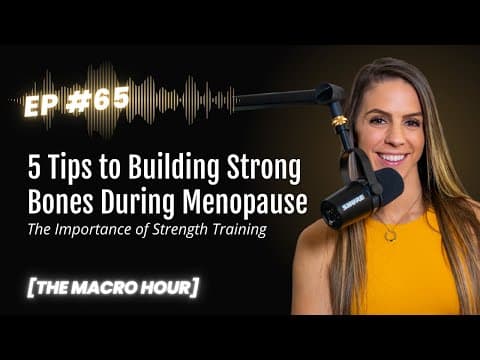
Plays from 8:09 · Ep. 65: Strength Training for Strong Bones During Menopause
How bone remodeling works and why legs and spine respond to resistance training
Plays from 3:59 · Ep. 98: Why Build Muscle During Menopause? 4 Key Reasons
Nikkiey on osteoporosis after menopause and building muscle around your bones
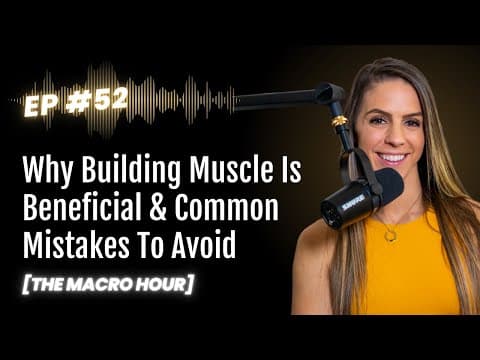
Plays from 15:56 · Ep. 52: Why Build Muscle After 40: Mistakes Women Should Avoid
The full answer
On Ep. 65, Nikkiey explains why this matters now. During menopause, hormones shift and some decrease, including estrogen, which she calls very important to bone health. As those levels change, bone density declines and osteoporosis risk climbs. She draws on her nine years in healthcare, including time in a nursing home and the ER, where she saw women come in with broken hips after falls. For questions about your own bones or hormones, work with your doctor.
The mechanism is simple: lifting stresses bone, and bone responds. On Ep. 98 she describes remodeling, where old tissue is removed and replaced with new. Weight-bearing bones like the legs and spine are especially responsive. On Ep. 373 she adds that mechanical loading stimulates bone-forming cells called osteoblasts. She also says women who strength train consistently have measurably higher bone density than women who don't.
That's why cardio alone falls short. Nikkiey says walking and cardio don't do this to the same degree as heavy resistance training. On Ep. 92, Sal Di Stefano goes further and says nothing comes close to strength training for bone density. In his view, cardio has a small, mostly lower-body effect, and data suggests it may even cause bone loss in the upper body. He also points out that calcium, magnesium and vitamin D are building blocks. Without the training signal, your body has no instructions for using them.
Stronger bones are only part of the payoff. On Ep. 52, Nikkiey cites a CDC statistic that 95 percent of hip fractures come from falls. Strength training builds muscle around your bones. She says that makes you more likely to withstand a fall and recover more easily if you do break something. Pair it with a nutrient-dense diet and you're protecting your independence, not just exercising.
From The WarriorBabe Show with Nikkiey Stott. For education, not medical advice: talk to your doctor about your own health.
Women also ask
More questions →
Women's Health & Aging
Does lifting weights help your mental health?
Yes. On The WarriorBabe Show, Nikkiey explains that lifting gives the stress your body carries somewhere to go, triggers endorphins she calls the brain's natural antidepressants, and builds confidence every time you lift heavier. She also cautions that not every way of exercising is good for your mind, especially when your training is driven by guilt.
Read the answer →
Women's Health & Aging
Can I strength train after a knee or hip replacement?
Yes, according to several women on The WarriorBabe Show who did it. Johanna lifts three days a week after two total knee replacements and says she has no programming limitations. Peggy started about four to five months after her surgeries with one modified session a week. Follow your surgeon's guidance and modify every movement.
Read the answer →

Women's Health & Aging
What should I do if my doctor dismisses my symptoms?
Don't accept "it's just aging" or "it's stress" without data. Nikkiey says to push back politely and firmly, arrive with a weekly symptom log and a list of questions and tests, and remember you can get a second opinion or change doctors if yours won't engage.
Read the answer →
Watch the full episodes
More episodes → 1 hr 8 min
How to Build Discipline for Fitness, With Sal Di Stefano
With Sal Di Stefano
 31 min
Why Build Muscle After 40: Mistakes Women Should Avoid
Episode 52 · May 8, 2023
 29 min
Strength Training for Strong Bones During Menopause
Episode 65 · Jun 7, 2023