
Answered in 5 episodes
How much protein do women in menopause need?
Answered by Nikkiey Stott and her guests · Updated
The short answer
Nikkiey's recommendation is about one gram of protein per pound of body weight, so a 150-pound woman aims for roughly 150 grams a day, and that target stays the same through menopause. Guests on The WarriorBabe Show land in a similar range, and several say most women are eating far too little.
Hear it from the show
Tap play to start right where it's answered. It keeps playing while you browse.
Nikkiey on why one gram per pound stays the same through menopause
Plays from 15:47 · Ep. 75: How Hormone Changes Affect Fat Loss and Muscle After 45
Nikkiey on tracking honestly and why 40 to 60 grams a day falls short
Plays from 13:39 · Ep. 406: Not Losing Fat After 40? It May Not Be Your Hormones
Esther Blum on aiming for 120 to 150 grams and starting at 100
Plays from 8:23 · Ep. 130: How to Navigate Menopause: Protein, Carbs, HRT and Lifting
Abbey Sharp gives her grams-per-kilogram range for perimenopause and menopause
Plays from 42:08 · Ep. 306: How to Stop Food Cravings Without Restrictive Dieting
Hatty McCafferty on 160 grams for a 160-pound woman, starting at breakfast
Plays from 48:17 · Ep. 207: Early Signs of Perimenopause and How to Manage Them
The full answer
Nikkiey explains on Ep. 406 that perimenopause raises your protein requirement because of anabolic resistance: your body needs more protein to get the same muscle-preserving response. If you're eating 40, 50 or 60 grams a day and your muscle is disappearing, she calls that a protein problem compounded by perimenopause, not a hormone problem alone. Her test is simple. Track honestly for a week. If you're consistently hitting about one gram per pound of body weight, you can rule protein out as the main driver. On Ep. 75 she adds that even when carb and fat intake shift after menopause, protein stays the same.
The guests' numbers:
- Esther Blum (Ep. 130) aims for 120 to 150 grams a day but starts women at 100 because higher targets feel intimidating. She says most women come to her eating 60 to 70 grams, and recommends 30 to 40 grams per meal, roughly four to five ounces, to get enough leucine for muscle.
- Hatty McCafferty (Ep. 207) uses about one gram per pound, so a 160-pound woman eats around 160 grams, in four or five palm-sized portions starting at breakfast.
- Abbey Sharp (Ep. 306) recommends about 1.2 to 1.6 or 1.8 grams per kilogram, a little higher with fat loss goals, with protein at every meal and most snacks.
One nuance: Abbey's per-kilogram range works out lower than the one-gram-per-pound target Nikkiey and Hatty use (one gram per pound is about 2.2 grams per kilogram). What everyone agrees on is that the typical intake of 40 to 70 grams is nowhere near enough, and that protein works best spread through the day rather than saved for dinner. If you have a medical condition that affects how much protein you can eat, check your target with your doctor. Otherwise, if your body has stopped responding, look at the plan before you blame yourself.
From The WarriorBabe Show with Nikkiey Stott. For education, not medical advice: talk to your doctor about your own health.
Women also ask
More questions →
Menopause & Perimenopause Weight Loss
What are the first signs of perimenopause?
According to guests on The WarriorBabe Show, the first signs usually aren't hot flashes or missed periods. Dr. Jolene Brighten says falling progesterone shows up first as worsening PMS, irritability, breast tenderness and waking at night before your period, sometimes from 35. Hatty McCafferty adds sleep disruption, skin changes, digestive shifts and fatigue.
Read the answer →
Menopause & Perimenopause Weight Loss
Is it possible to lose weight after menopause?
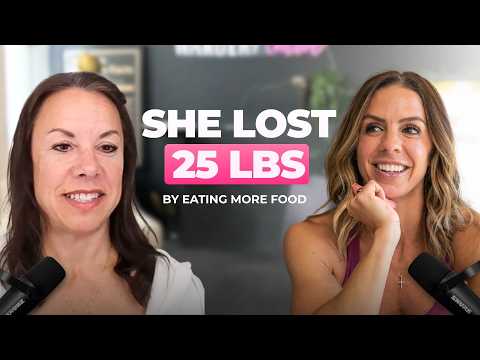
Yes. The WarriorBabe Show has featured several post-menopausal women who lost weight: Debra went from close to 180 to 149 pounds, Amy lost over 40 pounds, and Bryn lost over 25 while eating more. Nikkiey explains the approach is adjusting nutrition and exercise: enough food and protein, consistent strength training, and patience.
Read the answer →
Menopause & Perimenopause Weight Loss
Should I eat fewer carbs during menopause?
Moderately, yes, but not to keto levels. Nikkiey explains that WarriorBabe lowers carbs and raises fats during perimenopause and menopause because insulin resistance changes how your body handles carbs, using a split of 35% protein, 27% carbs and 38% fat. Carbs are never eliminated, and guest Louise Digby warns that going too low can slow your metabolism.
Read the answer →
Watch the full episodes
More episodes →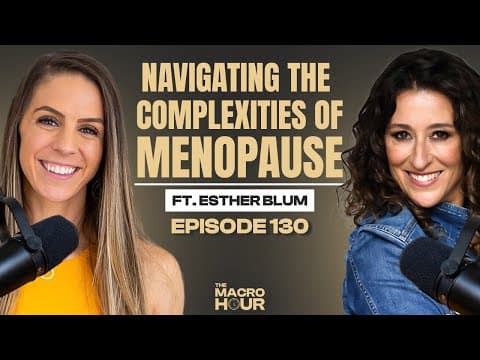 1 hr 6 min
How to Navigate Menopause: Protein, Carbs, HRT and Lifting
With Esther Blum
 28 min
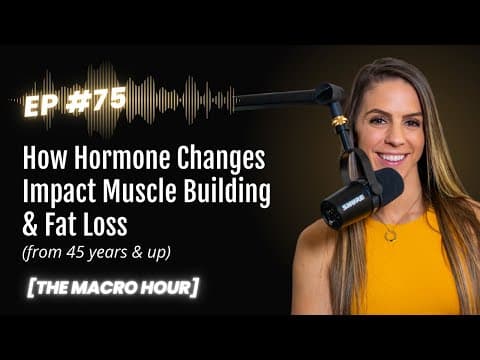
How Hormone Changes Affect Fat Loss and Muscle After 45
Episode 75 · Jul 3, 2023
 50 min
How to Stop Food Cravings Without Restrictive Dieting
With Abbey Sharp