
Episode 30333 min
Calories vs Macros: What Women Over 40 Need to Know

Listen to episode 303
Chapters
In this episode
Most women have been taught to chase one number: calories. In this episode, Nikkiey Stott explains why that number only tells part of the story. Calories decide whether you lose or gain weight, but macros (protein, carbohydrates and fats) decide what your body actually looks like. You can lose weight on 1,200 calories and still end up tired, soft and frustrated, a smaller version of the same body.
Using a real moment standing in line at a fast-casual restaurant, Nikkiey walks through why picking the lowest-calorie option on the menu keeps so many women stuck. She compares a blueberry muffin, an egg omelet and avocado toast that land in the same calorie range but act completely differently in your body. She breaks down each macro in plain terms: protein is the builder, carbs are the fuel and fats are the regulator. She also explains why protein in particular protects your muscle, keeps you full and supports your metabolism.
She closes with a practical starting point. Get clear on your goal, track what you are already eating for seven days to build awareness, then set a calorie target and a protein, carb and fat breakdown that fits your body. The aim is not perfection or another diet. It is understanding what is in your food so you can stop eating less and start eating right.
Key takeaways
- Calories determine your size, but macros determine your shape, so if your real goal is to look toned and defined, counting calories alone will not get you there.
- When you see calorie numbers on a restaurant or cafe menu, pause and ask what those calories are actually made of instead of automatically picking the lowest number.
- Eat enough protein while in a calorie deficit so your body holds on to muscle instead of breaking it down for energy, which is the difference between ending up skinny fat and toned.
- A 400-calorie blueberry muffin is mostly carbs with under 5 grams of protein, while a 450-calorie omelet has around 35 grams of protein and keeps you full for two to three hours.
- If you order avocado toast, which is mostly fats and carbs, add a side of egg whites to bring up the protein.
- Do not fear carbohydrates; they fuel your workouts and recovery, but pair them with training so your muscles can use them.
- Fats have nine calories per gram versus four for protein and carbs, so they are easy to overeat in meals that look reasonable on calories.
- To start, log everything you eat for seven days in MyFitnessPal just to build awareness before deciding whether you need to raise protein, reverse diet or set a new calorie target.
Questions answered
What is the difference between calories and macros?
Nikkiey explains that calories measure how much energy you put into your body, while macros (protein, carbohydrates and fats) tell you what those calories are made of and how they work once they are in your body. Calories control your weight, and macros control your shape.
Can you lose weight eating 1,200 calories a day?
Yes, Nikkiey says you probably will lose weight, but you are likely to end up a skinnier, softer version of yourself who feels tired and frustrated. If you want to look toned and defined, you need the right macros, especially enough protein.
Why am I eating healthy but not seeing results?
According to Nikkiey, many women are calorie aware but not macro aware. They choose low-calorie meals that are mostly carbs and fats, and most women eat about half the protein they need.
Does your metabolism slow down because of age?
Nikkiey's view is that it is not age but muscle loss from years of under-eating, particularly under-eating protein. Protein preserves muscle, and more muscle means a higher metabolism that burns more even at rest.
Why do I get intense cravings at the end of the day?
Nikkiey says it is usually because you did not give your body enough proper nutrients during the day, most likely not enough protein. Protein keeps you full for two to three hours, which is why she recommends multiple smaller meals through the day.
How do I start tracking macros?
First decide your goal: lose fat, gain muscle or maintain. Then track everything you eat for seven days in MyFitnessPal to see how much you really eat, set a calorie target and break it into protein, fats and carbs that fit your body, focusing on consistency rather than perfection.
Full transcript
Nikkiey: Macronutrients are protein, carbohydrates and fats. And they tell you what those calories are made up of and how they work once they're in your body. So think of it like this. You've got 1,600 calories. What are those calories made up of? What is the percentage of protein in that number? What is the percentage of carbohydrates in that number? And what is the percentage of fats in that number?
What's up, everybody? Hey, you guys. Welcome back to another episode of The WarriorBabe Show with your host, Nikkiey Stott. On these episodes, we talk about mindset, methodologies and tactics that will help you lose body fat, build muscle, be strong and feel insanely confident.
All right, my friends. On today's episode, episode number 303, I want to talk about something that I think every woman needs to understand if she wants to stop spinning her wheels with food and finally change the way her body looks, her body composition. Because here's the truth. Most women have been taught to chase one number. They've been taught to look at just calories. We've been programmed to believe that as long as you eat less and you burn more, you will lose weight. And that's not wrong. Calories do control whether you lose or gain weight. That's the math.
And you've heard it from influencer after influencer on social media, or maybe people you follow in programs. How do I lose weight is your number one question, and their response is going to be, you need to be in a calorie deficit. Yes. So focusing on that number, controlling that number, will help you either lose or gain weight. That's just math.
But macros, macronutrients, which some of you have probably never even heard of before. Even if you've been listening to this podcast for the three years we've had it live, you're learning about macros, but before this you'd never heard about macros. You may have been the one that was just focusing on calories. Macros are what I want to dive into with you guys today. Really dive into it, so that you leave understanding which one is more important to focus on.
Macros control what your body actually looks like. And that's the magic. You can lose weight eating 1,200 calories a day. Yes, you can. But what you will end up feeling and looking like is more of a skinnier, fatter version of yourself. You're going to end up tired. You're going to end up flabby. You're going to end up more frustrated, because yes, you wanted to lose weight, but in your mind, losing weight also has this image of, I want to be toned. I want to be lean. I want to be defined.
So first of all, get clear and use clear verbiage on the goals that you want. Because if you want to lose weight, focusing on calories, calories in and calories out, all that jazz, will help you do it. But I know the majority of you have that other goal of, I want to be toned, I want to be defined, X, Y and Z. If you eat 1,800 calories with the right macros, you're going to be able to build muscle. You're going to be able to tone your body. You're going to be able to boost your metabolism. You're going to actually be able to feel very strong. And that's typically the goal the majority of you want.
Because this is the thing. Calories are going to determine your size, but macros are going to determine your shape. And that's really what I want to dive into with you guys today.
So let's talk about why so many women get stuck in this calorie trap. First and foremost, it's not your fault. This has been years and decades of marketing telling you to focus on your calories, yada, yada, yada. We've all been there.
This topic was inspired when I walked into a Cava or a Sweetgreen, one of those quick chain healthy restaurants. If you have those by you, or you've been in one of those types of places, you can literally choose: do you want a burrito, do you want a bowl? You pick your base, you pick your protein, you pick your toppings, X, Y and Z. But basically I'm standing in line. You guys are standing in line. You're looking up at a board and you're seeing these bold numbers next to every single meal.
And those bold numbers say, okay, the honey harissa chicken bowl is 450 calories. Or you see another one that's 620 calories, or another one that's 390 calories, or some of them in the 800s and the 1,000s. And the first thought that hits your brain is what? First of all, you're judging, and you're like, I'm just going to pick the one with the lowest number. Because we've all been conditioned to believe that smaller means better, that fewer calories means more progress.
But that conditioning has kept millions of us women stuck in bodies that don't reflect our effort. Some of you guys are going to the gym four, five, six times a week. You're crushing it. You're getting your workouts in. Yet with your nutrition you're focusing on just the calories. You're going to restaurants, you're picking the lowest calorie number, and you're not eating enough. I'm also going to dive into the makeup of what you may be consuming, in a way you may not have thought about before.
Here's the thing. Calories measure energy. They tell you how much energy you're putting into your body, but not what kind of energy it is. Macros, on the other hand, are protein, carbohydrates and fats. Because some of you guys, like, I asked my son, I asked my mom, I asked family, friends, older generations, WarriorBabes, do you know what a macronutrient is? One of my friend's moms said it's a superfood.
So the information is out there, but the understanding of what it actually is isn't. Macronutrients are protein, carbohydrates and fats. And they tell you what those calories are made up of and how they work once they're in your body. So think of it like this. You've got a calorie number. You've got 1,600 calories. What are those calories made up of?
It's not just a blanket statement of 1,600 calories. There's so much more behind that number. What is the percentage of protein in that number? What is the percentage of carbohydrates in that number? And what is the percentage of fats in that number? We're going to elaborate on that.
But calories, again, will help you lose weight. My friends, if you are someone eating 1,200 calories, you're probably going to lose weight. But like I said, the majority of you want that tone, that definition, that sexy body. Macros are what help you lose fat and gain that tone, that definition, build that muscle. That's what tone is. You're eating the right nutrients to give the body what it needs to build muscle, which is then going to help you decrease body fat and help your metabolism, your hormones and all the other things. And aesthetically, it gives you that toned look when you have more muscle on your body.
That's why you can have two women eating 1,500 calories a day who look completely different. One looks lean and strong, and the other one probably feels soft, tired and frustrated. The difference isn't their calories. It's in their macros. And I'm going to break that down for you.
The majority of us look at it as, okay, I need to eat 1,500 calories. You download MyFitnessPal and you're just aiming to hit 1,500 calories in a day. You don't really care about the protein, fats and carbs because you weren't educated to understand them and why they're so important.
On one side of the table, if you're just focused on eating 1,500 calories, let me bring awareness to this: probably the majority of what you consume in a day is made up of carbohydrates and fats and not enough protein. I would put about a 95% bet on that being correct for the majority of you if you just focus on calories. On the other hand, if you have 1,500 calories and you know the percentages of protein, fats and carbs those 1,500 calories are coming from, then you're going to be eating the right balance of what your body needs.
And most importantly, you're going to be getting the protein your body needs, and protein is the macronutrient king of all kings.
I want to break this down a little further in a way that makes sense. Calories are like the total amount of money in your wallet. I know some of us just use Apple Pay nowadays, but bring me back to when we had cash in hand. Calories are the total amount of money you have in your wallet. Macros are how you spend that money.
So you could spend $1,500 on all the shoes. Think of shoes as carbs and fats. Or you can invest some of it into your future, like your muscle, your recovery, your hormones. That's protein. One looks cute in the short term, all the shoes. But the other sets you up for long-term wealth in your metabolism, in your energy and in your results.
Taking that a step further, some of you may have an understanding of it when I say macros are protein, fats and carbs. But maybe some of you are thinking macros are superfoods or macros are multivitamins. I don't know. Some of you have no idea what they are. So let me break it down for you.
Protein is the builder. Let me say that louder. Protein is the builder. And think about how many of you don't eat protein on a regular basis, or enough of it. What protein does is repair and maintain your muscle. So if you go into a calorie deficit and you're not eating enough protein, the first thing your body is going to attack to give you energy is your muscle.
But let's say you're going into a calorie deficit and you know the protein number you're supposed to be eating on a daily basis. You're not going to allow your body to tap into that muscle, because you're eating enough protein to maintain and hold on to it.
The image I like to bring to people's minds is the skinny fat version and a toned body. Someone who's skinny fat probably isn't eating enough protein when they're in a calorie deficit, so their body isn't only going after the fat, it's also going after the muscle to give the body energy.
A toned individual is decreasing body fat around their muscle, bringing that muscle more to show, making it more defined and toned. That person is eating enough protein, which maintains their muscle even though they're in a calorie deficit, because they're aware of the protein they're eating. So think about it like that. If there's anything you take away, and you're like, oh my gosh, I'm not eating enough protein, please just go and eat some protein.
And get a whole food protein. Because I'll tell people to eat more food, and then they're like, Nikkiey told me to eat more food, and they eat more carbs and fats. I'm like, no, no, no. You need to eat more of the right types of foods. That's what I mean.
So going back to protein: it keeps you full. It balances your blood sugar. It supports your hormones. And if you don't get enough of it, like I said, your body burns your muscle for energy.
Think about it like this. Some of you get to the end of the day and you're like, oh my gosh, I have all the cravings in the world, I'm so hungry. It's because you didn't give your body enough proper nutrients during the day, most likely not enough protein. Because what should happen is you eat protein and you're full for two or three hours while you're digesting it, and then you get hungry again. That's why it's so important to eat multiple small meals throughout the day.
Carbs. Carbs are fuel. Please do not be afraid of carbohydrates. They give you energy. They help you work out harder. They help your recovery. But if you eat too many of them, especially the processed kind, that can throw off hormones and that can lead to fat storage. You need the right balance of each of these macronutrients for what your body needs specifically. But I don't want you to fear them. If you eat the right amount of them and you eat the good kind, it's a game changer for how you feel on a regular basis.
All right, quick pause, because if you've been listening for a while, you know that I'm huge on optimizing your routines, especially when it comes to recovery and sleep. And that's why I have to tell you about Cozy Earth. I tried so many sheets over the years until I finally landed on Cozy Earth about two years ago, and I haven't looked back since. Their bamboo sheets, made from viscose from bamboo, have completely changed the way that I sleep. They're temperature regulating, and I actually wake up feeling recovered instead of tossing and turning or kicking off the covers in the middle of the night. And when I'm not sleeping, I'm wrapped up in their bubble cuddle blanket.
It's ultra soft. It's mid-weight. And it's part of my Sunday reset routine. Give me some coffee, give me some journaling, give me some quiet time with this blanket. It's the absolute best. And Cozy Earth gives you a 100-night sleep trial and a 10-year warranty, which honestly says so much about the quality of their products. Once you feel this comfort, you're never going to go back. Trust me. So head to CozyEarth.com and use my code MACROHOUR for up to 20% off your order. And when they ask where you heard about it, say The WarriorBabe Show. All right, let's get back to the show.
And then fats. So protein is the builder. Carbs are the fuel. And fats are your regulator. Fats keep your hormones balanced. These all work together. You can't just have carbs and fats and not the protein, because the protein and the fats work together to balance your hormones. The fats and the carbs work together to give you energy. So you can't just have one or none.
You've got to focus on getting the right balance of all three. So fats are your regulator. Fats are going to keep your hormones balanced. They're going to keep your brain sharp. They're going to keep your skin glowing. But they're also easy to overconsume because they're calorie dense. So when you go into a restaurant and you see that a meal is 400 calories or 800 calories, guess what? Probably the majority of it is coming from carbs, like I said, but also from fats, because fats are nine calories per gram versus protein and carbs at only four calories per gram.
So fats are more dense. That's why when you see a person's macro numbers, you might see protein at 150, carbohydrates at 250, and then fats at 80, because fats are way more calorically dense.
When you have these macros in balance, your body thrives. They work together synergistically. They ebb and flow. They align. But when they're not in balance, when you're having more carbs... perfect example, think about how you feel after Thanksgiving dinner.
It's coming up. Yeah, you've got protein on the plate, but you've got mostly fats and carbs on there. We feel tired after, right? We feel bloated. It's the same thing. When these aren't in alignment, you're going to feel sluggish. You're going to feel bloated. You're going to feel underfed. You're going to be confused about why nothing's changing.
Let's go back to the cafe example for a second. You walk in, you look up, you see avocado toast, 550 calories. You see an egg white omelet, 450 calories. You see a blueberry muffin, 400 calories.
You see a turkey sandwich, maybe 600 calories. What do most women pick? Everybody wants that blueberry muffin, because it's the lowest calorie of all the things I just named. But here's what that actually looks like in macros. A muffin is going to be the heaviest in carbohydrates. It's 60 grams of carbs. Depending on the size, it's probably 15 to 20 grams of fat. And it's got maybe under 5 grams of protein.
But because it has fewer calories, a woman thinks, that's what I'm going to go for. Now let's turn to the omelet, say 450 calories. An omelet has 35 grams of protein in it because you've got the eggs and the egg yolks. Because of the egg yolks, it's probably got, depending on size, about 20 grams of fat. And then it's got maybe, give or take, 15 grams of carbohydrates, depending on what additives are in it.
Usually vegetables. But let that contrast sink in for a second. And so many of you girlies, I love them too, I love me an avocado toast. All the girlies love an avocado toast. But you know what I do when I order it? I get an extra side of egg whites. Because listen, avocado toast is mostly fats and carbohydrates. Avocados are high in fats. They're great fats, but they're high in fats.
That toast is mainly carbohydrates. And that little egg they put on top, maybe two eggs, is only about 10 to 12 grams of protein. Let that sink in for a second. That's why, you bet, I'll get an avocado toast, but I'm always asking for a side of egg whites.
And these are me just ballparking some macro numbers and calorie numbers. But roughly, the avocado toast, the blueberry muffin and the egg white omelet are in the same ballpark of calories.
But they're going to give you totally different results in your body. That 400-calorie blueberry muffin, ladies, is going to immediately spike your blood sugar. It's going to crash your energy. And it's going to leave you starving in about an hour. On the flip side, that 450-calorie egg omelet is going to keep you full. It's going to regulate your hormones. It's going to support your muscle growth, the very thing that makes your body look more toned.
And let me hang on that. It's going to make you feel fuller for longer. You're going to feel satiated for two to three hours before you feel your body revving again and wanting more food. That's because of the protein. Protein stabilizes your blood sugar and makes you feel full for longer periods of time.
This is what I want to call out. Women say to me, or to the WarriorBabe coaches, yeah, I'm eating healthy, but I'm not seeing results.
Ladies, this is why. You're calorie conscious. You're calorie aware. You see, that's a low-calorie meal, I'm going to eat it. But you don't take it one step further. You're not macro aware. And if I haven't nailed this enough yet, the one macro that changes every single thing is protein. Most women eat half the protein they need in a day, especially women over 40, 45, 50.
I would even argue women in their mid-30s. And when you under-eat protein, your body becomes a fat storage machine instead of a fat burning one. Why? Because protein preserves muscle, like I was saying with those two images I wanted to paint in your head, a skinny fat individual and a toned individual. Muscle increases your metabolism. And a higher metabolism means you burn more fat, even at rest. So if you've ever felt like your metabolism has, quote unquote, slowed down as you've aged, it's not age.
It's the muscle loss from years of under-eating, from years of under-eating protein, from years of over-focusing on, let me just focus on a calorie number, let me just focus on hitting 1,500 calories in a day. Awareness has really been the number one word in these episodes lately. But if you're over-focusing on calories, let me remind you, it's probably like the breakdown I just gave you.
It's really mostly carbohydrates and fats. When women start hitting their protein, and I've seen this time and time again with the thousands of women inside WarriorBabe, when they focus on hitting their protein goals consistently, dude, everything changes. They're suddenly so full between meals. They have way more energy. Their cravings drop drastically. That's the number one thing I hear, that their cravings drop drastically. Y'all know how I feel about that. I did talk about that in the Ozempic episode.
Ladies, are you feeling frustrated with body changes you're experiencing during menopause? It's time to take control. If you're between 45 and 65 years old and tired of struggling with body fat and muscle loss, WarriorBabe is here for you. At WarriorBabe, we've helped over 18,000 women just like you lose body fat, build toned muscle and understand their bodies better with personalized plans based on hormone and thyroid testing and more. Imagine knowing exactly what your body needs to see real results, and results that last.
Don't wait anymore. Take charge of your health and join our community of strong, empowered women. Visit warriorbabe.com/apply today to start your transformation. That's warriorbabe.com/apply. All right, let's get back to the show.
That's the Ozempic episode, if you guys didn't listen to it. But anyway, I digress. Their sleep improves. Workouts feel stronger. The scale finally starts to move in the right direction.
It's not magic, friends. It's not magic at all. It's literally biology. This is what our body is meant to do when it's given the right nutrients it needs.
So here's what actually happens when you eat protein. Protein breaks down into amino acids. Those amino acids repair your muscle tissue. They regulate your hunger hormones. And they literally raise your metabolism through digestion. It's called the thermic effect. I've said this in episodes before: when you eat protein, you are burning calories.
Shouldn't that be enough for you ladies to say, I need to eat more protein, because I will burn more calories? It literally raises your metabolism through digestion.
Your carbs break down into glucose. That fuels your brain and your muscles, and it helps you recover better and work out harder. But if you're constantly eating carbs without training, without working your muscles and allowing them to absorb those carbs, that energy is going to get stored as fat.
This is where people get confused, and this is why they fear carbohydrates. These two go together. You've heard me say it before: nutrition is king, exercise is queen. You can't have one without the other and get the results you want. You've got to pair them both. So many women focus on just exercising, exercising, exercising. Or the flip: some people focus on trying to eat better, but they don't actually work out.
Side rant. Getting back to what this actually does in your body. Fats digest slowly, which, on top of protein, keeps you feeling fuller for longer. But remember that they pack more than double the calories per gram, so they're easy to overeat without even realizing it. That's what's crazy. People will go for 500-calorie meals, the majority of which is probably fats, and they're already overeating. You're probably eating 50 grams of fat sometimes in one meal.
And you don't even realize it. So when you say, I'm eating 1,400 calories, but 75% of that is coming from fats and carbs, your body doesn't have enough protein to build muscle or enough balance to stabilize your hormones. And that's why you feel stuck. You're running your body on low-grade fuel and wondering why the engine's sputtering.
So for those of you who are like, yeah, Nikkiey, I focus on calories, you know I like to give you a high-level look at how to even start tracking macros.
This is where we get practical. Number one, what is your goal right now? Are you trying to lose fat? Are you trying to gain muscle? Are you trying to maintain? Because your macros will differ based on that. Then we're going to find your calorie target. But first, we're going to take a step way back and just pay attention to how much you're eating. Bring awareness to that. How much are you actually eating in a day? I challenge you guys to take seven days to do that in MyFitnessPal. It's super easy. You just log all the food you've been eating in a day, and it's going to bring a lot of awareness to the situation for you.
And then we can go from there. Do we need a reverse diet? Do we just need to increase your protein? What does it look like? Then we're going to look at what your calorie number needs to be, and then break that down in terms of what your body may need with protein, fats and carbs. There is no one percentage I could give here that would match everyone perfectly, so that breakdown is going to look different for everyone. But it's the biggest game-changing baseline to see what the real balance feels like in your own body.
And then you're going to start building awareness. Don't obsess over it. Just start noticing. You're going to start tracking, putting it in MyFitnessPal, and you're going to be like, wow, that one smoothie I thought was healthy was 80 grams of carbs and only 10 grams of protein. Holy cow. That awareness alone changes how I'm going to eat moving forward, because now I know that's so many carbs and not enough protein. You're bringing awareness to the situation. You're like, wow, I never knew this before. Now I know some healthy alternatives, ways to change what I'm eating in a day.
You're going to choose to make your own protein smoothie. It just brings more awareness, and that awareness alone is going to change how you eat. And then just focus on consistency. You don't have to be perfect. The goal isn't numbers. It's understanding. At the end of the day, macros aren't meant to be another diet you're on. They're meant to give you the skill set to understand your nutritional needs on a daily basis. And once you understand what's in your food, you're never going to look at a label or a cafe menu the same way again, because you're going to have this understanding.
You're going to have this knowledge. You're going to have this why. And that's all I want for you guys: to empower you to make better food choices while knowing the why behind them.
I want to get real for a second before we close this episode. For years, women have been praised for eating less, for choosing the smaller portion, for skipping the dessert, for saying no thanks to food that could actually help them. But what if you stopped eating smaller and started eating stronger? What if you stopped trying to eat less and learned how to eat right?
Calorie counting helps you understand, but not to the furthest understanding it can go. It doesn't give you the end-all, be-all answers I know a lot of you want when it comes to the type of body you want to have. It'll give you one step, but it won't get you the full way. Tracking macros puts you in that type of control, and it also gives you so much freedom. It teaches you how to eat like a human being should eat, not like a dieter. It teaches you how to fuel your hormones, your muscles and your metabolism, not starve them.
And that's what's going to get you that sculpted, toned, lean look that every woman says she wants. A lot of women say, I want to lose weight, but it's like, okay, what does that mean to you? People say, well, I want to be toned. I want to be defined. I want to be lean. I want to feel good in my bikini. I want to show some muscle. Macros are going to get you there by feeding your body intelligently. The next time you walk into one of those restaurants or cafes and you see those calorie numbers on the menu, I want you to pause and ask yourself, what are those calories made up of?
Because that's the question that will change everything for you. Again, calories are going to help you lose weight. Yes, they work. They're a tool in that sense. But macros are going to help you transform your body. Think about it like this: calories are the quantity, macros are the quality. When you learn to fuel your body through macros, that's when you finally get toned. You finally get strong. You finally have that one layer deeper when we ask what your goal is. Instead of just losing weight, it's, I want to look this way.
I shared this with you in the last episode, or maybe the one where I was talking about Ozempic, but I want to remind you that if this episode hit home for you, you can grab the Ultimate Guide to Macros. It's my step-by-step system for understanding exactly how to personalize, implement and adjust your macros the way we do it inside WarriorBabe, just without a coach. The link is in the description below this podcast. If you get inside that program, you'll go from a beginner standpoint, not knowing macros at all, through the course.
And by the end of it, if you actually implement it, you'll be a macro genius. I promise you. But you've got to actually do it, or that promise doesn't stand. So go check that out in the description below. I hope this podcast really helped you guys. Maybe it brought some awareness in a way it's never been brought to you before. Maybe you have a different understanding of calories versus macros now. That's all I hope. And then you walk into a restaurant, look at the calorie numbers and think, but what does that actually consist of?
All right, friends. Love you guys, and I will see you in the next episode.
Hey, really quick before you go, I have one small favor to ask. If this episode brought you value or sparked something in you, take just a moment to hit that review button. Your rating and review make all the difference in helping more women discover the tools they need to transform their fitness and their confidence. It takes less than a minute, but it can change the path of someone else's journey. Thank you so much for leaving that review. I appreciate you so much. Thank you.
Listen next
All episodes →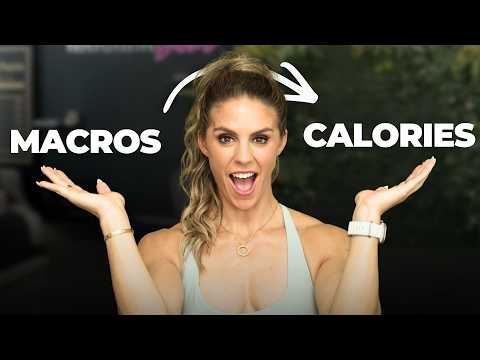 26 min
Macros vs Calories: Which Works Better for Women Over 40?
Episode 351 · Apr 10, 2026
Why Eating More Helps You Lose Fat After 40
Episode 272 · Jun 30, 2025
Macros vs Calories: Which Is Better for Fat Loss?
Episode 77 · Jul 7, 2023
Free Body
Transformation Assessment