
Answered in 5 episodes
Why do women gain weight during menopause?
Answered by Nikkiey Stott and her guests · Updated
The short answer
On The WarriorBabe Show, the answer is mostly hormonal, not a willpower problem. As estrogen declines, fat storage shifts from the hips and thighs to the belly and around the organs. Muscle also becomes easier to lose. Guests add that insulin and stress are major drivers, even when your eating and training stay the same.
Hear it from the show
Tap play to start right where it's answered. It keeps playing while you browse.
Nikkiey on how falling estrogen moves fat from hips and thighs to the belly
Plays from 11:32 · Ep. 401: How to Lose Visceral Fat After Menopause
Michal on muscle loss, fewer mitochondria and menopausal belly fat
Plays from 15:20 · Ep. 187: How Menopause Changes Your Metabolism and Fat Burning
Dr. Morgan Nolte on estrogen, stress and why insulin drives midlife weight gain
Plays from 29:40 · Ep. 159: How to Reverse Insulin Resistance After 40
Nikkiey on how menopause amplifies cortisol's effect on belly fat
Plays from 14:20 · Ep. 186: How Stress and Cortisol Cause Belly Fat After 40
Nikkiey on estrogen, testosterone and shifting fat distribution after 45
Plays from 9:20 · Ep. 75: How Hormone Changes Affect Fat Loss and Muscle After 45
The full answer
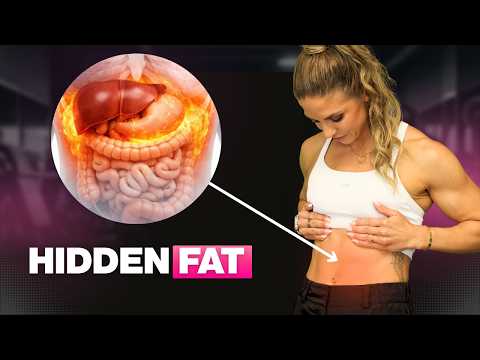
Nikkiey explains on Ep. 401 that in your younger years, estrogen directs fat to sit under the skin at the hips and thighs, away from your organs. As estrogen declines in later perimenopause, menopause and beyond, that pattern shifts. Fat starts going to the abdomen and around the organs as visceral fat. Her point: this is not because you changed what you were eating. On Ep. 75 she adds that declining testosterone can make building and keeping muscle harder.
The guests add more layers, and they don't all frame it the same way:
- On Ep. 187, Michal, co-founder of Lumen, says women in menopause become more sensitive to muscle breakdown. Muscle is packed with mitochondria, so losing muscle means less ability to burn fat while fasting. That leads to fat accumulation, especially in the belly.
- On Ep. 159, Dr. Morgan Nolte agrees it is hormonal but argues insulin, not estrogen alone, is what really drives midlife weight gain. Her explanation is that estrogen helps keep insulin lower, so as it drops, insulin rises. She also says chronic stress pushes the body to rely more on fat tissue to produce estrogen.
Stress matters too. On Ep. 186, Nikkiey says the hormonal and emotional ups and downs of menopause can strengthen cortisol's effects. That makes it easier to gain weight in the abdomen and harder to lose it there.
The takeaway is that it's the plan, not you. Dr. Nolte says what worked in your 30s and 40s won't keep working, so the strategy has to change. Nikkiey calls strength training the most powerful tool against visceral fat, along with getting your protein in and managing stress. For anything involving your hormones or blood sugar, work with your doctor on what's right for you.
From The WarriorBabe Show with Nikkiey Stott. For education, not medical advice: talk to your doctor about your own health.
Women also ask
More questions →
Menopause & Perimenopause Weight Loss
How much protein do women in menopause need?
Nikkiey's recommendation is about one gram of protein per pound of body weight, so a 150-pound woman aims for roughly 150 grams a day, and that target stays the same through menopause. Guests on The WarriorBabe Show land in a similar range, and several say most women are eating far too little.
Read the answer →
Menopause & Perimenopause Weight Loss
Is it possible to lose weight after menopause?
Yes. The WarriorBabe Show has featured several post-menopausal women who lost weight: Debra went from close to 180 to 149 pounds, Amy lost over 40 pounds, and Bryn lost over 25 while eating more. Nikkiey explains the approach is adjusting nutrition and exercise: enough food and protein, consistent strength training, and patience.
Read the answer →

Menopause & Perimenopause Weight Loss
Should I eat fewer carbs during menopause?
Moderately, yes, but not to keto levels. Nikkiey explains that WarriorBabe lowers carbs and raises fats during perimenopause and menopause because insulin resistance changes how your body handles carbs, using a split of 35% protein, 27% carbs and 38% fat. Carbs are never eliminated, and guest Louise Digby warns that going too low can slow your metabolism.
Read the answer →
Watch the full episodes
More episodes → 28 min
How Hormone Changes Affect Fat Loss and Muscle After 45
Episode 75 · Jul 3, 2023
 56 min
How to Reverse Insulin Resistance After 40
With Dr. Morgan Nolte
 27 min
How to Lose Visceral Fat After Menopause
Episode 401 · Oct 2, 2026