
Answered in 8 episodes
Is tracking macros better than counting calories?
Answered by Nikkiey Stott and her guests · Updated
The short answer
For most women over 40 who want to change how their body looks, yes. Nikkiey explains that macro tracking isn't an alternative to counting calories; it's the more complete version. Calories alone can get the scale moving, but you'll lose muscle with the fat. Tracking protein, carbs and fat lets you lose fat while keeping muscle.
Hear it from the show
Tap play to start right where it's answered. It keeps playing while you browse.
Nikkiey on why macro tracking is the complete version of calorie tracking
Plays from 4:25 · Ep. 351: Macros vs Calories: Which Works Better for Women Over 40?
The two-women, same-1,800-calories example and why results differ
Plays from 9:31 · Ep. 347: What Are Macros and How Do I Start Tracking Them?
Why counting calories alone costs you muscle along with fat
Plays from 1:49 · Ep. 8: Tracking Macros vs Counting Calories for Fat Loss
When calorie counting is enough and when to switch to macros
Plays from 12:03 · Ep. 109: Macros vs Calories: Why Tracking Macros Works After 40
The full answer
Nikkiey doesn't dismiss calories. On Ep. 351 she calls energy balance a foundational principle: eat consistently less than you burn and you lose weight. The problem is what that weight is made of. On Ep. 8 and Ep. 351 she explains that a calorie-only deficit takes a little of everything, including fat, muscle and fluids, and leaves you looking like a skinnier, softer version of yourself, with low energy and a slower metabolism. Calorie tracking gives you no visibility into whether you're eating enough protein. Her Ep. 347 example: two women each eat 1,800 calories, but the one eating high protein with moderate carbs and fat builds more muscle, loses more fat and feels fuller and more energized.
That's because the macros do different jobs. Nikkiey describes protein as building and repairing muscle, carbs as fuel for your body, brain and recovery, and fat as support for cellular health and hormone production. On Ep. 109 she points out that a soft drink and a piece of fruit can have similar calories with very different nutrition. On Ep. 82 she notes that many women avoid fat out of fear, and that people eating only to a calorie number tend to end up with lots of carbs and little protein. On Ep. 351 she names daily protein as the single most important number to hit, with each macro target landing within plus or minus five grams.
There is nuance. On Ep. 109 she says calorie counting can work well if you have a lot of weight to lose and are likely over-consuming; once some weight comes off, shift to macros alongside strength training. If you're brand new, she suggests on Ep. 82 that starting with just your protein target is fine, and she doesn't expect anyone to track forever. She calls macros a skill set, not a diet. If calorie counting left you smaller but not stronger, that was the plan, not you.
From The WarriorBabe Show with Nikkiey Stott. For education, not medical advice: talk to your doctor about your own health.
Women also ask
More questions →
Macros & Macro Tracking
How do I make tracking macros less overwhelming?
Make the job smaller at first. The women on the show who stuck with it started small: tracking only protein, planning one day and repeating it, or picking a few meals from a sample plan. Nikkiey says week one might take half an hour a day, but by week three or four it takes five to ten minutes.
Read the answer →
Macros & Macro Tracking
How do I start tracking macros as a beginner?
Start by learning to track before chasing any numbers. Nikkiey has beginners log what they normally eat in MyFitnessPal for seven days, then focus on protein first and add fats and carbs later. Keep your meals simple and repetitive for the first few weeks so tracking becomes a skill, not a source of overwhelm.
Read the answer →
Macros & Macro Tracking
Do I have to track macros forever?
No. Nikkiey is clear that you don't have to track macros for the rest of your life. Tracking and weighing your food is a temporary, educational phase that teaches you what real portions of protein, carbs and fat look like. Do it consistently for a couple of years and it becomes second nature.
Read the answer →
Watch the full episodes
More episodes →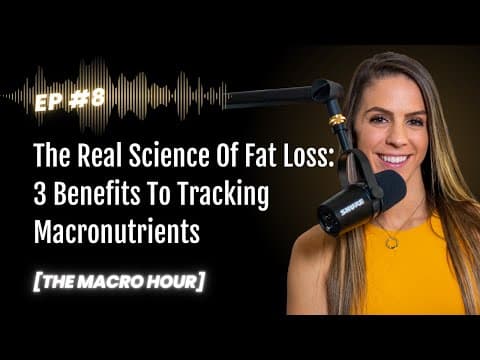 18 min
Tracking Macros vs Counting Calories for Fat Loss
Episode 8 · Jan 25, 2023
 26 min
Macros vs Calories: Why Tracking Macros Works After 40
Episode 109 · Dec 4, 2023
 26 min
Macros vs Calories: Which Works Better for Women Over 40?
Episode 351 · Apr 10, 2026